
Workout Book - Live Your Life With Life Changing Books
Workout Book - We recommend these workout books to help readers reach their fitness goals. Packed with exercises, nutrition advice, and tips for a well-rounded fitness routine for everyone.

Looking for a workout book to help you reach your fitness goals and keep you motivated? Look no further! We have researched and come up with these amazing books that are sure to provide you with the motivation, advice, and tools you need to achieve success.
Whether you're looking to improve your strength, stamina, flexibility, or overall health, these books will give you the guidance and information you need to reach your goals. We choose experienced fitness experts and contain detailed exercises and nutrition tips to help you reach your desired level of fitness. Get ready to take your fitness journey to the next level with these incredible workout books!
If you’re looking for a way to take your workouts to the next level, there are plenty of great books that can help. Here are four of the top-rated workout books that could help you get the most out of your workout routine.
No matter your fitness goal, there’s a book that can help you reach it. From strength training to bodyweight exercises to Navy SEAL-level workouts, these books are sure to help you get the most out of your workout routine.
Buyer’s Guide
How to Choose the Best Workout Book
1. Define Your Fitness Goal
Before you pick up a workout book, ask yourself:
- Am I trying to build muscle, lose fat, improve flexibility, or train for a sport?
- What’s my current fitness level (beginner, intermediate, advanced)?
- Do I prefer bodyweight-only workouts or gym/machine-based routines?
The best workout book for you will align with your goal.
2. Look at the Book’s Structure & Format
- Clear program breakdown: A good workout book will have weekly/day-by-day plans, progression guidance, and rest days built in.
- Exercise variety and description: Look for one with illustrations/photos, technique tips, common mistakes, and modifications.
- Training & Nutrition integrated: Many top books include nutrition advice — macros, meal planning, hydration, recovery.
- Tracking tools: Some books come with logs, checklists, or companion apps/work sheets to track progress.
3. Suitability for Your Environment & Equipment
- No equipment vs full gym: Ensure the book’s recommended workouts match what you have. If you train at home with minimal gear, pick a book that caters to that.
- Space & time constraints: If you only have 20-30 minutes per session or small space, find books with efficient routines.
- Budget & accessibility: Consider cost, digital vs print editions, and whether the book is available in your country or language.

4. Author’s Credibility & Testimonials
- Qualified author: Check that the author is certified (e.g., NSCA, NASM, ACE) and has relevant experience in training, coaching, or sports science.
- Real-world results: Look for before-/after testimonials, case studies, or peer reviews that show the program works.
- Updated content: Fitness science evolves, so newer editions (last 3-5 years) may include current trends like movement-quality training, mobility, recovery science, HIIT options, etc.
5. Progression, Modification & Safety
- Progression built in: Does the book help you advance from where you are (beginner) to where you want to be?
- Modifications offered: Are there easier/harder versions of each exercise? Are options for injury or mobility-limited users?
- Safety tips included: Look for warm-up/cool-down routines, injury-prevention cues, and recommendations for safe lifting/form.
- Recovery & lifestyle integration: Comprehensive books cover sleep, stress management, mobility work—not just workouts and diet.
6. Fit with Your Learning Style
- Visual learners: Choose books with high-quality photos/diagrams, step-by-step form cues, and possibly video links.
- Auditory/kinesthetic learners: Some books come with audio files, app companion workouts, or interactive plans.
- Planner/tracker types: If you like crossing things off, choose books with logs/work sheets or companion apps.
7. Value for Money & Additional Resources
- Included extras: Some books include downloadable resources, apps, nutrition trackers, or community access.
- Reusability: Will you use this book once, or will it support you for 12-24 months? A program with progression has longer value.
- Return policy: If buying online, check whether you can return/discount if it’s not suitable.
8. Read Sample Chapters & Reviews
- Check Amazon/online retailers for “Look Inside” to see if the writing style resonates with you.
- Read user reviews (especially from people with similar goals/level).
- Search for blog or YouTube reviews for each workout book to see how real users found it.
9. Plan for Integration & Commitment
- Allocate time: Choose a book whose schedule you can commit to (2 vs 5 workouts/week).
- Budget for equipment: If the book recommends dumbbells, bands, or a gym membership, factor that in.
- Tracking plan: Decide how you’ll track progress — book logs, app, spreadsheet, photo journal.
- Review your goal each month: Use the book’s structure to reassess and stay on track.
10. Make Your Final Selection
Once you’ve done the above steps, narrow to the top 2-3 candidates and compare:
- Which book directly addresses your primary goal?
- Which one aligns with your environment, equipment, and time-budget?
- Which author, structure and style you feel you’ll stick with?
- Which offers the best long-term value (progression, extras, ecosystem)?
A workout book can be an excellent tool — provided it fits your goal, your lifestyle, and you actually commit to it. The right book becomes your roadmap—structuring workouts, nutrition and recovery—so you stay consistent. Avoid buying a “one size fits all” guide that you’ll abandon after a few weeks; instead, choose a book you’ll use for months, revisit and progress with.
The New Rules of Lifting for Women
Shop NowThe New Rules of Lifting for Women
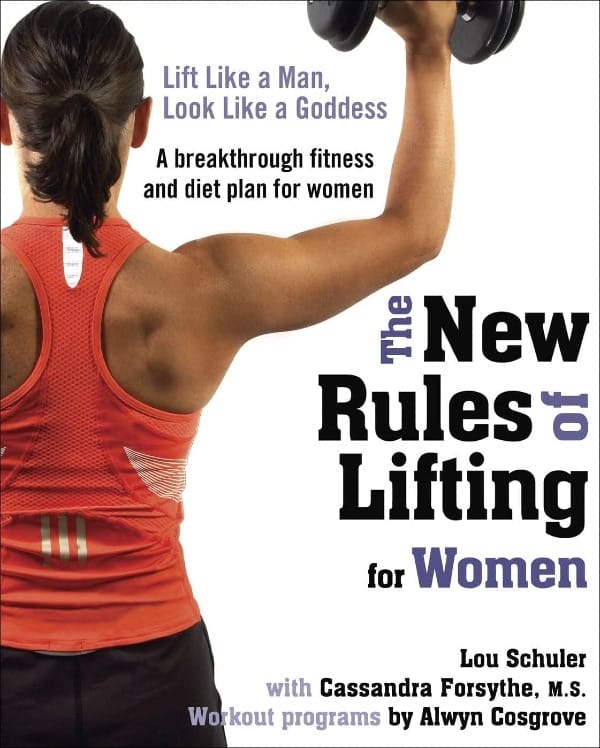
By: Lou Schuler and Alwyn Cosgrove
The first book is The New Rules of Lifting for Women by Lou Schuler and Alwyn Cosgrove. This book is a great resource for women looking to build strength, gain muscle, and lose fat. It includes an easy-to-follow program that incorporates detailed exercises and nutrition advice. This book is perfect for those just starting out and even for more advanced lifters.
Bigger Leaner Stronger: The Simple Science of Building the Ultimate Male Body
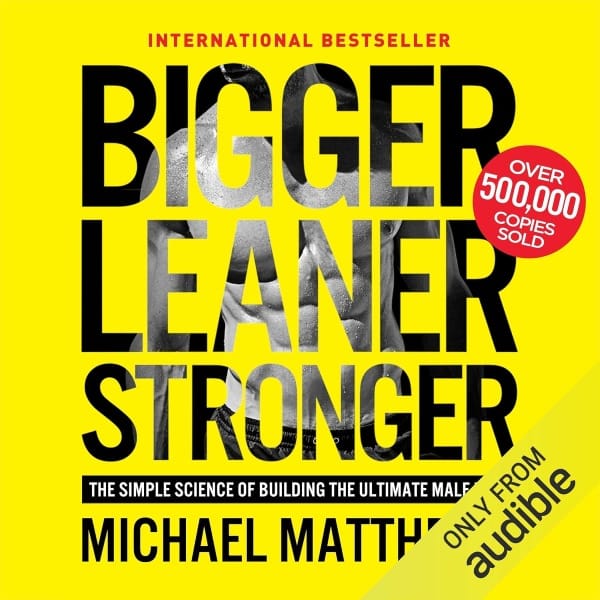
The bestselling fitness book for men who want to gain 25-35 pounds of lean muscle and lose as much fat or more in just 3-5 hours per week—and without giving up delicious foods or doing grueling workouts.
Is Bigger Leaner Stronger a body building book that can help you pack on brain-shrinking amounts of muscle in 30 days flat?
No.
Is it a fitness nutrition book full of dubious diet and exercise “hacks” and “shortcuts” for melting belly fat faster than a roided hornet?
Absolutely not.
But is it a science-based strength training book (and nutrition book) that’ll demystify building muscle and losing fat and show you exactly how to get a lean, strong, and muscular physique without spending hours in the gym every day?
And while still enjoying your favorite foods, like hamburgers, pizza, and ice cream?
Yes.
Bodyweight Strength Training Anatomy
Shop NowBodyweight Strength Training Anatomy
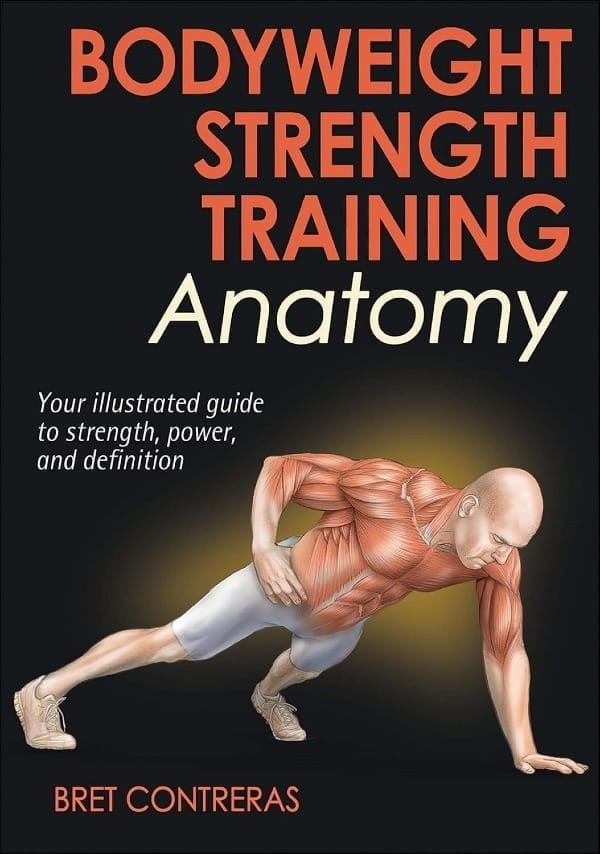
By: Bret Contreras
Next is Bodyweight Strength Training Anatomy by Bret Contreras. This book contains more than 200 full-color illustrations that show each exercise in detail. It includes step-by-step instructions, exercise variations, and progressions to help you maximize your results. This book is great for those looking to build strength and muscle with bodyweight exercises.
Starting Strength: Basic Barbell Training
Shop NowStarting Strength: Basic Barbell Training
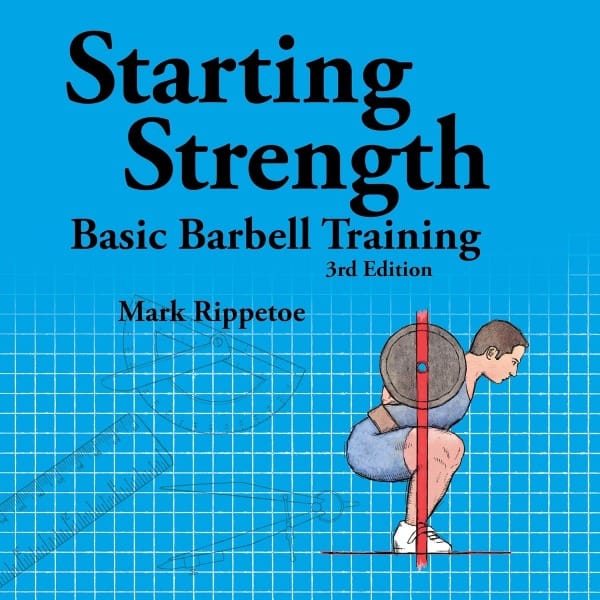
By: Mark Rippetoe
Starting Strength: Basic Barbell Training is an essential guide to developing strength and power through barbell training. Written by renowned strength coach Mark Rippetoe, this book offers a comprehensive approach to barbell exercises for beginners and experienced lifters alike.
With step-by-step instructions, illustrations, and photographs, this book covers the basics of barbell training and provides detailed explanations of the squat, deadlift, press, clean and jerk, and power clean. Learn the proper form and technique, as well as strategies for effective programming.
This book is perfect for anyone looking to increase their strength and power, and it will allow you to reach your goals more quickly and safely. Whether you're an aspiring bodybuilder, powerlifter, or athlete, or just want to get stronger, Starting Strength: Basic Barbell Training is the perfect resource for you.
The Complete Guide to Navy SEAL Fitness
Shop NowThe Complete Guide to Navy SEAL Fitness
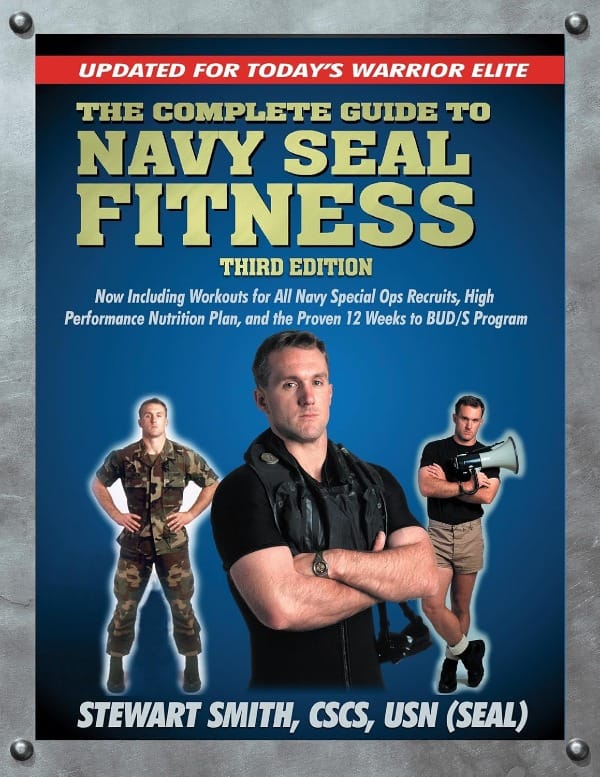
By: Stewart Smith
The Complete Guide to Navy SEAL Fitness by Stewart Smith is an essential resource for anyone interested in achieving peak physical performance. With exercises and strategies developed over decades of training Navy SEALs, this comprehensive guide provides an in-depth look into the training methods used by one of the world’s toughest special forces.
With detailed descriptions and illustrations of each exercise, this guide makes it easy to understand and apply the knowledge needed to get into top-level physical shape. Whether you’re looking to become a Navy SEAL or just want to adopt a more effective fitness regimen, The Complete Guide to Navy SEAL Fitness is your one-stop shop for reaching peak physical fitness.
FAQs
Q: What is a good amount of volume for a workout?
Answer: A good amount of workout volume depends on your fitness goal, experience level, and recovery capacity. In simple terms, volume refers to the total amount of work you do — usually measured as sets × reps × weight for strength training, or total time/intensity for cardio.
For most people, a balanced approach works best:
- Beginners: 8–12 total sets per muscle group per week (spread over 2–3 sessions).
- Intermediate lifters: 12–18 sets per muscle group per week.
- Advanced lifters: 16–25 sets per muscle group per week (if recovery and nutrition are well-managed).
The key is quality over quantity. Doing more sets doesn’t always mean better results — your muscles need time to recover and grow. It’s also important to progressively overload (gradually increase weight or reps) while maintaining good form.
For general fitness, 45–75 minutes of mixed resistance and cardio training, 3–5 times a week, is a healthy range for most adults.
Remember, the best workout volume is the one you can sustain consistently, recover from, and enjoy doing long-term.
Q: Can you get ripped in 7 weeks?
Answer: Getting “ripped” in 7 weeks is possible — but it depends heavily on where you’re starting from. If you already have a moderate fitness base and some muscle definition, 7 weeks can be enough time to see noticeable improvements. However, if you’re starting from scratch, you’ll make great progress, but you might not reach that fully “shredded” look just yet.
The key is discipline and consistency. To maximize results in 7 weeks, focus on:
- Strength Training (4–5 days/week):
Combine compound lifts like squats, deadlifts, push-ups, and pull-ups with isolation exercises. Focus on progressive overload — increasing weight or reps weekly. - High-Intensity Cardio:
Add 2–3 HIIT sessions per week to burn fat efficiently while preserving muscle. - Nutrition:
Eat lean proteins, complex carbs, and healthy fats. Keep your diet clean and aim for a slight calorie deficit to reduce body fat while maintaining muscle. - Rest and Recovery:
Get enough sleep and allow your muscles to recover. Growth happens outside the gym, not just inside it. - Hydration & Mindset:
Stay hydrated, manage stress, and keep a consistent routine.
With strict training, clean eating, and commitment, you can definitely see visible muscle tone and reduced fat in 7 weeks — though getting fully “ripped” usually takes longer. Think of it as the start of a lasting transformation, not just a short-term sprint.
Q: Can I transform my body in 3 months?
Answer: Yes, you can transform your body in 3 months — but how dramatic that transformation will be depends on your starting point, consistency, and commitment to both nutrition and exercise.
In three months, you can achieve noticeable improvements in strength, stamina, and body composition — meaning less fat, more muscle tone, and better energy levels. Here’s what makes it possible:
- Structured Workout Routine:
Combine strength training (3–4 times a week) with cardio (2–3 sessions weekly). Resistance training helps build lean muscle, while cardio supports fat burning and heart health. - Balanced Nutrition:
Your diet will make or break your results. Focus on high-protein foods, whole grains, healthy fats, and plenty of fruits and vegetables. Avoid excessive sugar and processed foods. - Recovery & Sleep:
Muscles grow and repair during rest. Aim for 7–9 hours of sleep per night and schedule at least one rest day per week. - Consistency Over Perfection:
The biggest transformations come from staying consistent, even when motivation dips. Small, steady progress each week adds up fast. - Track Your Progress:
Take photos, measure your waist, hips, and arms, and record your workouts. Visible progress will keep you motivated.
While you might not look like a professional athlete in 3 months, you can absolutely build a fitter, leaner, and stronger version of yourself — and lay the foundation for long-term success.
If you want structured guidance, consider using workout books or programs that combine exercise plans, nutrition advice, and progress tracking — they help you stay focused and make the most of every workout.
Q: What does 1 month of working out look like?
Answer: A month of working out can bring noticeable changes — both physically and mentally — even if you’re just starting out. However, what you experience largely depends on your consistency, workout type, diet, and recovery habits.
Here’s what a typical 1-month transformation might look like:
- Week 1:
You’ll start building the habit. Expect sore muscles (DOMS) and some fatigue as your body adjusts to new movements. Your energy levels might fluctuate, but your motivation is high. - Week 2:
Your endurance begins to improve. Workouts feel slightly easier, and you might notice small strength gains — lifting a bit more weight or doing extra reps. Your mood and sleep quality often get better, too. - Week 3:
You start seeing visible changes — maybe a bit more muscle tone, better posture, and small drops in weight or inches if you’re consistent with nutrition. You’ll likely feel stronger and more confident. - Week 4:
The habit feels more natural. You recover faster, feel more energetic throughout the day, and your body composition begins to shift. While dramatic changes take more time, the progress you see after one month can be very motivating.
In short, 1 month of working out = building momentum. You’ll gain strength, discipline, and a new appreciation for how capable your body is. Stay consistent for another 2–3 months, and that’s when the real transformation happens. 💪
Q: What is the 3 3 3 rule for working out?
Answer: The 3-3-3 rule for working out is a simple fitness guideline designed to help you stay consistent, balanced, and motivated in your training routine. It focuses on frequency, variety, and recovery — three key elements for long-term results.
Here’s what it means:
- 3 Days of Strength Training:
Dedicate three days each week to resistance or weight training. This helps you build muscle, increase metabolism, and improve overall body strength. - 3 Days of Cardio:
Include three days of cardiovascular exercise such as running, cycling, swimming, or brisk walking. Cardio helps improve heart health, burn calories, and boost endurance. - 3 Key Recovery Principles:
- Get enough sleep (7–9 hours per night)
- Stay hydrated throughout the day
- Schedule rest or active recovery days to allow muscles to repair and grow
The 3-3-3 rule is great for people who want structure without overcomplicating their routine. It creates a sustainable rhythm — balancing effort, recovery, and lifestyle — so you can progress steadily without burnout.
In short: Train smart, move often, and rest well. That’s the essence of the 3-3-3 workout rule.