
Facts You Need to Know About Pickleball Court Dimensions!
Pickleball has taken the world by storm, becoming one of the fastest-growing sports in the United States.
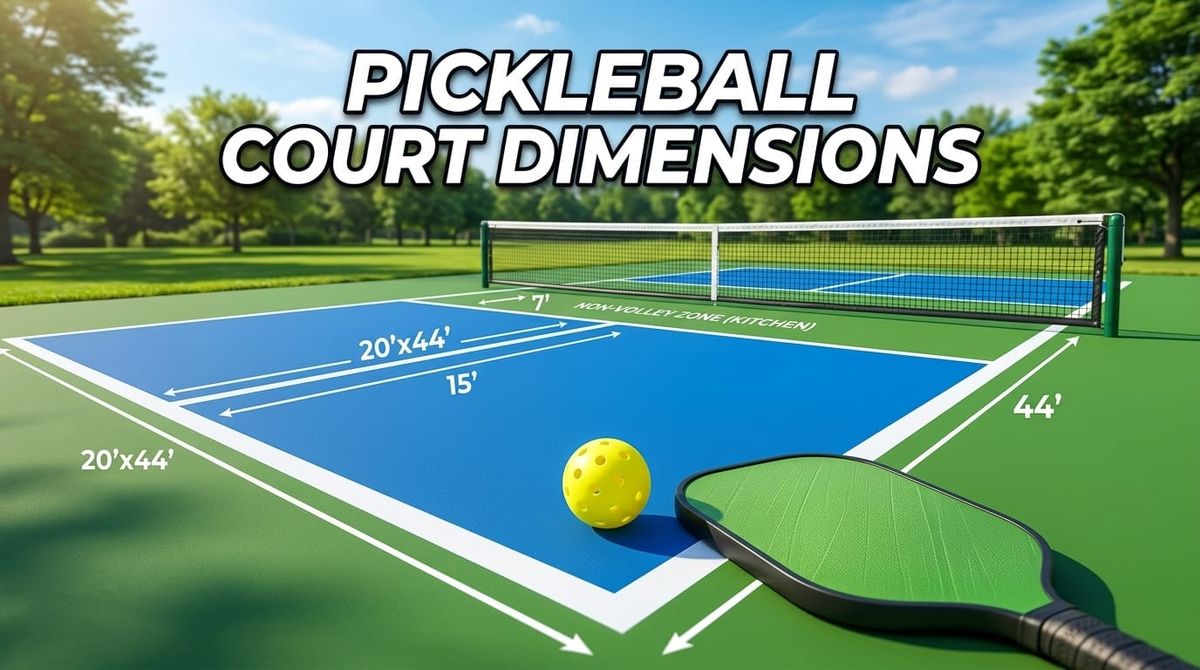
Pickleball may be one of the fastest-growing sports in the world, but its court is surprisingly compact compared with many other racquet and paddle sports. Whether you're a first-time player, planning to build a court at home, converting an existing tennis or badminton court, or simply trying to understand the game better, knowing the correct pickleball court dimensions is essential.
At first glance, a pickleball court may look simple: a rectangular playing area, a net in the middle, a few boundary lines, and the familiar seven-foot “Kitchen” or non-volley zone near the net. However, every measurement has a purpose. The width and length of the court, the position of the non-volley zone, the service areas, the net height, and even the space surrounding the court all influence how the game is played and how safely players can move.
Interestingly, this same court size is used for both singles and doubles play, unlike some other court sports where the playing area changes by format.
But here's an important distinction: the playing lines are not the same thing as the total space you need to build or play comfortably on a court. The actual court occupies 20 × 44 feet, while USA Pickleball recommends a minimum playing surface of 30 × 60 feet to provide additional space around the court. For new construction, a larger 34 × 64-foot playing surface is recommended, providing more room for player movement and safety.
The court itself is also divided into several important zones. On each side of the net is a 7-foot-deep non-volley zone, commonly called the Kitchen. Behind the Kitchen are the service areas, which are divided into left and right service courts. The net is 36 inches high at the sidelines and 34 inches high at the centre, creating the distinctive playing characteristics that make pickleball different from tennis and other court sports.
Understanding these dimensions matters for more than competitive play. If you're installing a backyard pickleball court, marking temporary lines on an existing surface, planning a community recreation facility, converting another sports court, or purchasing equipment, even a small measurement error can affect gameplay and court usability.
In this guide, we'll break down the official pickleball court dimensions, explain what each line and zone means, look at the required space around the court, compare singles and doubles dimensions, and explore some practical considerations when designing or setting up your own pickleball playing area.
So, before you grab your paddle and step onto the court, let's take a closer look at the numbers behind the game—and the facts every pickleball player should know about court dimensions.
The Basics of the Pickleball Court
Dimensions
The official pickleball court is 20 feet wide and 44 feet long. These dimensions are the same for both singles and doubles. The court is divided into two halves by a net that is 36 inches high at the sidelines and 34 inches high at the center.
The playing area is also marked by lines that define the service courts and the non-volley zone, also known as the "kitchen." The service courts are 10 feet wide and are divided into two sections by a centerline. The non-volley zone is located on either side of the net and extends 7 feet from the net towards the baseline.
The Service Area
When serving in pickleball, the server must stand behind the baseline and hit the ball into the opposite service court. The serve must clear the net and land in the opposite service court to be considered legal. The server has two attempts to make a legal serve, and the serve must be made underhand.
The Non-Volley Zone
The non-volley zone is a key feature of the pickleball court. This area is defined by a line that extends 7 feet from the net towards the baseline on either side of the court. Players are not allowed to hit the ball while they are standing inside the non-volley zone, also known as the "kitchen." This rule is designed to prevent players from hitting a ball out of the air when they are too close to the net.
Understanding the dimensions of the pickleball court is essential for anyone who wants to play the game. Whether you're a beginner or an experienced player, it's important to know the size of the court, the location of the non-volley zone, and the rules governing the service. With this knowledge, you'll be able to enjoy all the fun and excitement that pickleball has to offer.
Facts You Need to Know
- Standard Size: A pickleball court is 20 feet wide and 44 feet long, the same dimensions as a doubles badminton court. This compact size makes it accessible and easy to set up in various locations.
- Non-Volley Zone: Also known as the "kitchen," the non-volley zone extends 7 feet from the net on both sides. Players cannot volley the ball within this zone, adding a strategic element to the game.
- Net Height: The net height is 36 inches at the sidelines and 34 inches in the middle, slightly lower than a tennis net, allowing for a faster-paced game.
- Doubles and Singles: Unlike tennis, the court dimensions for doubles and singles pickleball are identical. This means one court can accommodate both styles of play without any modifications.
- Service Area: The court is divided into two equal service areas by the centerline, creating left and right service courts. Players must serve diagonally across the net into the correct service court.
- Baselines and Sidelines: The baseline runs parallel to the net at the back of the court, and the sidelines run perpendicular to the net, marking the court's width.
- Court Markings: The lines on a pickleball court are 2 inches wide and are usually white or yellow for clear visibility. These markings help ensure accurate calls during play.
- Surface Types: Pickleball courts can be made from various materials, including asphalt, concrete, or even hardwood for indoor play. The surface can impact the ball's bounce and game speed.
- Portable Nets: Portable nets are available for pickleball, allowing enthusiasts to set up a court almost anywhere, from driveways to gymnasiums, making the game highly versatile.
- Conversion from Tennis Courts: Many pickleball courts are converted from existing tennis courts. Typically, one tennis court can accommodate up to four pickleball courts, making efficient use of space.
- Popularity Surge: With over 4 million players in the U.S. alone, the demand for pickleball courts is skyrocketing. This growth has led to an increase in dedicated pickleball facilities and multi-purpose courts.
These dimensions and facts about pickleball courts highlight the sport's accessibility, strategic depth, and growing popularity. Whether you're a beginner or a seasoned player, understanding these aspects can enhance your appreciation and enjoyment of the game.
Important information about pickleball court dimensions
- Standard pickleball court: 20 feet wide by 44 feet long, which is slightly smaller than a doubles badminton court.
- The court is divided into left and right service courts by a centerline, and each service court is divided into two sections by a service line.
- The non-volley zone, also known as the "kitchen," is a 7-foot area on either side of the net that extends back to the service line. Players are not allowed to volley the ball while standing in the kitchen.
- The net height is 36 inches at the sidelines and 34 inches at the center of the court. The lower net height in the center helps to prevent players from spiking the ball too hard and causing injury to themselves or their opponents.
- If you don't have access to a standard pickleball court, you can modify a tennis or badminton court to create a smaller pickleball court. The court size should be reduced to 44 feet by 20 feet, and the non-volley zone should be 7 feet from the net on each side. Franklin Sports Pickleball Court Marker Kit is handy for transforming any court area into a pickleball court.
- It's important to follow the standard court dimensions and markings when playing pickleball to ensure a fair and consistent game. If you're playing in a tournament, the court dimensions will be strictly enforced by the referees.
- Finally, practicing on a regulation-sized court will help you develop your skills and strategy for playing in tournaments or more competitive settings. However, if you're just starting, it's okay to practice on a modified court or a smaller area until you feel more comfortable with the game.
- Use the appropriate pickleball paddle.