
Compact Treadmill for Home - Maximize Your Space and Your Fitness
Maximize your space with the Compact Treadmill for Home! Our 2026 guide features top space-saving models, expert reviews, & buying advice.
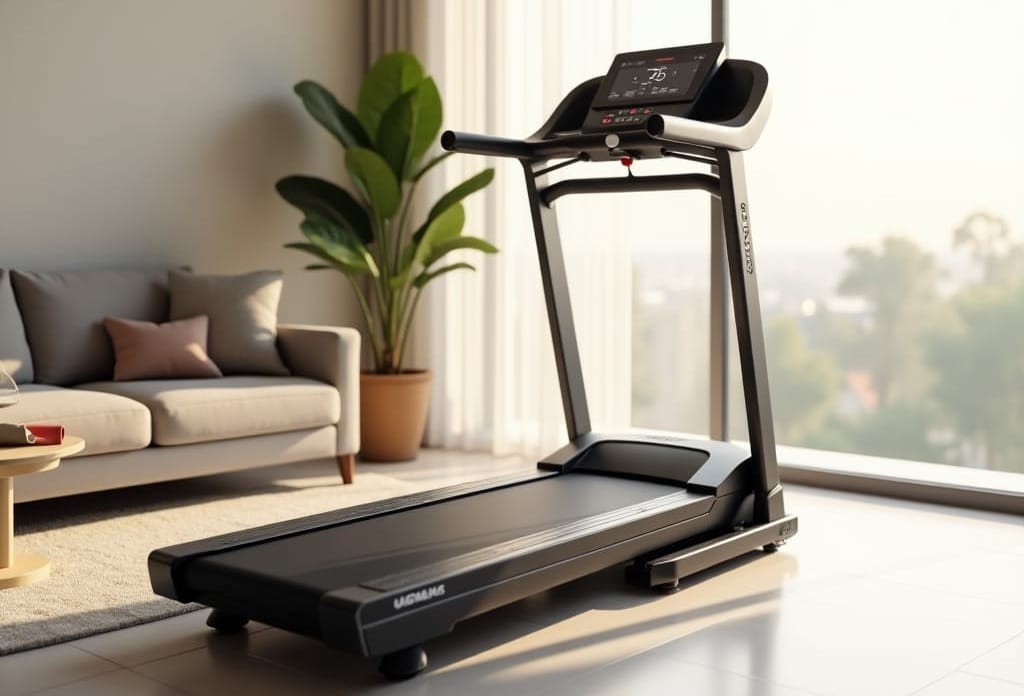
In an era where the "home office" has become a permanent fixture and city apartments seem to be shrinking by the minute, the dream of a sprawling home gym often feels out of reach. You want the endorphin rush of a morning run, but you don't want a massive piece of industrial machinery as your new roommate.
Enter the compact treadmill. Gone are the days of clunky, noisy machines that take up half the living room. Today’s space-saving treadmills are sleek, whisper-quiet, and—most importantly—foldable enough to hide under a bed or inside a closet. Whether you are a marathon trainer living in a studio or a remote worker looking to hit 10,000 steps during Zoom calls, there is a perfect machine for you. In this guide, we’ll break down how to choose the right one and review the top-rated models on the market today.
🏃 Buyer’s Guide
How to Choose a Compact Treadmill for Home
Choosing the right compact treadmill for your home can make a huge difference in your fitness routine—especially if you’re short on space but still want the convenience and health benefits of walking or running indoors. Here’s a complete guide to help you pick the best compact treadmill for your needs.
1. 🧠 Assess Your Fitness Goals
Before anything else, ask yourself:
- Are you walking, jogging, or running?
Casual walkers can get by with slower, lighter treadmills. Runners need sturdier machines with higher top speeds and shock absorption. - How often will you use it?
Daily use demands better build quality; occasional use can be fine with budget models. - Who will use it?
Consider the weight, height, and fitness level of everyone who’ll use the treadmill.
2. 📏 Size & Portability
One of the biggest reasons people choose compact treadmills is space savings—but not all are equally small.
- Foldable vs Non-Foldable:
Foldable treadmills are great for saving space. Make sure they lock securely when folded. - Footprint:
Check the treadmill’s dimensions both open and folded so you know it will fit comfortably where you plan to store it. - Wheels:
Treadmills with built-in wheels are easier to move between rooms.
3. 🛠️ Build Quality & Weight Capacity
Even compact treadmills should be sturdy:
- Weight Capacity:
Always choose a treadmill with a max user weight higher than your own weight. This ensures durability. - Frame Material:
Steel frames are stronger and more durable than aluminum or plastic. - Belt Size:
For walking, a belt width of ~16 inches is okay. If you plan to jog or run, look for 18 inches or wider.
4. ⚡ Motor Power
The motor affects performance, smoothness, and noise:
- Continuous Duty Motor (CHP):
Look for at least 1.5–2.5 CHP for walking and jogging. Higher CHP (3.0+) is ideal for regular running. - Noise Level:
Quiet motors are better for apartments or homes with shared walls.
5. 🏃 Speed & Incline Options
- Speed Range:
- Walking: 0.5–4 mph
- Jogging: 4–6 mph
- Running: 6 mph+
- Incline:
Manual or powered incline adds challenge and simulates outdoor terrain.
6. 📱 Features & Technology
Look for features that help you stay motivated:
- Display Console:
Shows time, speed, distance, calories, and heart rate. - Preset Workouts:
Handy for structured exercise. - Bluetooth / App Integration:
Syncs with fitness apps or plays music. - Heart Rate Monitoring:
Useful for tracking progress in effort and fitness.
7. 🧰 Safety & Comfort
Comfort makes workouts better and safer:
- Shock Absorption:
Cushioned decks reduce impact on joints. - Safety Key / Emergency Stop:
Should stop the treadmill immediately if needed. - Handrails:
Helpful for balance—especially for beginners.
8. 💸 Budget & Warranty
- Price Ranges:
- Budget (< $500): Good for walkers and light use
- Mid-Range ($500–$1,000): Balanced performance & durability
- High-End (>$1,000): Best for frequent jogging/running and advanced features
- Warranty:
- Motor: 2–5+ years
- Frame: A lifetime or long-term warranty is ideal
- Parts & Labor: At least 1 year
9. 🏅 Brands & Reviews
Always read user reviews and compare:
- Real customer experiences help you understand durability and performance in everyday use
- Look for consistent positive feedback and reliable customer support
✅ Quick Checklist Before Buying
✔ Fits your space (open & folded)
✔ Suitable motor power and speed range
✔ Comfortable belt size & cushioning
✔ Sturdy frame and weight capacity
✔ Helpful tech features and safety options
✔ Good warranty & strong reviews
🏠 Final Thoughts
A compact treadmill can be the perfect home fitness solution—as long as you choose one tailored to your space, goals, and budget. Whether you’re walking for wellness or training for your next run, the right treadmill makes your workouts more enjoyable and achievable.
Top 5 Compact Treadmill For Home
NordicTrack T Series (T Series S)
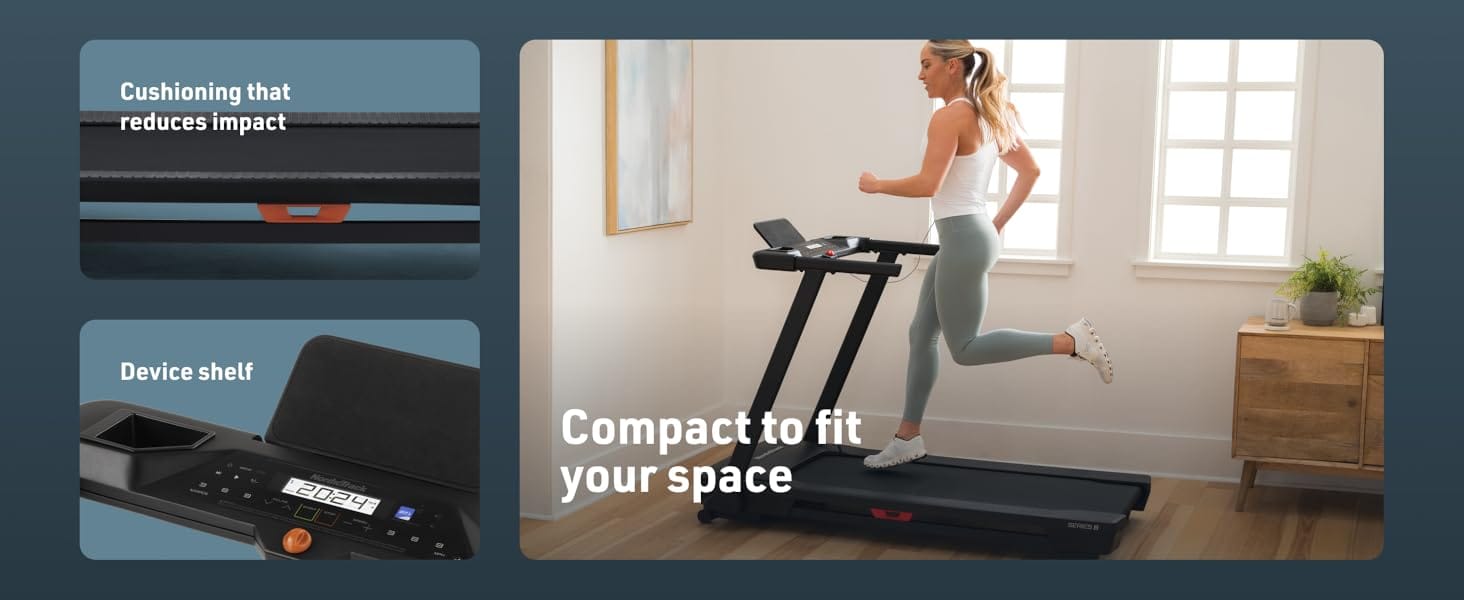
This is one of the great choice for people who wants to keep their fitness without going to the gym. It is a popular home treadmill in the USA. It balances professional-grade features with a footprint that doesn't overwhelm a room.
- Pros: 10% OneTouch incline control; FlexSelect cushioning allows you to toggle between a soft deck or a road-like feel; iFit compatible.
- Cons: Very heavy to move once assembled; requires an internet connection for the best features.
- Best For: Serious runners who need a reliable, high-performance machine.
Horizon Fitness Treadmill
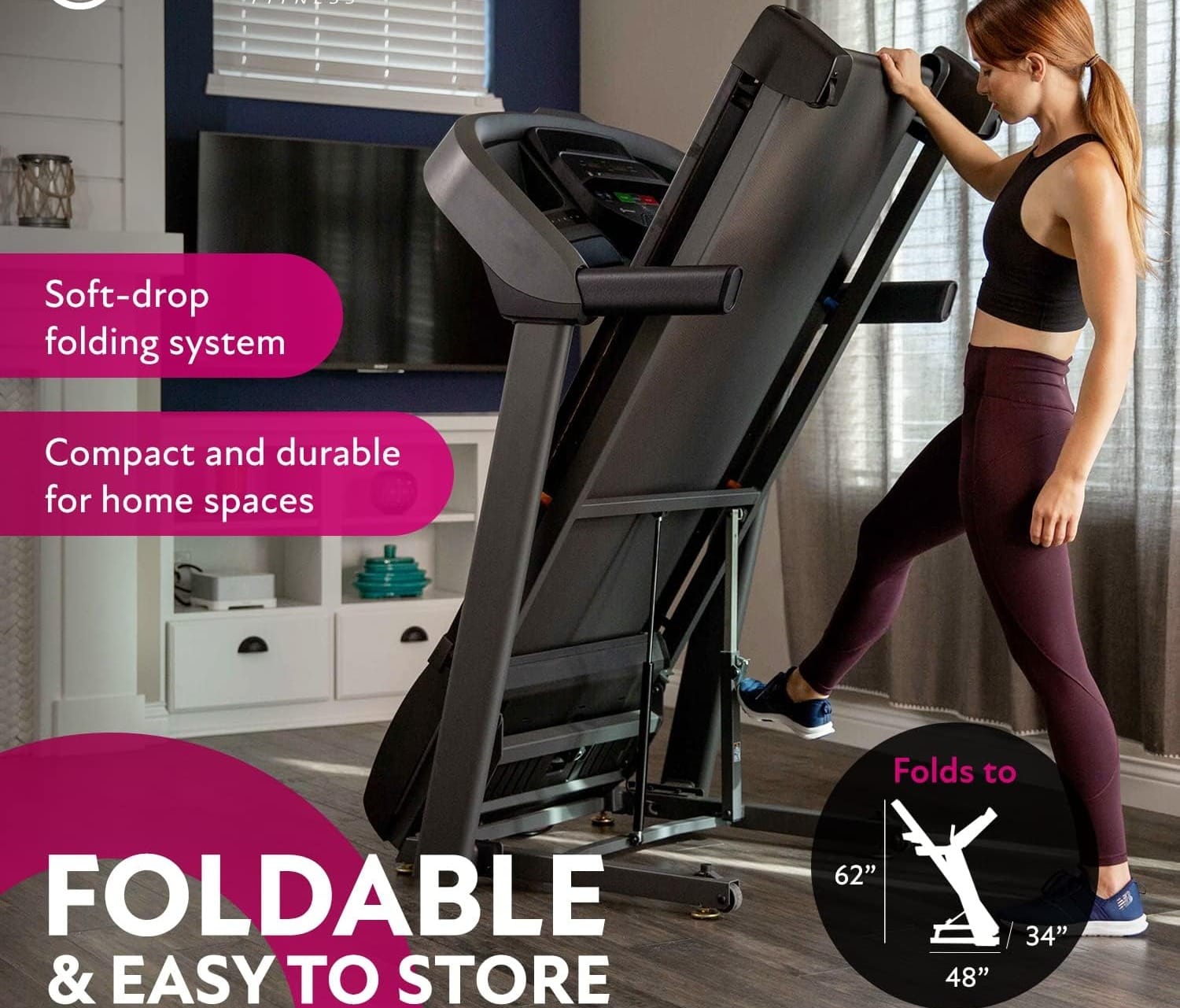
Great value with Durability, this Horizon is famous for its "no-nonsense" approach. The T101 is legendary for being one of the quietest and easiest-to-assemble treadmills on the market.
- Pros: Rapid-sync motor follows your pace changes quickly; built-in fan and speakers; very sturdy frame for the price.
- Cons: The display is a basic LED (no fancy touchscreens); limited built-in workout programs.
- Best For: Walkers and joggers looking for a durable workhorse that lasts for years.
UREVO 2-in-1 Compact Treadmill
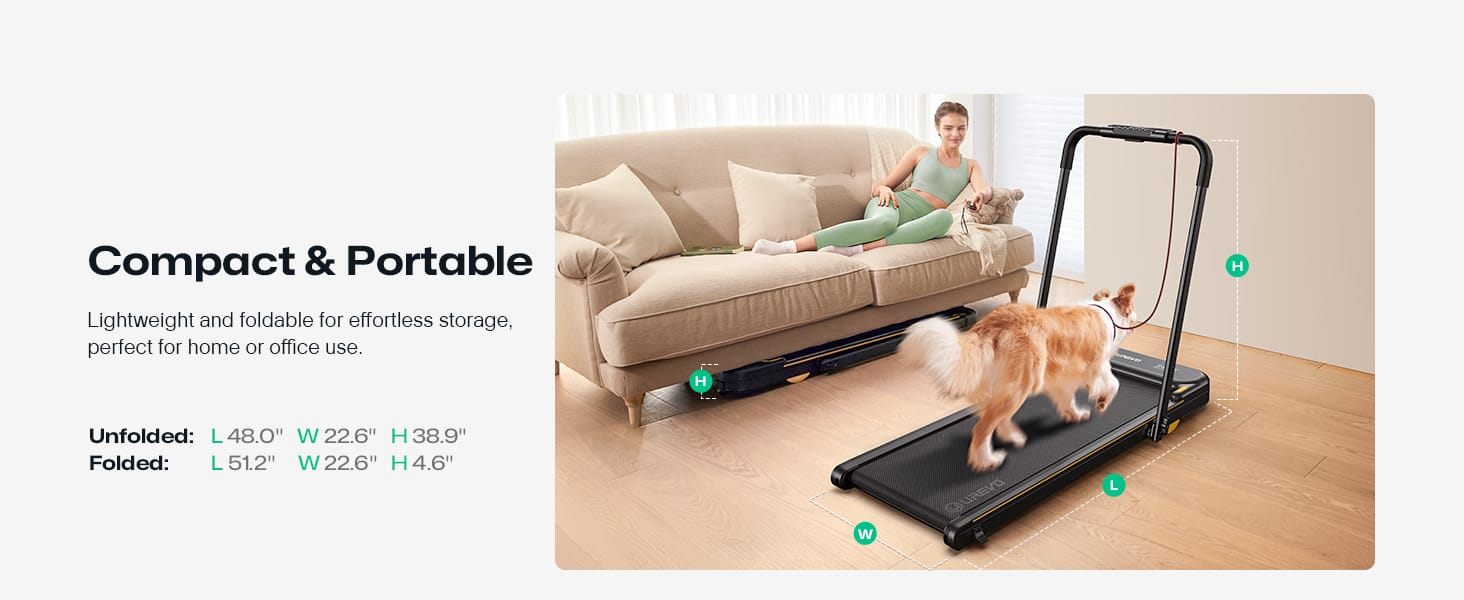
The Best for Small Apartments and Offices, this UREVO 2-in-1 Compact Treadmill is a Walking Pad hybrid. With the handrail down, it’s an under-desk walker (max 2.5 mph). With the handrail up, it’s a jogging treadmill (max 7.6 mph).
- Pros: Extremely slim; comes fully assembled; fits under most beds; incredibly affordable.
- Cons: Not suitable for tall runners (short belt); no incline capability.
- Best For: Remote workers and people in tiny studio apartments.
Echelon Stride Auto-Fold Treadmill
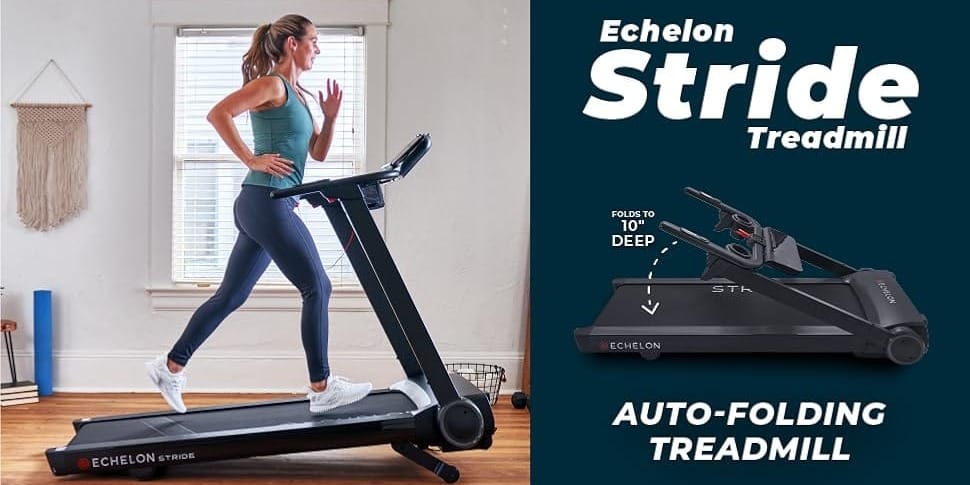
The Space-Saving Champion The Stride is designed specifically for people who need their treadmill to vanish when not in use. It features patented "auto-fold" technology.
- Pros: Folds to just 10 inches deep; can be stored upright against a wall; includes a metal safety bar to prevent tipping.
- Cons: Smaller motor (not ideal for long-distance marathon training); requires a tablet to see most metrics.
- Best For: Style-conscious users who want their equipment hidden away.
Sunny Health & Fitness Treadmill
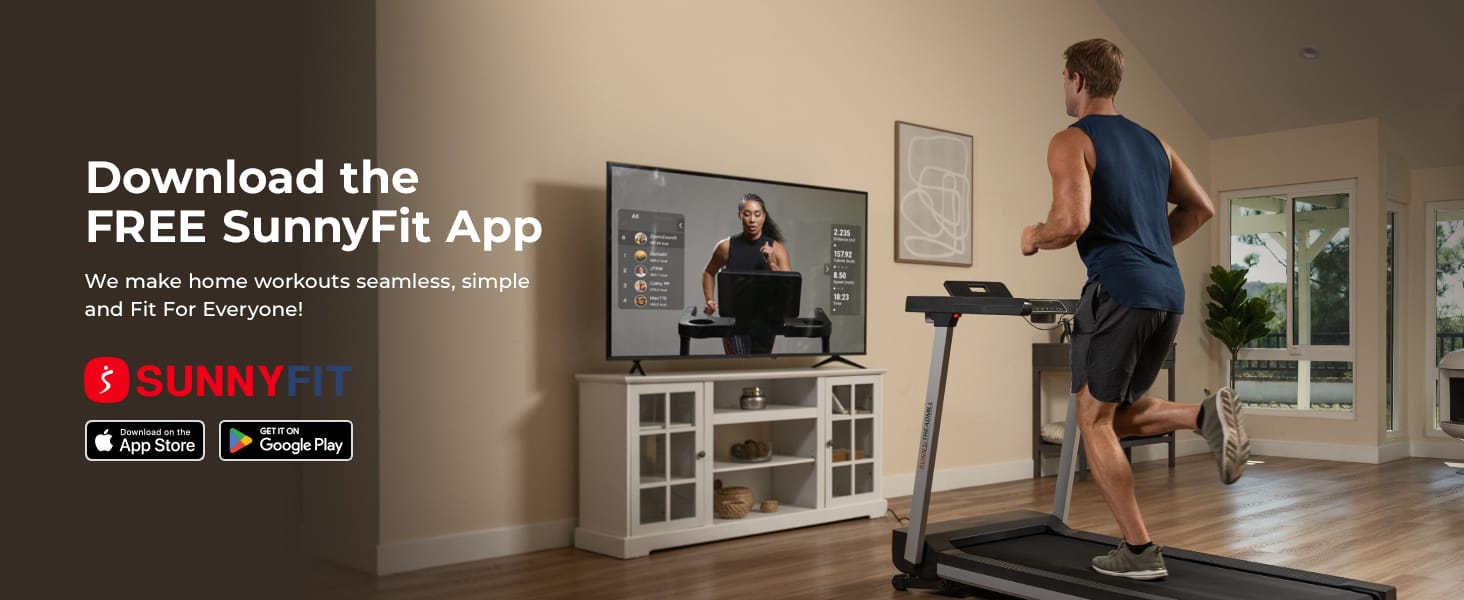
The Best Budget Pick If you want a traditional treadmill experience without spending over $500, this is the top choice on Amazon.
- Pros: Very lightweight; features a "Soft Drop" hydraulic system for safe unfolding; integrated tablet holder.
- Cons: Weight capacity is lower (max 220 lbs); the belt is narrow (15.7 inches).
- Best For: Light cardio on a strict budget.
🏆 Editor’s Choice
NordicTrack T Series has ticked most of our boxes. While it doesn't have the flashy screens, its build quality, quiet motor, and ease of folding make it the most practical choice for 90% of home users. It offers the best "bang for your buck" without a monthly subscription fee.
Top Frequently Asked Questions
Q. Are compact treadmills actually safe for running?
Answer: Compact (or folding) treadmills have become popular because they’re affordable, space-saving, and convenient for home use. But safety depends on how you use them and what the treadmill is built for.
1. Design Intent Matters
Most compact treadmills are engineered for:
- Walking
- Light jogging
- Short, moderate-speed runs
They usually have:
- Smaller running decks
- Shorter belt length and width
- Lighter frames
- Lower motor horsepower
Because of this, they are not ideal for sprinting or intense running sessions.
When Compact Treadmills Are Safe for Running
Compact treadmills can be safe if:
- You run at moderate speeds (typically under 10–12 km/h or 6–7.5 mph)
- Your stride length fits comfortably on the deck
- The treadmill has adequate motor power (at least 2.5–3.0 CHP for running)
- You use it for short runs or interval jogging, not marathon training
For beginners, casual runners, or people doing recovery runs, compact treadmills are often more than sufficient.
Potential Safety Concerns to Be Aware Of
Here’s where most issues arise:
1. Short Running Surface
A shorter deck can cause:
- Overstriding
- Reduced balance
- Higher risk of stepping off the belt at faster speeds
This is especially important for taller runners or those with a long stride.
2. Motor Strain
Running generates more impact and continuous load. A weak motor can:
- Overheat
- Lose speed consistency
- Wear out faster
This can lead to sudden belt slowdowns—unsafe at higher speeds.
3. Stability and Frame Strength
Compact treadmills are lighter, which means:
- More vibration during runs
- Less stability during fast or aggressive foot strikes
A wobbly treadmill increases the risk of falls.
Who Should Avoid Running on Compact Treadmills?
Compact treadmills are not ideal if you:
- Do high-speed sprint training
- Weigh close to or above the treadmill’s max weight limit
- Train for long-distance or daily runs
- Have balance or joint stability issues
In these cases, a full-size treadmill offers better safety and durability.
Tips to Run Safely on a Compact Treadmill
If you choose to run on one, follow these safety tips:
- Check the maximum speed and motor rating before buying
- Ensure the belt length is at least 120–130 cm (47–51 inches) for running
- Stay well within the weight limit
- Wear proper running shoes with a good grip
- Use safety clips and handrails when adjusting speed
Compact treadmills are safe for running—but only for light to moderate use. They’re best suited for short runs, jogging, and fitness maintenance rather than intense or long-distance training. If you respect their limitations and choose a quality model, they can be a safe and effective addition to a home workout routine.
Q. How loud is a treadmill in an upstairs apartment?
Answer: A treadmill in an upstairs apartment can be noticeably loud, but how loud it feels depends on a few key factors.
Most home treadmills produce around 60–75 decibels while running. To put that in perspective, that’s similar to a normal conversation (60 dB) up to a vacuum cleaner (70–75 dB). For the person using it, the noise is manageable—but for neighbors downstairs, the impact noise and vibrations are often the bigger issue than the motor sound.
What really affects noise in an upstairs apartment:
- Type of treadmill: Cheaper or older treadmills tend to be louder. High-quality models with quieter motors and better shock absorption are noticeably quieter.
- Running vs walking: Walking creates minimal noise, while running causes repeated foot impact that can echo through floors.
- Flooring: Hardwood or concrete floors transmit more vibration than carpet.
- Speed and user weight: Faster speeds and heavier impact increase vibration and sound.
- Building construction: Older buildings with thinner floors amplify noise more than modern, well-insulated apartments.
In real-life terms, a treadmill upstairs can sound like thumping or rhythmic pounding to neighbors below—especially during running sessions. This is why many apartment users place a thick treadmill mat or rubber padding underneath to absorb vibration and reduce noise transfer.
Bottom line: A treadmill upstairs isn’t silent, but with a quiet model, walking instead of running, and proper vibration mats, the noise can be reduced enough to be apartment-friendly. Without those precautions, it can easily become disruptive—especially in shared living spaces.
Q. Do I really need to lubricate the belt?
Answer: Yes—you really do need to lubricate the belt (or deck) in most cases, especially if you’re talking about a treadmill belt. Skipping this simple step can lead to poor performance and expensive repairs.
Here’s why it matters:
1. Reduces friction and wear
Lubrication minimizes friction between the belt and the deck. Without it, the belt rubs harder against the surface, causing faster wear on both parts.
2. Protects the motor
A dry belt forces the motor to work harder. Over time, this extra strain can overheat the motor and significantly shorten its lifespan.
3. Improves performance
A properly lubricated belt runs smoother and quieter, maintains consistent speed, and feels more comfortable underfoot.
4. Saves money long-term
Regular lubrication can prevent premature belt, deck, or motor replacement—repairs that cost far more than a bottle of lubricant.
When you might not need to lubricate
Some modern treadmills come with pre-lubricated or maintenance-free belts. In that case, adding lubricant can actually cause problems. Always check your manufacturer’s manual before applying anything.
How often should you lubricate?
For most treadmills, every 3–6 months or after 100–150 miles of use is a good rule of thumb, depending on usage and manufacturer recommendations.
Bottom line:
If your treadmill requires lubrication, don’t skip it. It’s one of the easiest ways to keep your machine running smoothly, quietly, and reliably for years.
Q. Can I lose weight just by walking on a compact treadmill?
Answer: Yes—you can lose weight just by walking on a compact treadmill, if you do it consistently and correctly.
Walking is a low-impact but effective form of cardio that burns calories, improves metabolism, and supports fat loss. A compact treadmill works just as well as a full-size one for weight loss because the key factors aren’t the machine—it’s how often, how long, and how hard you walk.
Here’s what actually matters:
- Consistency: Walking 30–60 minutes a day, at least 5 days a week, creates a steady calorie deficit over time.
- Intensity: A brisk pace (where you can talk but not sing) is ideal. Adding incline or interval walking increases calorie burn.
- Duration: Longer walks burn more calories, especially if you maintain a steady pace.
- Diet: Walking alone helps, but weight loss is much faster and more sustainable when paired with mindful eating.
Compact treadmills are especially useful because they make walking convenient. You can walk while working, watching TV, or during short breaks—making it easier to stay active daily. Many people lose weight simply because they move more throughout the day without feeling exhausted or overwhelmed.
That said, results vary. Walking may lead to gradual, steady weight loss, not dramatic overnight changes. If your goal is faster results, combining walking with light strength training and a balanced diet works even better.
Yes, you can lose weight by walking on a compact treadmill. It’s one of the simplest, most sustainable ways to stay active—especially if you stick with it long term.
Q. Can I store a folding treadmill vertically?
Answer: Yes, in most cases you can store a folding treadmill vertically—but there are a few important things to check first.
Most modern folding treadmills are designed with space-saving in mind and can be stored upright after use. When folded properly, the deck locks into place, allowing you to stand the treadmill vertically against a wall or in a corner. This makes it a great option for small apartments, home offices, or rooms with limited floor space.
However, not all treadmills are built for vertical storage. Always check the manufacturer’s instructions to confirm whether vertical storage is supported. Some models are only meant to be folded flat and rolled away, not stood upright. If stored incorrectly, you risk damaging the frame, belt, or motor.
Safety is another key factor. Make sure the treadmill is fully locked before standing it up, and place it against a sturdy wall to prevent tipping. If you have kids or pets, consider using a safety strap or storing it in a low-traffic area. Also, avoid vertical storage if the treadmill is very heavy and difficult to lift on your own.
In short, folding treadmills can usually be stored vertically if the model supports it and you follow the proper safety guidelines. When done right, it’s a convenient way to save space without compromising the lifespan of your treadmill.