
Best Ultra-Running Books – Get Inspired and Ready to Hit the Trails!
Here’s a concise 153-character excerpt optimized for search and readability: Discover why ultrarunners train for speed, how faster running improves endurance and efficiency, and the best ways to add speed work to ultra training.

There is something uniquely captivating about ultrarunning. While a marathon already pushes the boundaries of endurance, ultrarunning asks a completely different question: How far are you willing to go when the distance, terrain, fatigue, and doubt all tell you to stop?
For many runners, the appeal of ultrarunning goes far beyond simply covering more kilometres. It is about exploring remote trails, experiencing nature, testing physical limits, developing mental resilience and discovering capabilities you never knew you had. An ultramarathon can take you through mountains, forests, deserts and rugged trails, sometimes for many hours—or even days. The journey can be as important as the finish line.
But becoming an ultrarunner isn't simply about running longer. It requires patience, preparation, smart training, nutrition, recovery, pacing, and, perhaps most importantly, the ability to stay mentally composed when things don't go according to plan. The sport demands a different approach to endurance, and learning from experienced runners can be one of the best ways to understand what lies ahead.
That's where a great ultrarunning book can make a difference.
The best books about ultra-running take you behind the scenes of some of the world's most demanding endurance challenges. Some are gripping personal stories that capture the highs and lows of running 50K, 50 miles, 100 miles, or beyond. Others provide practical guidance on training, race preparation, nutrition, pacing, and developing the mental strength needed to keep moving when your body is exhausted.
Books such as Training Essentials for Ultrarunning have become valuable resources because they combine practical training guidance with evidence-based principles, while classic memoirs such as Born to Run, Ultramarathon Man, and Eat & Run have helped introduce countless readers to the culture and possibilities of long-distance running.
And you don't have to be an experienced ultrarunner to benefit from these books.
If you're considering your first trail ultra, preparing for your first 50K, dreaming about completing a 100-miler, or simply fascinated by the limits of human endurance, the right book can provide motivation and perspective. You can learn from athletes who have experienced extreme fatigue, difficult weather, injuries, navigation challenges, nutrition problems, and moments when quitting seemed like the easiest option.
Perhaps most importantly, ultrarunning books remind us that endurance isn't just about physical strength. It is also about mindset.
The ability to keep moving when you're tired, adapt when conditions change, manage discomfort, and break a seemingly impossible distance into smaller, achievable goals can be just as important as your weekly mileage. Reading the experiences of elite and everyday ultrarunners can provide valuable lessons about perseverance, discipline, and resilience that extend well beyond running.
There is also a wonderful sense of adventure woven through many of these stories. Ultra running can take you away from busy roads and conventional race environments and into some of the world's most spectacular landscapes. Trails become part of the experience, and every climb, descent, creek crossing, and technical section presents a new challenge. For many runners, that connection with nature is one of the reasons they keep coming back.
So, whether you're looking for training knowledge, race strategy, inspiration, adventure, or simply a good story about someone doing something extraordinary, there is an ultrarunning book waiting for you.
In this guide, we've brought together some of the must-read books for ultra-runners, covering inspirational memoirs, legendary race experiences, practical training guides, and stories that explore the physical and psychological side of endurance running. Some may motivate you to lace up your shoes immediately; others may give you practical ideas to incorporate into your training; and a few might simply make you wonder just how far the human body and mind can go.
Grab your favourite reading spot, lace up your trail shoes when you're ready, and let's explore the books that could inspire your next great ultrarunning adventure.
Ultramarathon Man: Confessions of an All-Night Runner
Shop Now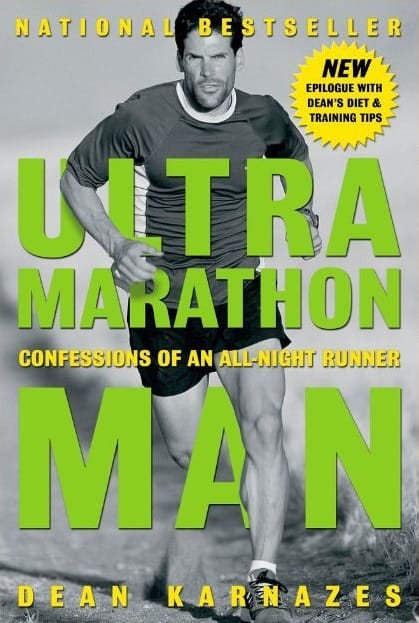
Ultramarathon Man: Confessions of an All-Night Runner by Dean Karnazes
Ultramarathon Man, Confessions of an All-Night Runner by Dean Karnazes, is a must-read for any ultra-runner. Written by legendary ultra-runner Dean Karnazes, this book offers an intimate look into the world of ultra-running and provides valuable insights on how to push yourself to the limit.
Karnazes reveals the mind-boggling adventures of his nonstop treks through the hell of Death Valley, the incomprehensible frigidity of the South Pole, and the breathtaking beauty of the mountains and canyons of the Sierra Nevada.
Available at amazon.com
Becoming a Supple Leopard
The Ultimate Guide to Resolving Pain, Preventing Injury, and Optimizing Athletic Performance
Shop Now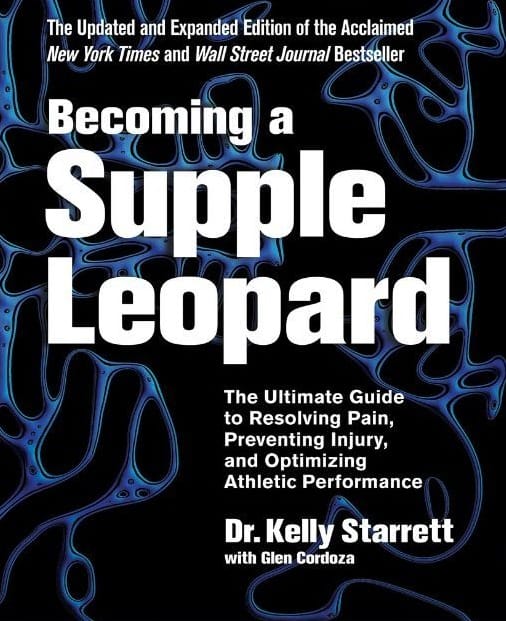
Becoming a Supple Leopard - The Ultimate Guide to Resolving Pain, Preventing Injury, and Optimizing Athletic Performance By Kelly Starrett
This New York Times and Wall Street Journal bestseller has been thoroughly revised to make it even easier to put to use. Want to truly understand the principles that guide human movement? Becoming a Supple Leopard lays out a blueprint for moving safely and effectively through life and sport.
Learn how to apply those principles to specific movements, whether you are doing squats in the gym or picking up a bag of groceries. Hundreds of step-by-step photos show you not only how to perform a host of exercise movements, such as the squat, deadlift, pushup, kettlebell swing, clean, snatch, and muscle-up, but also how to correct the common faults associated with those movements.
Available at amazon.com
Eat & Run: My Unlikely Journey to Ultramarathon Greatness
Shop Now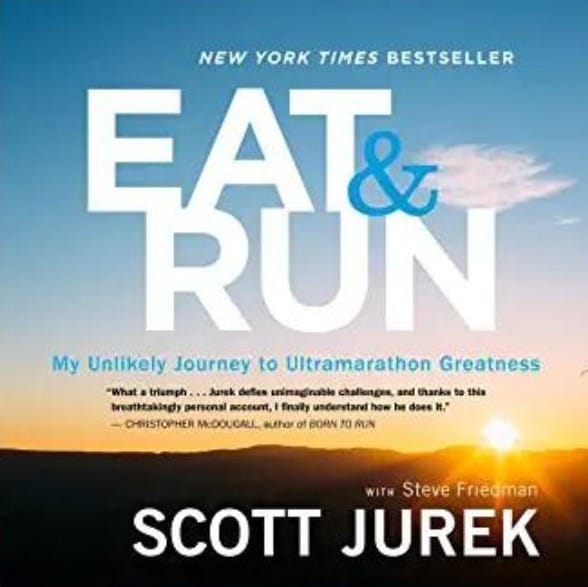
Eat & Run: My Unlikely Journey to Ultramarathon Greatness by Scott Jurek
Eat & Run: My Unlikely Journey to Ultramarathon Greatness by Scott Jurek: This inspiring memoir from one of the most successful ultra-runners of all time, Scott Jurek, offers an honest look at his life, from his humble beginnings to becoming one of the most successful ultra-runners ever.
For nearly two decades, Scott Jurek has been a dominant force - and darling - in the grueling and growing sport of ultrarunning. In 1999, as a complete unknown, he took the lead of the Western States Endurance Run, a 100-mile traverse over the old Gold Rush trails of the California Sierra Nevada. He won that race seven years in a row, setting a course record along the way.
Available at amazon.com
Can't Hurt Me: Master Your Mind and Defy the Odds
Shop Now
Can't Hurt Me: Master Your Mind and Defy the Odds by David Goggins & Adam Skolnick
For David Goggins, childhood was a nightmare--poverty, prejudice, and physical abuse colored his days and haunted his nights. But through self-discipline, mental toughness, and hard work, Goggins transformed himself from a depressed, overweight young man with no future into a US Armed Forces icon and one of the world's top endurance athletes. The only man in history to complete elite training as a Navy SEAL, Army Ranger, and Air Force tactical air controller, he went on to set records in numerous endurance events, inspiring Outside magazine to name him the Fittest (Real) Man in America.
In Can't Hurt Me, he shares his astonishing life story and reveals that most of us tap into only 40 percent of our capabilities. Goggins calls this The 40% Rule, and his story illuminates a path that anyone can follow to push past pain, demolish fear, and reach their full potential.
Available at amazon.com
Best Ultra-Running Books FAQs
Whether you’re a beginner or a seasoned ultra-runner, these books are sure to provide invaluable insights and tips to help you get the most out of your running experience. Pick up one of these books today and take your running to the next level!
Q: Who is the best ultra runner of all time?
Answer: It's hard to say definitively who the best ultra runner of all time is, as many talented athletes have achieved great success in the sport.
However, if we had to pick one, we'd have to say that the legendary Karl Meltzer, who holds the record for the most career wins in ultra marathons (100+), is the best of all time. Karl has won some of the toughest and most iconic ultra marathons in the world, including the Hardrock 100, the Western States 100, and the Wasatch Front 100. He is an incredible athlete and a true inspiration for all runners.
We recommend watching these movies
Q: What age do ultra runners peak?
Answer: Unlike sprinting or even marathon running, ultrarunning doesn't necessarily favour younger athletes. In fact, one of the fascinating things about ultramarathons is that many runners reach their best performances well into their 30s and 40s—and sometimes beyond.
So, what age do ultra-runners peak?
The short answer is: there isn't one universal peak age, but research generally places peak ultramarathon performance somewhere between the mid-30s and mid-40s, with the optimal age tending to increase as the race distance gets longer.
For example, a large study of more than 494,000 runners who completed 50 km ultramarathons found that peak running speed among the fastest age groups occurred at approximately 39–41 years of age.
For 100 km races, the picture shifts slightly. Research involving more than 370,000 100-km finishers found peak performance at approximately 40–44 years for women and 45–49 years for men when all finishers were considered. Among the very fastest runners, however, peak ages were younger—roughly the late 30s to early 40s.
Why do ultra-runners peak later?
Ultrarunning isn't purely a test of maximum speed or aerobic capacity. Once the distance stretches to 50 km, 100 km, 100 miles, or more, experience becomes extremely valuable.
An experienced ultrarunner has usually developed the ability to:
- Pace themselves conservatively early in a race
- Manage fatigue over many hours
- Develop effective nutrition and hydration strategies
- Handle discomfort and changing weather conditions
- Understand when to push and when to back off
- Deal with injuries, blisters, and other problems during races
- Stay mentally focused when exhaustion sets in
- Make better decisions when things don't go according to plan
These skills take years to develop. Research on ultra-endurance athletes also suggests that peak performance tends to occur at older ages as race duration increases. In time-limited events, for example, the estimated peak age increased from about 34 years in 6-hour races to almost 47 years in 48-hour races.
Longer races can favor older runners
One of the most interesting findings is that the longer the race, the older the peak-performance age can become.
Research examining races from 50 km through 1,000 km found that the fastest competitors in the longest events tended to be substantially older than those competing over shorter distances. Among the fastest men, the average age was around 32 for 100 km but approximately 47 for 1,000 km.
This makes sense when you consider what an ultramarathon demands. A 50 km race still requires considerable speed and aerobic capacity, whereas an event lasting many hours or even days places increasing importance on pacing, endurance, resilience, experience, and efficient energy management.
Does that mean you can't peak in your 20s?
Not at all.
Elite athletes can certainly perform exceptionally well at a young age, particularly over shorter ultra distances. In fact, studies looking specifically at the fastest competitors often find younger peak ages than studies considering all finishers. This is one reason why there isn't a single number that can accurately define the "peak age" of an ultrarunner.
Your personal peak may depend on your genetics, training history, race distance, injury history, experience, recovery ability, and how long you've been developing as an endurance athlete.
Your 40s can be an excellent time for ultrarunning
For recreational and competitive runners, perhaps the most encouraging takeaway is that your 40s are absolutely not too late to become an excellent ultrarunner.
Many runners enter ultrarunning after years of shorter-distance racing. By that point, they may have developed a strong aerobic base, understand their bodies better, and have the patience required to train consistently.
And you don't necessarily need to be exceptionally fast to become a successful ultrarunner.
Ultrarunning rewards the ability to keep moving efficiently for a very long time.
That means someone who isn't particularly fast over 5K or even a marathon can still become a highly capable ultra-distance runner.
So, what's the ideal age for an ultrarunner?
If you're looking for a simple answer, somewhere around 35–45 is a reasonable general range for peak ultramarathon performance, although the optimal age varies considerably depending on the distance and the athlete.
For 50 km races, research points toward roughly 39–41 years among the fastest age groups. For 100 km races, peak performance can extend further into the 40s, particularly when looking at the broader population of finishers. Longer races can favour even older athletes.
But perhaps the bigger lesson is this:
Ultrarunning is one of the endurance sports where experience can become an advantage rather than simply a consequence of getting older.
You may lose some raw speed with age, but years of training, racing, pacing, nutrition, mental resilience, and knowing how to manage your effort can compensate in ways that are particularly valuable over extreme distances.
So if you're 30, 40, 50—or even older—and thinking about tackling your first ultra, don't assume you've missed your window.
You may actually be entering one of the best periods of your endurance-running journey.
Q: Is it healthy to run ultra marathons?
Answer: Running ultra marathons can be a healthy choice for some people, depending on their overall fitness level and health. Generally, ultra marathons are considered to be more strenuous than traditional marathons, as they typically involve running distances greater than a full marathon (over 26.2 miles).
For this reason, it's important to consult with a doctor and consider your fitness level before attempting an ultra marathon. It's also important to ensure you have an adequate training plan that includes proper nutrition, hydration, and rest. Additionally, it's important to listen to your body and respond to its needs during the race. If you can follow these guidelines, ultra marathons can be a safe and enjoyable way to challenge yourself and push your physical limits.
Q: How hard is ultra running?
Answer: Ultra running can be a very challenging sport and is not for the faint of heart. It requires a great deal of physical and mental toughness to complete a race of this caliber. Physically, you will need to be in excellent condition, have good stamina, and be able to endure extreme conditions.
Mentally, it takes focus, determination, and the ability to stay motivated throughout the entire race. It can also be mentally draining at times, as the terrain is often difficult and the race can seem never-ending. Overall, ultra running is a difficult sport that requires a lot of dedication, but the reward of finishing a race like this is well worth the effort.
Q: Do ultra runners work speed?
Answer: Do Ultra Runners Work on Speed?
Yes, absolutely—but how much speed work an ultrarunner needs depends heavily on the distance, terrain, experience, and race goals.
At first glance, speed training might seem unnecessary for ultrarunning. After all, if you're preparing to run 50K, 100K, or 100 miles, shouldn't you spend most of your training time running long and building endurance?
The answer is yes, but not exclusively.
Ultrarunners still benefit from running faster. The key is understanding that speed work is usually a supporting element of ultra training rather than the primary focus.
Why would an ultrarunner need speed?
One reason is running economy. Faster running can help your body become more efficient, allowing you to maintain a given pace with less effort. Speed-based workouts can also improve aerobic capacity, running mechanics, and leg strength.
There's also a practical race-day benefit.
Imagine you're running a 100K trail race. You might spend hours moving at a relatively comfortable effort, but then encounter a runnable downhill, a flatter section, a competitor making a move, or a time cutoff that requires you to increase your pace.
You don't necessarily need to sprint. But having a higher "gear" can make those changes in pace much easier.
Speed training also teaches you what different levels of effort actually feel like. That can be extremely useful when you're running for many hours and pace can become difficult to judge.
What does speed work look like for an ultrarunner?
It doesn't necessarily mean spending hours on a track doing exhausting intervals.
Depending on the runner and their goals, speed training might include:
- Short strides of 15–30 seconds
- Hill repeats
- Tempo runs
- Tempo intervals
- Fartlek sessions
- VO2 max intervals
- Progression runs
- Faster sections within a long run
- Alternating easy and hard efforts
For example, an ultrarunner might finish an easy run with several short, controlled strides. Another might perform several 3–5 minute faster intervals with recovery jogging between them. Tempo and progression workouts can also develop the ability to sustain a stronger effort for longer periods.
But endurance comes first
This is where ultrarunning differs from shorter-distance racing.
If you're preparing for your first ultra, particularly a 50K or longer trail race, there's usually little value in sacrificing your long runs and recovery simply to squeeze in more high-intensity workouts.
You need a strong endurance foundation and the ability to handle increased training volume. Too much intensity, particularly when combined with rapidly increasing mileage, can increase fatigue and injury risk.
For many recreational ultrarunners, consistent, injury-free training is more valuable than constantly trying to become faster.
In other words:
Don't become so obsessed with speed that you can't run tomorrow.
Elite ultrarunners are a different story
If you're racing competitively, speed becomes considerably more important.
Elite ultrarunners aren't necessarily running 100 miles at a slow pace. They're covering enormous distances at surprisingly fast speeds, and the ability to run efficiently at higher intensities can make a significant difference.
That's why competitive ultrarunners may incorporate intervals, tempo runs, hill workouts and other higher-intensity sessions into their training.
For someone chasing a course record, qualifying standard or podium finish, speed can be a major performance differentiator.
For someone whose primary goal is simply to finish their first 100K, it may be much less important.
Trail speed is different from road speed
Another important point is that ultrarunning speed isn't always about your pace per kilometre.
On a technical mountain trail, running efficiently over rocks, roots, mud, and steep terrain may be more valuable than being able to run a fast 5K.
An ultrarunner may therefore benefit from:
Uphill strength + efficient downhill running + technical trail skills + aerobic endurance + the ability to change pace.
That's why hill repeats and trail-specific workouts can be particularly useful. Training should ultimately reflect the demands of the race you're preparing for.
So, should every ultrarunner do speed work?
Not necessarily.
If you hate speed work, are injury-prone, or are struggling to recover from your existing training load, adding more intensity may not be the best decision. Speed work is useful, but it isn't mandatory for completing an ultramarathon.
For a beginner, I'd prioritise:
- Consistent running
- Gradually increasing endurance
- Long runs
- Recovery
- Nutrition and hydration practice
- Strength and mobility
- Trail-specific skills
- Race-specific preparation
Once that foundation is established, adding a small amount of structured faster running can be an excellent way to become a stronger and more efficient ultrarunner.
The bottom line
Yes, ultrarunners work on speed—but they don't train like 5K specialists.
The goal isn't necessarily to make every training run faster. It's to develop enough speed and efficiency that your normal ultra pace feels more comfortable, and you have the ability to respond when the race demands more.
For most ultrarunners, the winning combination isn't simply speed or endurance.
It's speed + endurance + strength + efficiency + smart pacing.
And when you're several hours into an ultra, and everyone around you is getting tired, having an extra gear can be surprisingly valuable.