
Best Red Light Therapy Belts & Panels for Lower Back Pain (2026 Review)
Struggling with lower back stiffness or sciatica? We tested the top 4 targeted red light therapy wraps and panels for deep-tissue relief and daily office use.
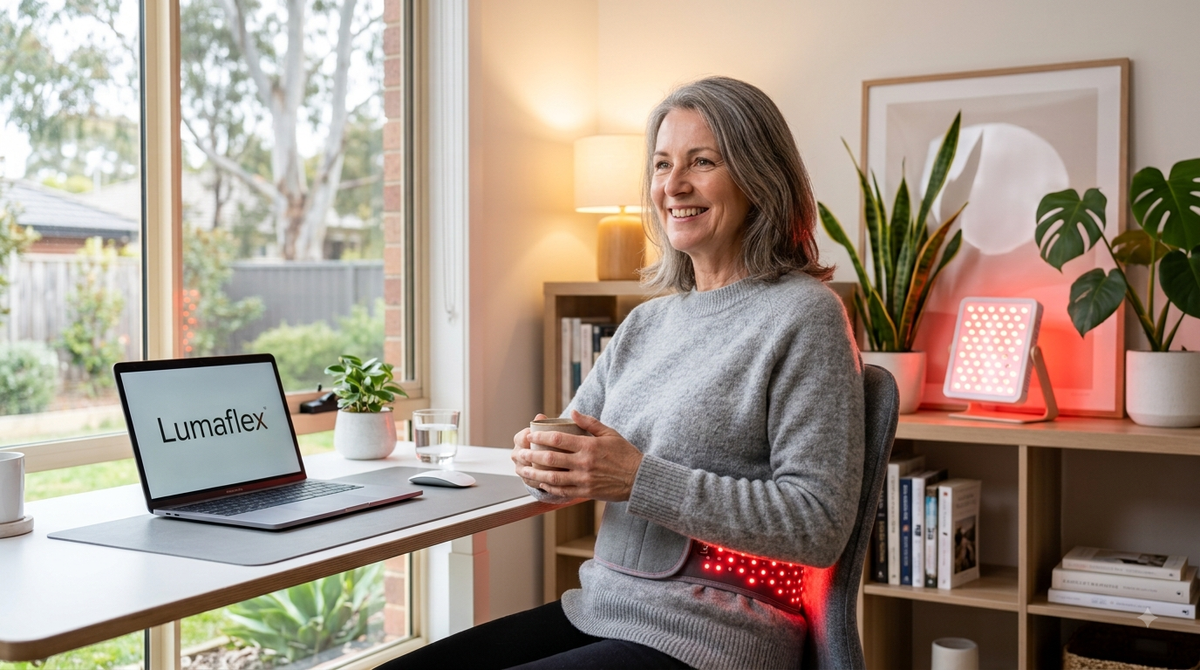
Dealing with chronic lower back tightness or sciatica while sitting at a desk all day can ruin your focus and productivity. While heating pads provide temporary surface warmth, Red Light Therapy (Photobiomodulation) works at a cellular level to support deep-tissue recovery and reduce localized inflammation.
By using dual wavelengths—660nm Red Light for 850nm Near-Infrared (NIR) Light- it supports mitochondrial energy production ($ATP$).
Below are our top 4 tested recommendations for wearable belts and targeted panels to soothe back pain during or after the workday.
At a Glance: Top Light Therapy Devices Compared
| Product | Form Factor | Wavelengths | Power / Portability | Primary US Market Fit |
| Lifepro AllevaRed Belt | Wearable Wrap | 660nm + 850nm | AC Adapter / Power Bank | Best Overall / Lifetime Warranty |
| Hooga HG300 Panel | Tabletop Panel | 660nm + 850nm | US 120V Wall Cord | Best High-Irradiance Panel |
| Targeted Belt | 660nm + 850nm | USB / Wall Adapter | Best Budget Choice ($80–$120) | |
| Mito Red Light Belt | Flexible Wrap | 630/660nm + 810/850nm | Portable Battery Pack | Best Quad-Wavelength Tech |
Detailed Reviews: Tested Light Therapy for Back Pain
Lifepro Allevared Pro Red Light Therapy Belt
The Lifepro AllevaRed is one of the top-selling wearable wraps on Amazon.com.
It is widely preferred by US remote workers because it features a flexible design and includes a lifetime warranty, making it a high-trust purchase.
US Fit: Comes standard with a US 110V power supply and is FSA/HSA eligible, allowing US buyers to use tax-free health savings accounts.
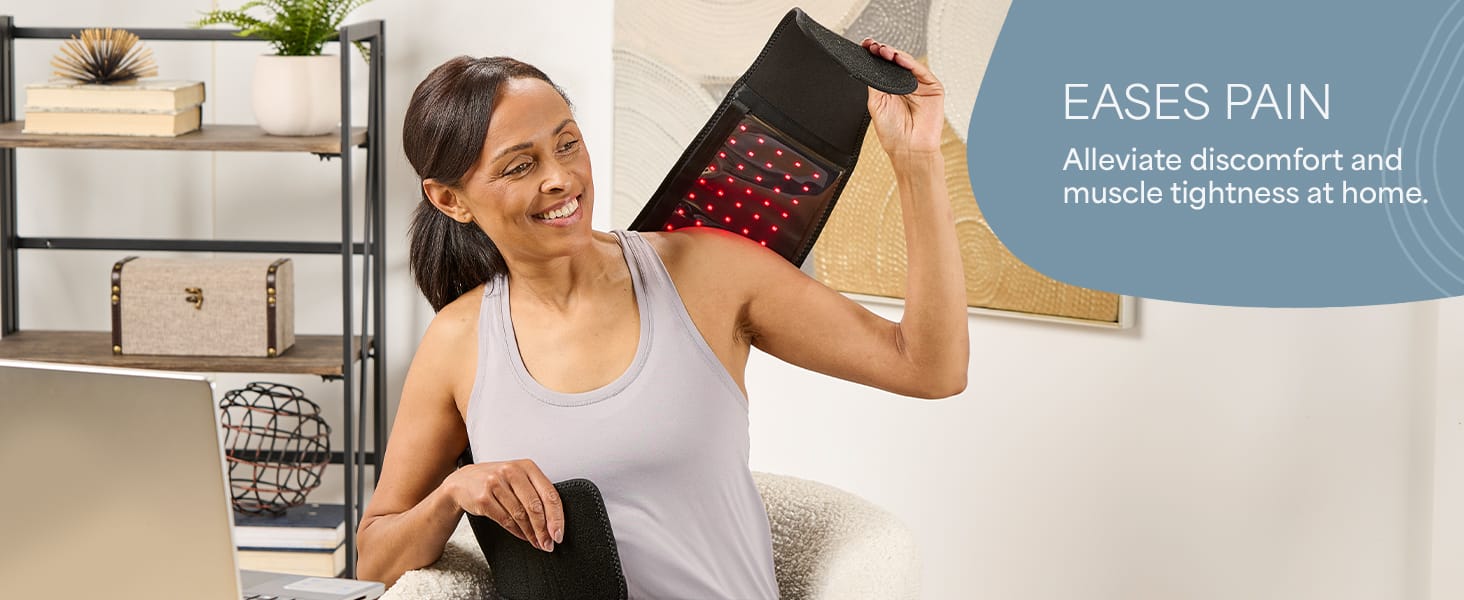
Hooga HG300 Red Light Therapy Panel - Best High-Irradiance Tabletop Panel
You don't need to spend $400+ to access photobiomodulation technology. The Comfytemp RLT Wrap provides dual-chip technology at a budget-friendly price point.
- Pulse Modes & Timer: Features 10Hz and 40Hz pulse settings alongside a 15-minute auto-shutoff timer to prevent over-exposure.
- Target Area: Generous 12" x 6" active LED surface covers the lower lumbar area, hips, or upper glutes seamlessly.
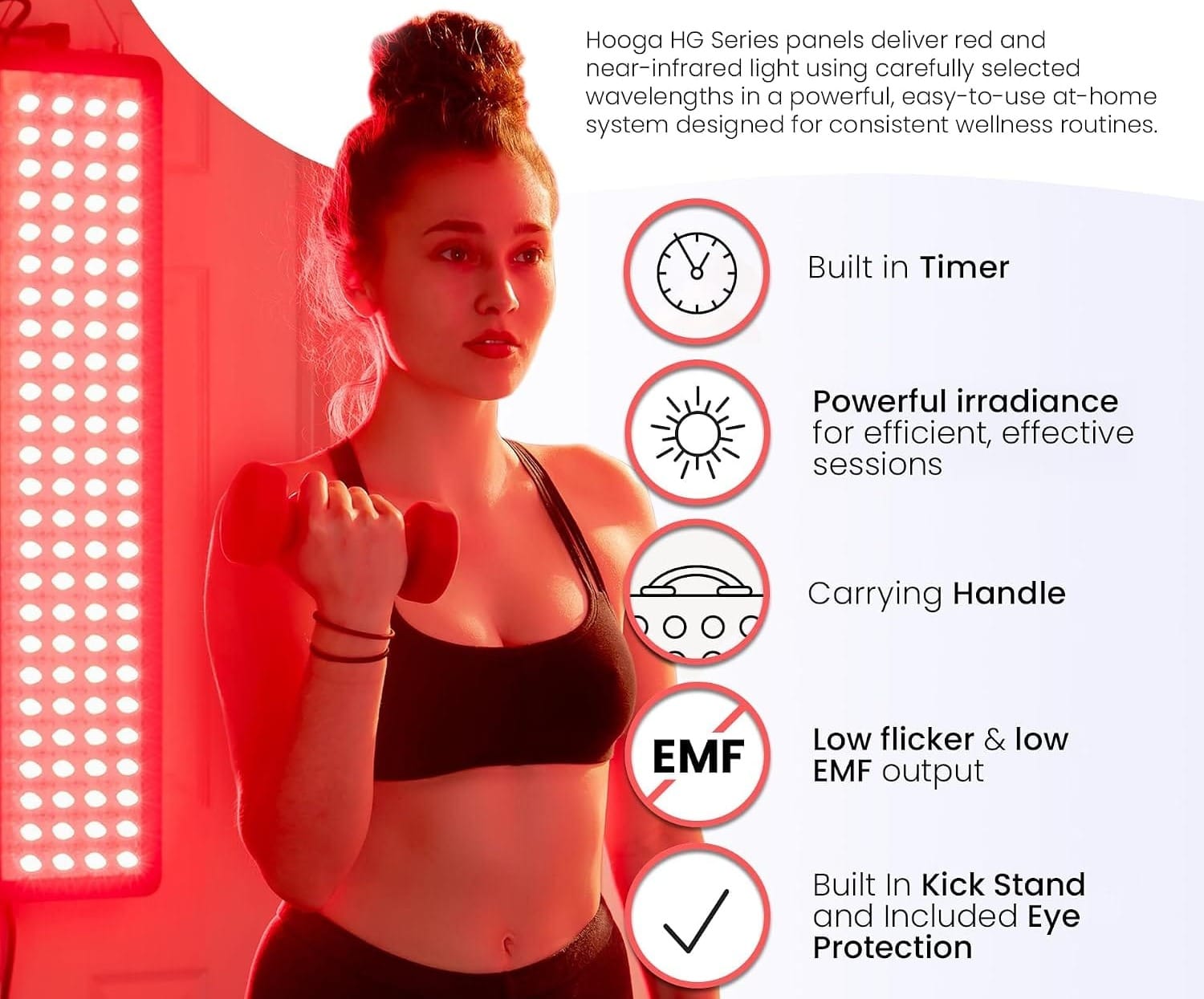
Comfytemp Red Light Belt
The Comfytemp Red Light Belt is a frequent Amazon US "Best Seller" in physical therapy wraps, offering high-intensity 660nm and 850nm dual-chip LEDs under $100.
US Fit: Operates using a standard USB-A interface, allowing connection to a laptop dock, US wall block, or standard portable power bank.
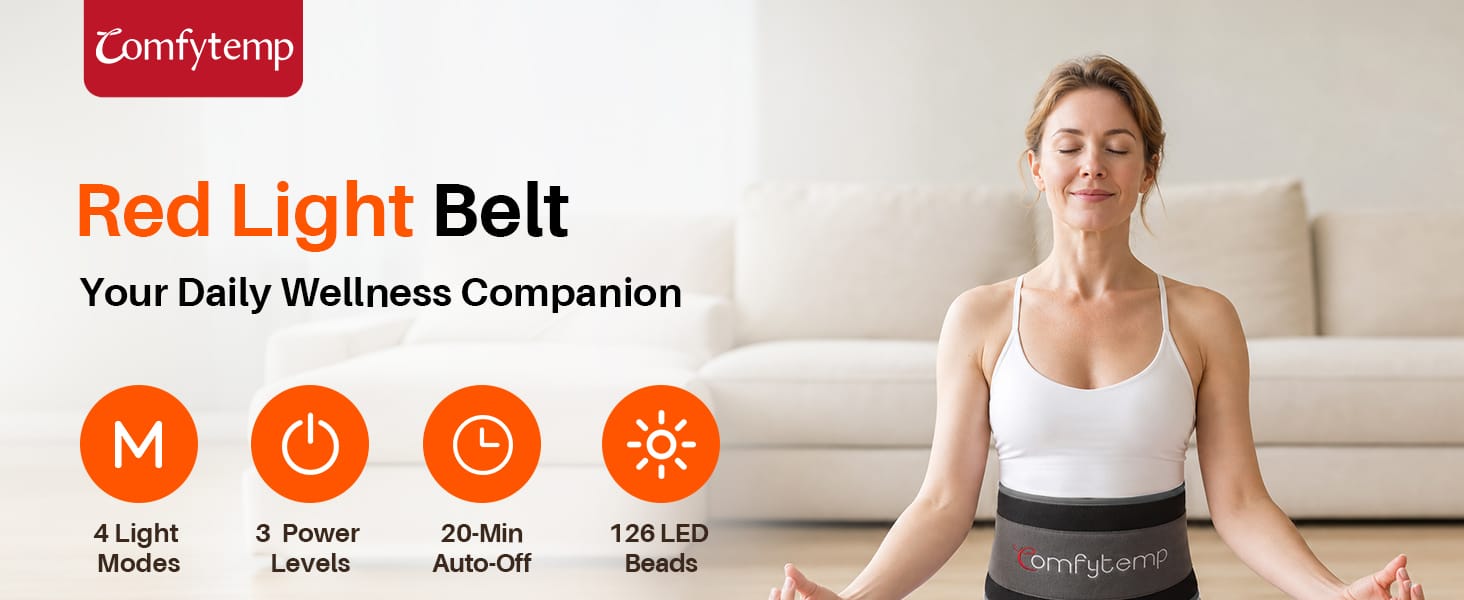
Mito Red Light Belt
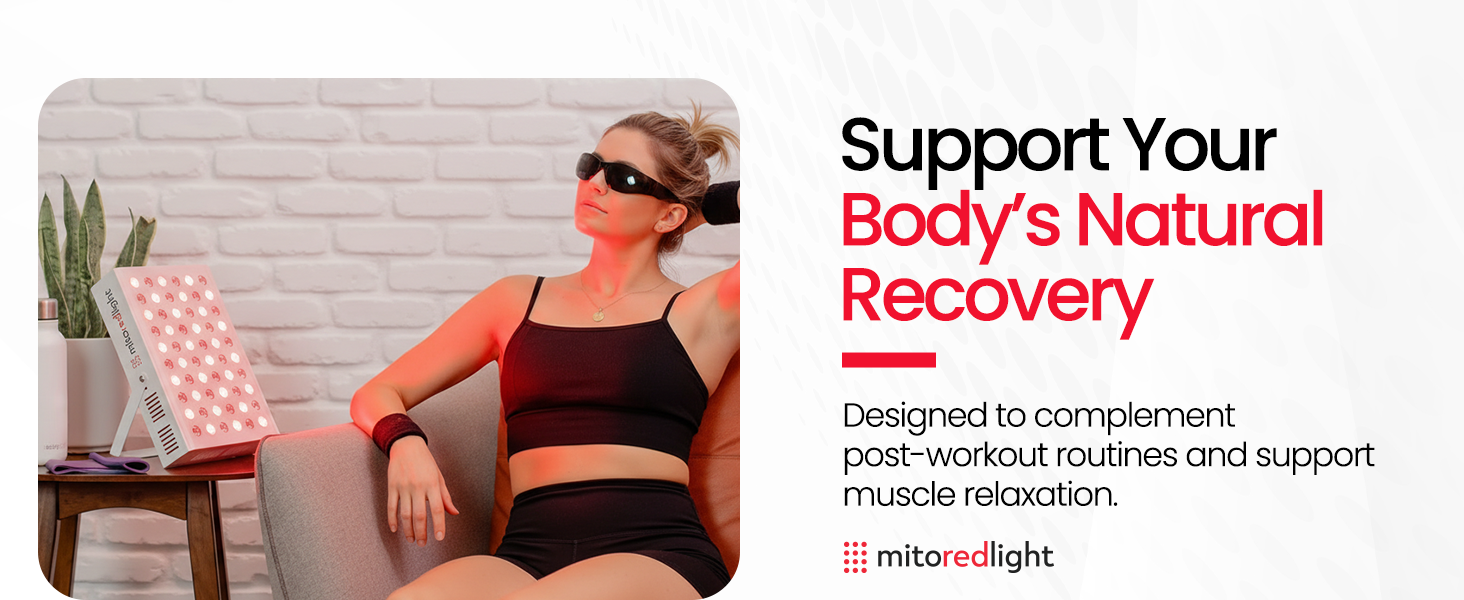
The Mito Red Light Belt targets the premium US segment ($300+). Instead of dual wavelengths, it uses quad-wavelength technology (630nm, 660nm, 810nm, and 850nm) to target both surface skin and deep muscle layers.
- US Fit: Uses an external rechargeable battery pack so users can walk around or sit at a desk cordless.
Key Buyer Checklist: What to Look For
- Wavelength Pairings: Always choose devices that combine 660nm (Visible Red) and 850nm (Near-Infrared). Red light targets superficial tissues, while Near-Infrared penetrates deeper into muscle and joint structures.
- Irradiance ($mW/cm^2$): Higher irradiance means your cells receive an effective optical dose in less time (typically 10 to 20 minutes per session).
- Fit & Portability: For desk workers, flexible wraps with Velcro straps stay in position while you work, whereas panels require you to remain in front of the device.
Frequently Asked Questions
Q: How often should I use red light therapy for lower back pain?
Answer: If you're considering red light therapy for lower back pain, a common starting point is 2–3 sessions per week, following the treatment time and distance recommended by your device manufacturer.
Red light therapy, also called photobiomodulation therapy (PBMT) or low-level light therapy, uses red and/or near-infrared light directed at the body. It is often promoted as a non-invasive way to support pain management and recovery.
However, there is an important caveat: research specifically on lower back pain has produced mixed results. A systematic review of 12 randomized controlled trials found that PBMT did not produce a clinically important improvement in pain or disability compared with sham treatment for nonspecific low back pain.
A reasonable starting schedule
If your healthcare professional has no concerns about you using a red or near-infrared light device, you could consider:
- 2–3 sessions per week
- Follow the manufacturer's recommended session length
- Leave at least several hours between sessions unless your device instructions say otherwise
- Reassess how you're feeling after a few weeks rather than automatically increasing the frequency
There isn't one universally established schedule for home red light therapy for lower back pain. Clinical studies have used very different protocols. For example, one study used treatment three times per week for four weeks, while another home-based laser study published in 2026 used 20-minute treatments five days per week for three weeks.
This variation is important because more sessions aren't necessarily better. Light therapy depends on factors such as wavelength, irradiance, treatment distance, and total energy dose. Two devices can look similar but deliver very different amounts of light.
Red light vs. near-infrared light
Many devices marketed for muscle and joint applications use both red and near-infrared wavelengths. Near-infrared light is generally intended to penetrate deeper than visible red light, which is one reason it is commonly included in devices marketed for areas such as the lower back.
When choosing a device, don't focus only on the number of LEDs or the brightness. Look for clear information about the wavelength, irradiance, recommended distance, and treatment time.
Should you use it every day?
Not necessarily.
Some research protocols have used daily or near-daily treatments, while others have used only two or three sessions per week. For example, a clinical trial protocol investigating PBMT combined with exercise used treatments twice weekly for six weeks.
For home use, it's generally better to follow the manufacturer's protocol rather than assume that daily treatment will provide faster results.
Don't rely on red light therapy alone
If you're dealing with persistent lower back pain, red light therapy should not replace evidence-based approaches such as staying appropriately active, exercise, or professional assessment when needed.
Think of it as a potential adjunct, rather than a standalone solution.
You should also speak with a healthcare professional if your back pain is severe, persistent, getting worse, or accompanied by symptoms such as significant weakness, numbness, fever, unexplained weight loss, or problems controlling your bladder or bowel.
For someone trying red light therapy at home for lower back discomfort, 2–3 sessions per week is a reasonable conservative starting point, provided it is consistent with the device's instructions. Give it several weeks and pay attention to whether your pain and function actually improve.
Most importantly, don't assume that increasing the frequency will automatically increase the benefit. Current research on photobiomodulation for nonspecific lower back pain remains mixed, so it's best viewed as a complementary option rather than a proven cure.
If your lower back pain continues or interferes with normal activities, getting the underlying cause assessed is more important than simply increasing your red light therapy sessions.
Q: Is near-infrared light safe for daily use?
Answer: For most healthy adults, near-infrared (NIR) light used at appropriate, manufacturer-recommended doses appears to be generally well tolerated. However, “safe for daily use” depends on the device, wavelength, intensity, treatment time, distance, and where the light is being applied.
Near-infrared light is increasingly used in home photobiomodulation (PBM) devices for wellness, skincare, muscle recovery, and other applications. Research on home-use PBM devices has generally reported favorable safety outcomes, although researchers have also noted that more high-quality studies are needed to establish optimal treatment schedules and long-term effects.
What is near-infrared light?
Near-infrared light is part of the electromagnetic spectrum just beyond visible red light. Unlike ultraviolet (UV) radiation, NIR used in photobiomodulation is generally delivered at relatively low energy levels and is intended to produce biological effects without damaging tissue.
PBM devices commonly use LEDs or other light sources at specific wavelengths. The FDA recognizes photobiomodulation devices as a category of medical devices and has published guidance addressing their safety and performance evaluation.
Can you use NIR light every day?
Possibly, but more isn't necessarily better.
PBM appears to have a dose-dependent effect. The appropriate combination of wavelength, intensity, exposure time, and treatment frequency matters. A systematic review of home-use PBM devices found that studies commonly used treatments several times per week, with generally favorable safety results, but also concluded that additional randomized studies are needed.
If your device manufacturer recommends daily sessions, following those instructions is generally more sensible than creating your own longer or more frequent treatment schedule.
Using a higher intensity or substantially longer session simply because you want faster results isn't necessarily beneficial and could increase the likelihood of unwanted effects.
What are the potential side effects?
When used correctly, PBM is generally considered well tolerated. However, possible problems can include:
- Temporary skin warmth or redness
- Skin irritation or discomfort
- Headache or eye discomfort in some circumstances
- Excessive heat if the device produces significant thermal energy
- Eye injury if sufficiently intense light is directed toward the eyes
The eyes deserve particular attention. NIR can be invisible to humans, meaning you may not instinctively look away from it. Recent PBM safety literature emphasizes eye protection and appropriate device-specific precautions, particularly with higher-powered systems.
What about your eyes?
This is probably the most important safety consideration.
Don't assume that because NIR light is invisible, it is automatically harmless to your eyes. The safety of light exposure depends on the wavelength and optical power reaching the eye.
Research on light therapy has generally found no evidence of ocular damage in healthy people under studied conditions, but safety can be different for people with existing eye conditions or increased photosensitivity.
If your device manufacturer recommends protective eyewear, use it. And don't stare directly into high-powered LEDs or NIR sources.
If you have an eye condition, have recently had eye surgery, or take medication that increases photosensitivity, it's sensible to ask your eye doctor or healthcare professional before using NIR around the face or eyes.
Q: Is NIR the same as infrared heat lamps?
Answer: No—and this distinction matters.
Some infrared products are designed primarily to produce heat, while photobiomodulation devices are designed to deliver controlled light exposure at specific wavelengths and doses.
The FDA distinguishes between different types of infrared devices, including non-thermal light-based devices and infrared lamps intended to provide topical heating.
Therefore, don't assume that safety information for one type of infrared product automatically applies to another.
Q: How can you use NIR more safely?
Answer: If you're using an at-home NIR or red-light device, a sensible approach is:
1. Follow the manufacturer's instructions.
Use the recommended distance, session duration, and frequency.
2. Don't increase exposure unnecessarily.
Longer sessions aren't automatically better.
3. Protect your eyes when instructed.
Especially when using higher-powered devices near the face or head.
4. Monitor your skin.
Stop if you experience persistent burning, significant irritation or unusual skin reactions.
5. Give your body time to respond.
There's usually little reason to dramatically increase treatment frequency simply because you don't see immediate results.
6. Use a reputable device.
Look for clear specifications about wavelength, irradiance/output, and recommended exposure times rather than relying solely on marketing claims.
Q: Who should be more cautious?
Answer: You should consider talking with a healthcare professional before regular NIR/PBM use if you:
Have an existing eye condition
- Recently underwent eye or other surgery
- Take photosensitizing medication
- Have a condition that makes you unusually sensitive to light
- Are using NIR over an area with a significant medical condition
- Are pregnant and considering use for a medical purpose
- Are using a high-powered or professional-grade device at home
This doesn't mean NIR is necessarily unsafe for these groups. It means that the evidence and appropriate dose may differ, so individualized medical advice is worthwhile.
So, is daily NIR light safe?
For many healthy adults, appropriately dosed NIR photobiomodulation appears to have a favorable safety profile, but daily use shouldn't be interpreted as universally safe for every device or every person.
The key is dose and device specifications. A low-intensity consumer PBM device used according to its instructions is very different from a high-powered professional system used for extended periods.
There's also an important distinction between “generally well tolerated” and “proven safe indefinitely.” Current research supports favorable short-term tolerability, but long-term safety data are still less established for many specific devices and treatment protocols. A 2026 review of red and NIR PBM in ophthalmology similarly noted that clinical evidence varies substantially by device, wavelength, dose and protocol, with long-term safety still requiring further study.
Bottom line: If you're a healthy adult using a reputable NIR/PBM device, follow its recommended exposure time, distance and frequency rather than assuming that daily or longer sessions will provide greater benefits. When using NIR around your face or head, pay particular attention to eye safety.