
Best Foam Rollers for Back Pain and Muscle Recovery: A Guide
Discover the best foam rollers for back pain, tight muscles and workout recovery. Compare foam roller types, firmness, sizes and features before buying.
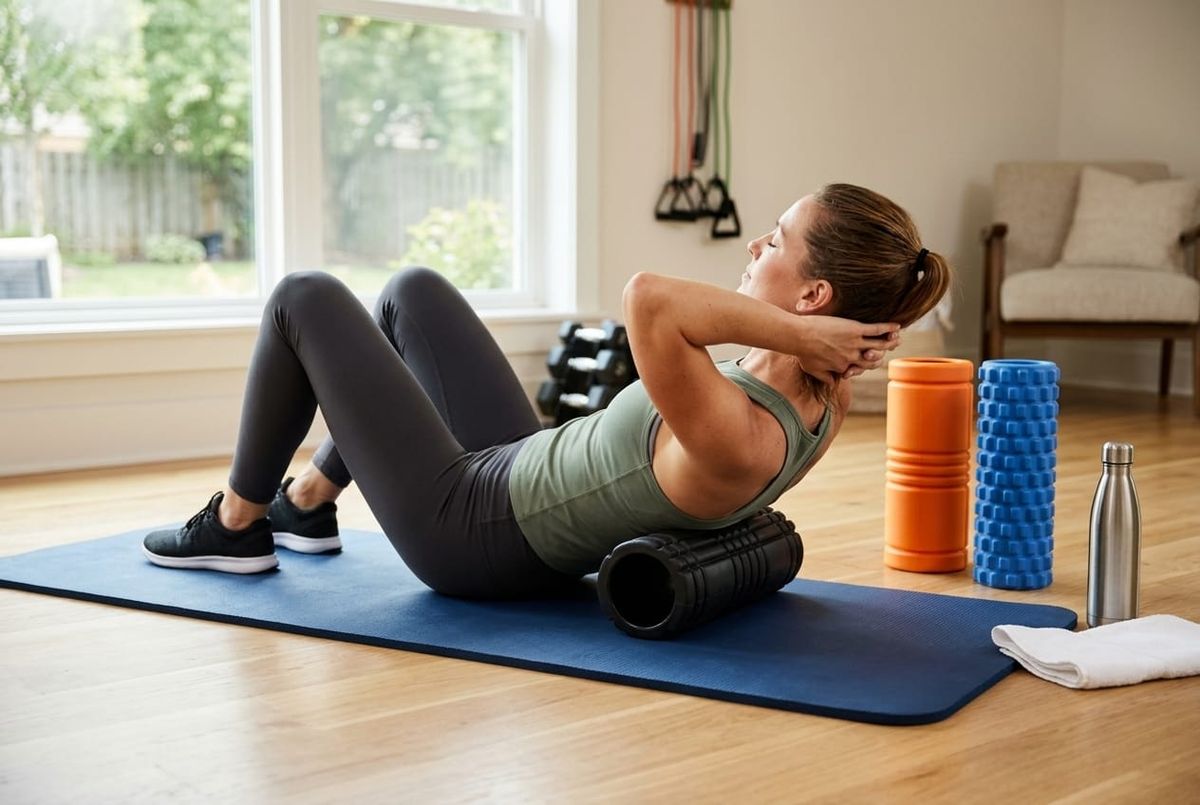
Back discomfort, muscle tightness, and post-workout soreness can make everyday activities feel more challenging. Whether you spend long hours sitting at a desk, enjoy regular workouts, or lead an active lifestyle, finding simple ways to support muscle recovery and mobility can make a difference. One popular option is foam rolling, a self-massage technique that uses a cylindrical or textured roller to apply gentle pressure to targeted muscle groups.
But with so many options available, how do you choose the best foam rollers for back pain and muscle recovery? From smooth, high-density rollers to textured and vibrating models, each type offers different features, pressure levels, and benefits. Understanding these differences can help you find a roller that suits your comfort level, fitness routine, and recovery needs.
In this guide, we'll explore how foam rollers work, their potential benefits, the different types available, and the key features to consider before buying. We'll also look at how to use them safely and which options may be better suited to beginners, athletes, and people looking to ease everyday muscle tension. Whether you're new to foam rolling or considering an upgrade, this guide will help you make a more informed choice.
Buyer's Guide
For Best Foam Rollers for Back Pain
Why Choosing the Right Foam Roller Matters
Whether you spend hours sitting at a desk, enjoy regular gym sessions or lead an active lifestyle, muscle tightness and soreness can affect how comfortably you move throughout the day.
A stiff upper back after working at a computer, tight legs after running or sore muscles following strength training are common experiences. One simple fitness accessory that may help manage this discomfort is a foam roller.
Foam rollers are widely used by athletes, fitness enthusiasts and people looking for convenient ways to massage tight muscles at home. They apply controlled pressure to soft tissue, helping improve flexibility, mobility and short-term muscle comfort.
However, not all foam rollers are created equal. Some are designed for beginners who prefer gentle pressure, while others offer firmer support or textured surfaces for more targeted massage.
So, which foam roller should you buy?
In this guide, we'll explore the best types of foam rollers for different needs, explain what features matter when shopping, and help you find an option that suits your fitness routine, experience and budget.
1. What Is a Foam Roller and How Does It Work?
A foam roller is a cylindrical fitness accessory typically made from expanded polypropylene (EPP), ethylene-vinyl acetate (EVA) or similar foam materials.
It is used for a technique known as self-myofascial release. This involves applying gentle, controlled pressure to muscles and surrounding soft tissues.
By using your body weight to move over the roller, you can target areas that feel tight or sore.
Regular foam rolling may help:
- Reduce the feeling of muscle tightness.
- Improve short-term flexibility and range of motion.
- Ease perceived muscle soreness after exercise.
- Support warm-up and cool-down routines.
- Improve comfort after prolonged sitting or physical activity.
Research suggests foam rolling can provide short-term improvements in mobility and perceived soreness. However, it should not be considered a cure for back pain, a substitute for rehabilitation or a guaranteed way to prevent injuries.
2. The Best Types of Foam Rollers for Different Needs
Before purchasing a foam roller, consider how you intend to use it. The right choice depends on your experience, preferred pressure and the muscle groups you want to target.
Here are the main types worth considering.
A. Smooth Foam Rollers – Best for Beginners
Smooth foam rollers have a uniform surface without raised bumps or ridges.
They provide relatively even pressure across the targeted muscle group, making them a practical starting point for people new to foam rolling.
Best for:
- Beginners learning foam rolling techniques.
- People who prefer gentle, consistent pressure.
- General stretching and mobility routines.
- Light muscle massage after exercise.
Advantages:
- Simple and easy to use.
- Suitable for larger muscle groups.
- Generally comfortable for beginners.
- Often available at affordable prices.
Potential drawback: They may not provide the more targeted sensation some experienced users prefer.
Buying tip: If you have never used a foam roller before, consider starting with a medium-density smooth roller rather than an extremely firm model.
B. High-Density Foam Rollers – Best for Firm Support
High-density foam rollers are designed to maintain their shape under pressure and provide a firmer massage experience.
They are popular among regular gym users, runners and people who prefer more substantial pressure when working on larger muscle groups.
Best for:
- Experienced foam roller users.
- Athletes and regular gym-goers.
- Quadriceps, hamstrings and calves.
- People who prefer a firmer massage.
Advantages:
- Durable construction.
- Maintains its shape with repeated use.
- Provides firm and consistent pressure.
- Suitable for regular exercise routines.
Potential drawback: They can feel uncomfortable for beginners or people with sensitive muscles.
Buying tip: Look for a high-density EPP or quality EVA construction. Remember that firmer does not automatically mean better.
C. Textured Foam Rollers – Best for Targeted Muscle Massage
Textured foam rollers feature raised ridges, grooves or patterned surfaces.
These designs create different pressure sensations as you move across the roller. Some users prefer them for targeting specific muscle areas.
Best for:
- Regular fitness enthusiasts.
- Targeted muscle massage.
- Legs, glutes and larger muscle groups.
- Users who prefer varied pressure sensations.
Advantages:
- Different surface patterns provide varied pressure.
- Can target specific muscle areas.
- Useful for a more personalised massage experience.
Potential drawback: Aggressive textures may be uncomfortable, particularly for beginners or people with sensitive areas.
Buying tip: Choose a moderate texture rather than a roller with extremely aggressive ridges if you are new to foam rolling.
D. Vibrating Foam Rollers – Best for Premium Recovery Features
Vibrating foam rollers combine a traditional foam roller with built-in vibration technology.
Depending on the model, users can select different vibration intensities to customise their experience.
Best for:
- Fitness enthusiasts who regularly train.
- People who prefer vibration-based massage.
- Users looking for additional recovery features.
- Those willing to spend more on specialised equipment.
Advantages:
- Adjustable vibration settings on many models.
- Combines rolling pressure with vibration.
- May offer a more customised experience.
Potential drawback:
- More expensive than standard foam rollers.
- Requires charging or batteries.
- Additional features may not provide meaningful benefits for every user.
Buying tip: Compare battery life, vibration settings, charging time, noise levels and warranty before purchasing.
E. Half-Round Foam Rollers – Best for Stability and Balance Exercises
Unlike traditional cylindrical rollers, half-round foam rollers have one flat side and one curved side.
They are commonly used in physical therapy, stretching, balance training and exercise routines.
Best for:
- Beginners who want a stable exercise surface.
- Balance and stability exercises.
- Stretching and mobility routines.
- Pilates and rehabilitation exercises under appropriate guidance.
Advantages:
- Flat surface provides additional stability.
- Useful for balance exercises.
- Can support different stretching positions.
Potential drawback: They are less versatile for traditional full-body rolling exercises.
F. Massage Balls – Best for Small, Targeted Areas
Although not technically foam rollers, massage balls are useful accessories to consider.
Their compact design makes it easier to apply controlled pressure to smaller areas that a full-sized roller cannot comfortably reach.
Best for:
- Feet and calves.
- Glutes.
- Areas around the shoulder muscles.
- Targeted muscle massage.
A massage ball can complement a foam roller, particularly if you want to work on smaller muscle groups.
How to Choose the Best Foam Roller
7 Important Features
With so many options available, choosing the right foam roller can become confusing. Here are seven factors worth considering before making a purchase.
1. Firmness and Density
Firmness is one of the most important considerations.
Foam rollers generally fall into three broad categories:
| Firmness | Best suited for |
|---|---|
| Soft | Beginners and sensitive muscles |
| Medium | General fitness and everyday use |
| Firm | Experienced users and regular training |
If you are new to foam rolling, start with a softer or medium-density option.
You can consider a firmer roller as your experience and comfort level increase.
2. Length and Diameter
Foam rollers are available in different lengths and diameters.
Common lengths include:
- 12 inches: Compact and travel-friendly.
- 18 inches: Suitable for smaller spaces and targeted exercises.
- 24 inches: A versatile option for many home workouts.
- 36 inches: Provides a larger rolling surface for full-body exercises.
Most standard foam rollers are approximately 6 inches in diameter.
Which size should you choose?
For general home use, a 24-inch or 36-inch roller is a practical option. If portability is important, consider a shorter model.
3. Material and Durability
The material affects the roller's firmness, durability and overall feel.
Common materials include:
- EVA foam: Often offers a comfortable balance of cushioning and firmness.
- EPP foam: Typically lightweight, firm and durable.
- PE foam: Commonly used in softer, more affordable rollers.
Check the manufacturer's specifications and look for a product that maintains its shape after repeated use.
4. Surface Texture
The surface design can influence your experience.
Smooth rollers offer consistent pressure, while textured rollers provide different pressure sensations.
If you are buying your first foam roller, a smooth surface is usually a sensible starting point.
5. Weight and Portability
If you plan to take your foam roller to the gym, office or while travelling, consider its weight and size.
Compact rollers are easier to carry and store, while longer models provide more versatility for home workouts.
6. Cleaning and Maintenance
Foam rollers come into direct contact with your skin and workout surfaces.
Choose a model with a non-porous or easy-to-clean surface where possible.
Check the manufacturer's cleaning instructions and avoid harsh chemicals that could damage the foam.
7. Price and Warranty
Foam rollers are available across different price ranges.
A basic roller may be sufficient for everyday stretching, while premium vibrating models offer additional features.
Before buying, compare:
- Material quality.
- Construction and durability.
- Available sizes.
- Warranty coverage.
- Customer feedback.
- Return policy.
Do not pay extra for features you are unlikely to use.
Our Top 5 Picks
Best Foam Rollers for Back Pain and Muscle Recovery
Choosing the right foam roller depends on how you plan to use it, how much pressure you prefer and which muscle groups you want to target. Some rollers offer a simple, smooth surface for general muscle relaxation, while others feature textured zones for more focused pressure.
We've selected five foam rollers worth considering, ranging from affordable everyday options to more specialised massage tools and multi-piece recovery kits. Each has a different purpose, so the best choice will depend on your experience level, comfort preferences and recovery routine.
How we rated these products: Our editorial ratings consider five factors: overall usability, comfort, versatility, construction and value for money. These are comparative editorial scores based on available product information, not results from hands-on laboratory testing. Product prices, availability and customer ratings can change, so check the latest Amazon listing before purchasing.
1. TriggerPoint GRID 1.0 Foam Roller – Best Overall
Rating: 4.8/5
Best for: Regular exercisers, athletes and people who prefer targeted muscle massage.
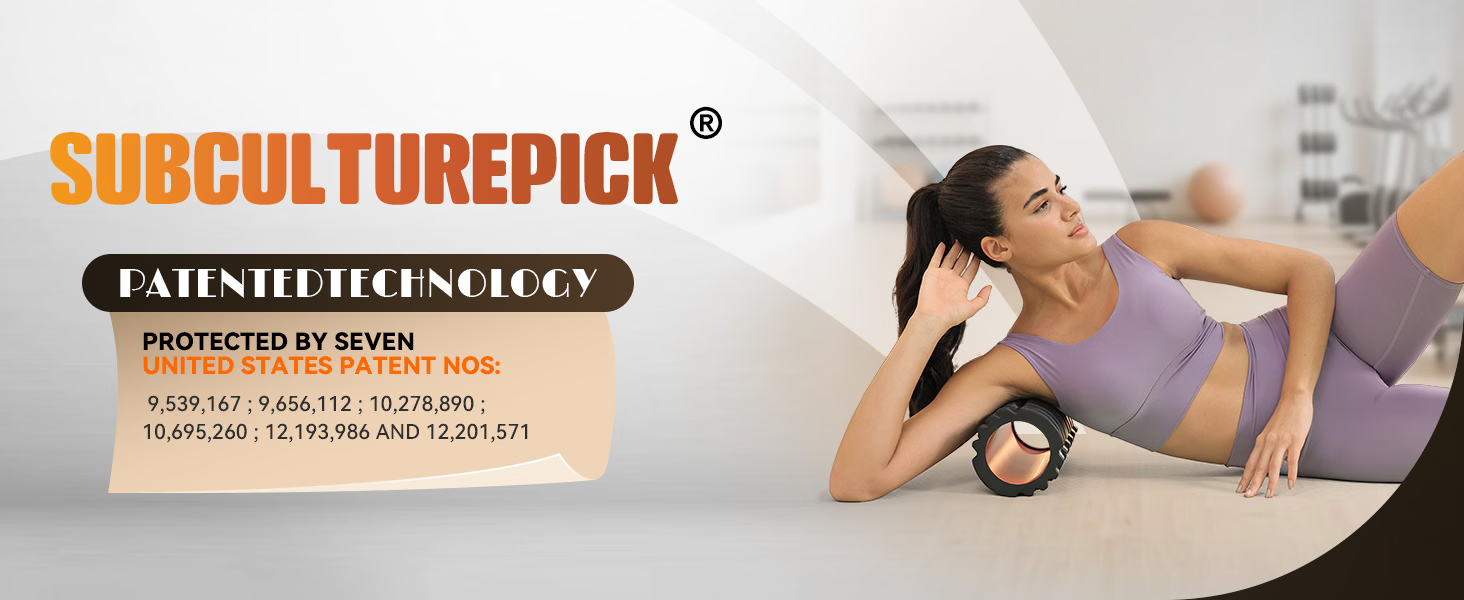
The TriggerPoint GRID 1.0 is a popular choice for those seeking a more specialised foam rolling experience. Its 13-inch design features a multi-density surface with different patterns and raised areas intended to provide varying levels of pressure during rolling.
Unlike a traditional smooth foam roller, the GRID has a hollow core wrapped in EVA foam. Its textured surface allows users to experiment with different pressure sensations when working on areas such as the calves, quadriceps, hamstrings and upper back.
Its compact size also makes it convenient to carry to the gym or take when travelling. However, its shorter length means it is less suitable for exercises that require full-body support.
Pros
- Multi-density textured surface offers different massage sensations.
- Hollow core is designed to retain its shape with regular use.
- Compact and convenient for home, gym and travel.
- Suitable for targeting individual muscle groups.
- Established brand with a recognisable foam roller design.
Cons
- More expensive than basic smooth foam rollers.
- Firm texture may feel uncomfortable for beginners.
- Shorter 13-inch length limits some full-body exercises.
- Raised sections may provide more pressure than some users prefer.
Editorial ratings
| Evaluation criteria | Rating |
|---|---|
| Overall usability | 4.8/5 |
| Comfort and pressure control | 4.3/5 |
| Versatility | 4.7/5 |
| Construction and durability | 4.8/5 |
| Value for money | 4.5/5 |
| Overall rating | 4.8/5 |
Our verdict: The TriggerPoint GRID 1.0 is our best overall recommendation for people who regularly exercise and want a durable, textured roller for targeted muscle recovery. Beginners who are sensitive to firm pressure may prefer starting with a smoother option.
Check price and availability on Amazon
2. Amazon Basics High-Density Foam Roller, 18 Inches – Best Budget Option
Rating: 4.7/5
Best for: Beginners, everyday exercise routines and affordable muscle recovery.
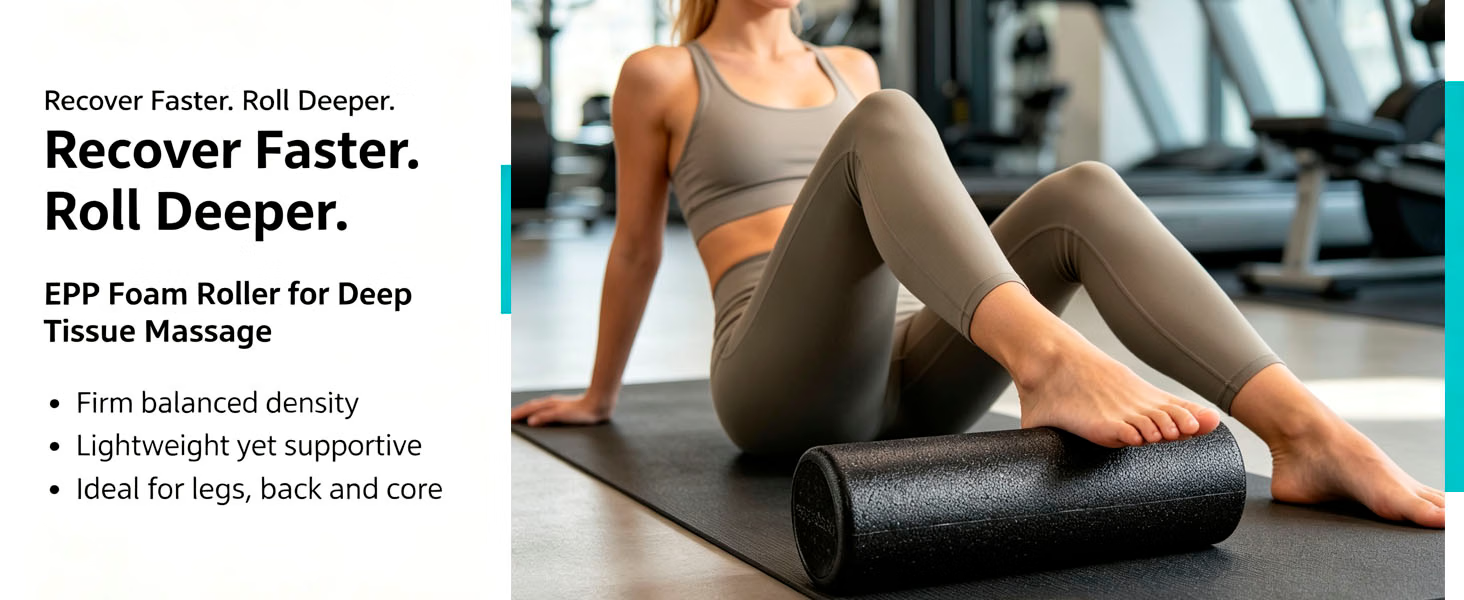
Sometimes a simple design is all you need. The Amazon Basics High-Density Foam Roller is a straightforward option for people who want a practical recovery tool without spending too much.
Its 18-inch length provides a useful balance between portability and coverage, making it suitable for common exercises involving the legs, calves, thighs and upper back. Its smooth surface distributes pressure over a broader contact area than a deeply textured roller.
The high-density construction provides a firm rolling experience, which can be useful for people who prefer consistent pressure. However, beginners who are not accustomed to foam rolling may find it too firm initially.
Pros
- Affordable option for everyday foam rolling.
- Smooth surface offers a more consistent pressure experience.
- 18-inch length provides reasonable versatility.
- Simple design with no complicated features.
- Suitable for beginners who prefer a basic roller and users on a budget.
Cons
- Smooth surface does not provide targeted pressure like textured rollers.
- Firm density may not suit people who prefer softer pressure.
- Limited specialised features.
- Not as compact as shorter travel-size rollers.
Editorial ratings
| Evaluation criteria | Rating |
|---|---|
| Overall usability | 4.7/5 |
| Comfort and pressure control | 4.5/5 |
| Versatility | 4.6/5 |
| Construction and durability | 4.6/5 |
| Value for money | 5.0/5 |
| Overall rating | 4.7/5 |
Our verdict: If you are buying your first foam roller or want an affordable option for general muscle recovery, the Amazon Basics 18-inch model is a sensible starting point. Its smooth design is straightforward, practical and easy to incorporate into a regular stretching routine.
Check price and availability on Amazon
3. 321 STRONG Patented 3-Zone Massage Roller – Best for Adjustable Massage Sensations
Rating: 4.6/5
Best for: People who want a textured roller with different pressure sensations.
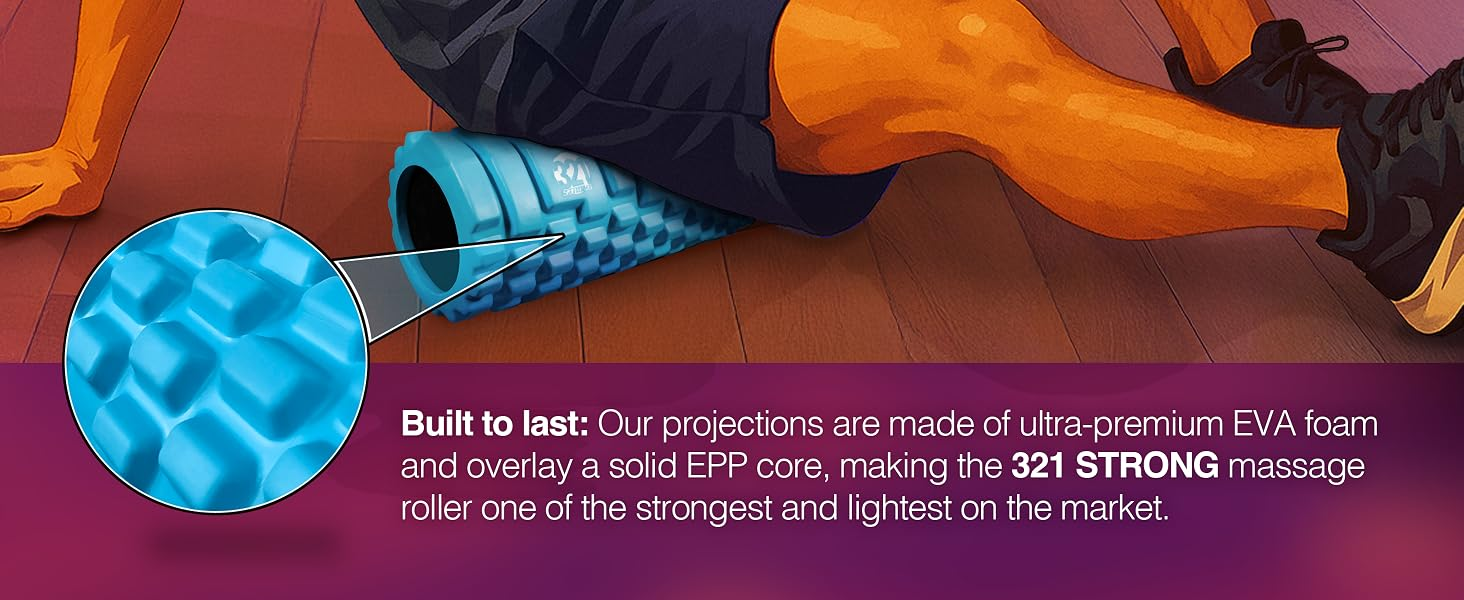
The 321 STRONG Patented 3-Zone Massage Roller offers an alternative to traditional smooth foam rollers. Its distinctive three-zone surface is designed to provide different massage sensations, allowing users to explore varying levels of pressure during their recovery routine.
Its textured construction makes it particularly interesting for people who want something between a basic smooth roller and a more aggressive deep-tissue-style massage roller.
The medium-density design is a useful consideration for people who find extra-firm rollers uncomfortable but still want some texture. It can be used on muscle groups such as the thighs, calves, glutes and upper back.
As with any textured roller, the experience depends on individual pressure tolerance and technique.
Pros
- Three-zone textured surface offers different pressure sensations.
- Medium-density construction may be more approachable than extra-firm rollers.
- Useful for targeting different muscle groups.
- Compact design is convenient for home and gym use.
- Offers a middle ground between smooth and highly aggressive rollers.
Cons
- Textured surface may still feel uncomfortable for pressure-sensitive users.
- Shorter design is less suitable for full-body support exercises.
- May not provide enough firmness for people who prefer very intense pressure.
- Less suitable for users who prefer a completely smooth rolling surface.
Editorial ratings
| Evaluation criteria | Rating |
|---|---|
| Overall usability | 4.7/5 |
| Comfort and pressure control | 4.6/5 |
| Versatility | 4.6/5 |
| Construction and durability | 4.5/5 |
| Value for money | 4.6/5 |
| Overall rating | 4.6/5 |
Our verdict: The 321 STRONG is worth considering if you want the benefits of a textured design without immediately moving to an extra-firm massage roller. It offers an interesting balance for regular exercisers and people who want to experiment with different pressure sensations.
Check price and availability on Amazon
4. High-Density Foam Roller Massager for Back and Leg Muscles – Best for Firm Massage
Rating: 4.3/5
Best for: People who prefer a firm roller for general back and leg muscle massage.
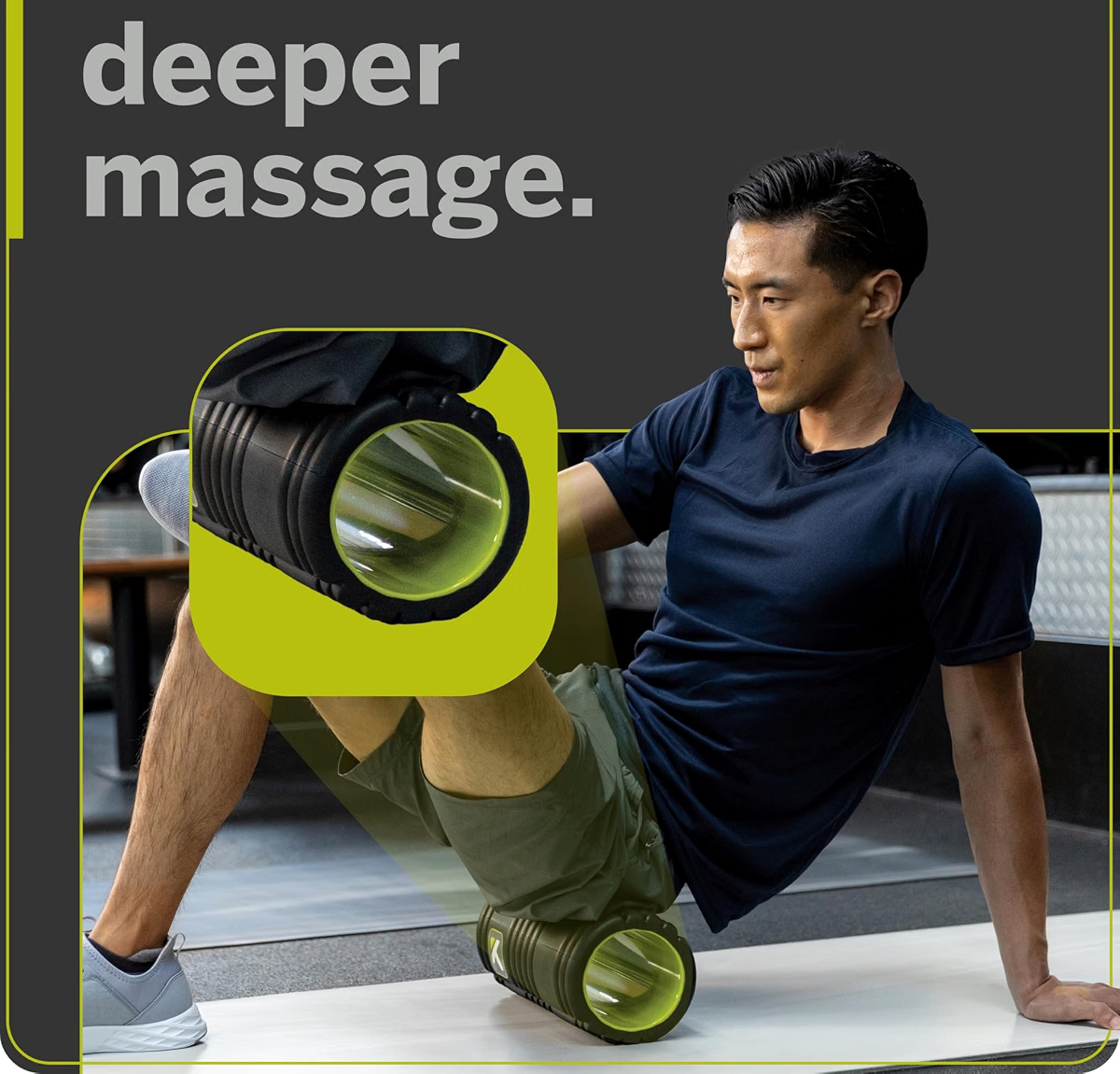
A high-density foam roller can be a useful addition to a stretching and recovery routine, particularly for people who regularly exercise or experience muscle tightness after physical activity.
This model is marketed as a high-density foam roller massager for the back and leg muscles. Its intended use makes it an option for people looking for a straightforward massage tool without investing in a premium branded roller.
A firmer roller can provide consistent pressure when used on larger muscle groups. However, the actual comfort and performance will depend on its dimensions, material density and surface design.
Pros
- High-density design intended for firm rolling pressure.
- Suitable for general back and leg muscle massage.
- Straightforward design without complicated mechanisms.
- Potentially useful for home stretching and post-workout routines.
- An alternative to more expensive branded options.
Cons
- Exact material, dimensions and firmness specifications should be checked before purchasing.
- Limited verified product information makes direct comparisons difficult.
- Firm pressure may not suit beginners or sensitive muscles.
- May lack the specialised texture and construction of premium rollers.
Editorial ratings
| Evaluation criteria | Rating |
|---|---|
| Overall usability | 4.3/5 |
| Comfort and pressure control | 4.1/5 |
| Versatility | 4.3/5 |
| Construction and durability | 4.3/5 |
| Value for money | 4.5/5 |
| Overall rating | 4.3/5 |
Our verdict: This is an option to consider if you want a simple, firm massage roller for general use. Before buying, review the Amazon listing carefully for its dimensions, material, customer feedback and firmness specifications.
Check price and availability on Amazon
5. 5-in-1 Foam Roller Set – Best Multi-Tool Recovery Kit
Rating: 4.5/5
Best for: People who want several massage and stretching accessories in one purchase.
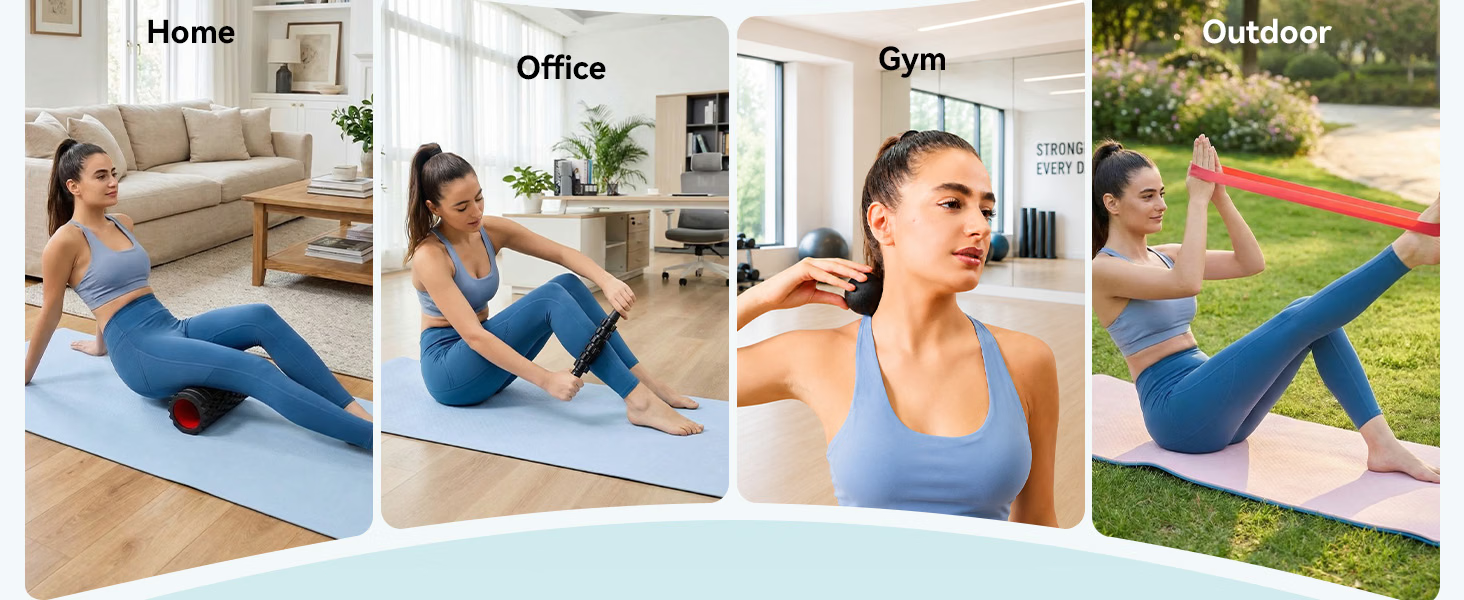
If you want more than a traditional foam roller, a 5-in-1 recovery kit may offer greater flexibility. These sets typically combine a foam roller with additional accessories designed for targeted massage, stretching and muscle recovery.
Depending on the exact kit configuration, accessories may include a massage stick, massage ball, stretching strap and other trigger-point tools. Each accessory serves a different purpose, allowing users to work on muscle groups that may be difficult to reach comfortably with a standard roller.
The main advantage is versatility. Rather than purchasing several recovery accessories separately, you can have a collection of tools available for different exercises and massage techniques.
However, the quality and usefulness of each accessory matter more than the number of items included.
Pros
- Multiple recovery accessories in one purchase.
- Offers more options for targeted massage and stretching.
- Useful for people who exercise regularly.
- Can be convenient for home workout and recovery routines.
- Potentially better value than purchasing individual accessories.
Cons
- Individual accessories may vary in quality and durability.
- Some tools may not be used regularly.
- Requires more storage space than a single foam roller.
- The included roller may be shorter or less versatile than a dedicated full-length model.
- Exact kit contents should be checked before ordering.
Editorial ratings
| Evaluation criteria | Rating |
|---|---|
| Overall usability | 4.5/5 |
| Comfort and pressure control | 4.3/5 |
| Versatility | 5.0/5 |
| Construction and durability | 4.2/5 |
| Value for money | 4.5/5 |
| Overall rating | 4.5/5 |
Our verdict: A 5-in-1 foam roller set is worth considering if you want a broader collection of recovery accessories rather than a single-purpose roller. It is particularly appealing for people who enjoy stretching, exercise and experimenting with different self-massage techniques.
Check the product listing to confirm the exact accessories included, their materials and dimensions before purchasing.
Check price and availability on Amazon
Quick Comparison: Which Foam Roller Should You Choose?
| Product | Best for | Overall rating |
|---|---|---|
| TriggerPoint GRID 1.0 | Overall performance and targeted massage | 4.8/5 |
| Amazon Basics 18-inch | Budget and everyday use | 4.7/5 |
| 321 STRONG 3-Zone | Textured massage with medium density | 4.6/5 |
| 5-in-1 Foam Roller Set | Versatility and multiple accessories | 4.5/5 |
| High-Density Foam Roller Massager | Firm, straightforward massage | 4.3/5 |
Our Final Recommendations
There is no single foam roller that is best for everyone. The right choice depends on your preferred pressure, exercise habits and the muscle groups you want to target.
- Best overall: TriggerPoint GRID 1.0 for its textured, multi-density design and established construction.
- Best budget choice: Amazon Basics High-Density Foam Roller for straightforward everyday use.
- Best textured alternative: 321 STRONG 3-Zone for people who want different pressure sensations.
- Best value for multiple tools: 5-in-1 Foam Roller Set for a more comprehensive recovery kit.
- Best simple firm option: High-Density Foam Roller Massager for people who prefer a basic design.
If you are new to foam rolling, consider starting with a smooth or medium-density roller and gradually exploring firmer or more textured options as your comfort and technique improve.
Remember: Foam rolling may help temporarily ease muscle tightness and improve range of motion, but it is not a treatment for underlying back conditions. Avoid rolling directly over the spine, and seek professional advice if you have persistent or unexplained back pain.
Which Foam Roller Is Best for Different Users?
The best foam roller depends on your individual requirements.
Here is a quick comparison to help narrow down your options.
| Your needs | Recommended type |
|---|---|
| First-time user | Smooth, medium-density |
| General muscle recovery | Medium or high-density |
| Regular gym workouts | High-density |
| Targeted muscle massage | Textured |
| Premium recovery features | Vibrating |
| Balance and stability exercises | Half-round |
| Travel and portability | Compact roller |
Our recommendation: If you are buying just one foam roller for home use, a 24-inch medium-density smooth or lightly textured roller is a versatile starting point for most people.
5. How to Use a Foam Roller Safely
Buying the right foam roller is only half the equation. Using it correctly is equally important.
Here are some general guidelines.
Start with Gentle Pressure
Do not immediately put your full body weight onto the roller.
Begin with gentle pressure and gradually adjust your position as you become comfortable.
Foam rolling should feel like controlled massage pressure, not sharp or intense pain.
Roll Slowly
Move slowly over the targeted muscle group rather than quickly rolling back and forth.
Spend approximately 15–30 seconds exploring a comfortable area, adjusting the duration according to your tolerance.
Focus on Muscle Groups
Common areas for foam rolling include:
- Upper back muscles.
- Glutes.
- Quadriceps.
- Hamstrings.
- Calves.
- Outer hip muscles.
Avoid rolling directly over bones, joints or the spine.
Avoid Direct Pressure on the Lower Back
This is particularly important for people purchasing a foam roller because of back discomfort.
Do not place a foam roller directly under your lower back and repeatedly roll across the lumbar spine without professional guidance.
If you experience persistent back pain, consult a qualified healthcare professional or physical therapist for an appropriate approach.
Stop If You Experience Pain
Mild pressure or temporary tenderness may occur, but sharp pain, numbness, tingling or worsening symptoms are not normal.
Stop if these symptoms occur.
6. Common Foam Rolling Mistakes to Avoid
Even a high-quality foam roller will not provide a good experience if used incorrectly.
Watch out for these common mistakes:
Choosing a roller that is too firm
Many beginners assume that a harder roller provides better results. In reality, excessive pressure can make the experience uncomfortable.
Rolling too quickly
Slow, controlled movements allow you to adjust pressure and identify sensitive areas.
Spending too long on one area
More pressure and longer sessions do not necessarily mean better results. Start with short sessions and see how your body responds.
Rolling directly over the spine
Focus on surrounding muscle groups rather than placing direct pressure on the spinal bones.
Using a foam roller as a substitute for treatment
Foam rolling may help with muscle tightness and temporary discomfort, but it cannot diagnose or treat the underlying cause of persistent back pain.
7. Are Foam Rollers Worth Buying?
For many people, a foam roller is an affordable and convenient addition to a home fitness routine.
It does not require electricity, complicated setup or extensive training to get started.
A foam roller may be particularly useful if you:
- Spend long hours sitting at a desk.
- Exercise regularly and experience muscle soreness.
- Enjoy running, cycling or strength training.
- Want to improve flexibility and mobility.
- Prefer having a simple massage tool at home.
However, it is important to have realistic expectations.
Foam rolling is a recovery and mobility tool, not a medical treatment. Its benefits are generally short-term, and long-term improvements in physical function require appropriate exercise, movement and strength training.
Frequently Asked Questions
Q: What is the best foam roller for back pain?
Answer: A smooth or medium-density foam roller is a reasonable starting point for people looking to address surrounding upper-back muscle tightness. However, foam rolling is not appropriate for every cause of back pain. Seek professional advice for persistent or unexplained symptoms.
Q: Is a high-density foam roller better than a soft foam roller?
Answer: Not necessarily. High-density rollers provide firmer pressure and may suit experienced users. Softer rollers are generally more comfortable for beginners and people with sensitive muscles.
Q: How long should you use a foam roller?
Answer: Start with short sessions of approximately 5–10 minutes, depending on your comfort and the areas being targeted. Avoid prolonged or aggressive rolling over sensitive areas.
Q: Can foam rolling help with lower back pain?
Answer: Foam rolling may help address tightness in surrounding muscles, but it should not be used to apply direct pressure to the lumbar spine. Lower back pain can have many causes, so professional guidance is recommended if symptoms persist.
Q: Should I choose a smooth or textured foam roller?
Answer: Smooth foam rollers provide more uniform pressure and are generally better for beginners. Textured rollers offer different pressure sensations and may suit people who already have experience with foam rolling.
Q: Can you use a foam roller every day?
Answer: Many people can incorporate gentle foam rolling into their daily mobility routines, provided it feels comfortable. However, frequency and technique should be adjusted to individual needs.
Q: Are vibrating foam rollers worth the extra money?
Answer: Vibrating models offer additional features and adjustable settings. However, they are not essential. A standard foam roller may be sufficient for most everyday fitness and mobility routines.
Q: What size foam roller should I buy?
Answer: A 24-inch roller is a versatile choice for many home users. A 36-inch roller provides more support for full-body exercises, while 12-inch and 18-inch models are easier to transport.
Key Takeaway
Which Foam Roller Should You Buy?
The best foam roller is not necessarily the most expensive, firmest or most feature-packed model. It is the one that matches your experience, comfort level and intended use.
For most beginners, a smooth, medium-density foam roller is a sensible first purchase. Regular gym users may prefer a firmer high-density model, while experienced users looking for more targeted pressure may appreciate textured designs.
If you want additional features, vibrating foam rollers are worth considering, although they are not essential for a good recovery routine.
Before purchasing, compare the roller's firmness, dimensions, construction, durability and warranty. Most imp