
Best Ergonomic Footrests for Home Office Setup
Discover the best ergonomic footrests for your home office, with comfortable, adjustable options designed to improve posture and support long workdays.

Switching to a standing desk or an active sitting chair is an effective step toward fixing sitting posture. However, if your feet dangle or rest flat on a hard floor for 8 hours, you still place significant pressure on your lower back and thighs.
An ergonomic footrest or foot rocker completes your dynamic home office setup. By supporting your feet at the correct angle, it aligns your pelvis, reduces pressure on your hamstrings, and keeps blood circulating while you type.
In this guide, we review the top-rated ergonomic footrests popular with US remote workers, ranging from active wooden rockers to medical-grade memory foam cushions.
🔍 Top Recommended Footrests
1. Humanscale FR300 Ergonomic Foot Rocker — Best Overall Active Motion
If you prefer movement throughout your workday, the Humanscale FR300 offers continuous motion without rigid position locks.
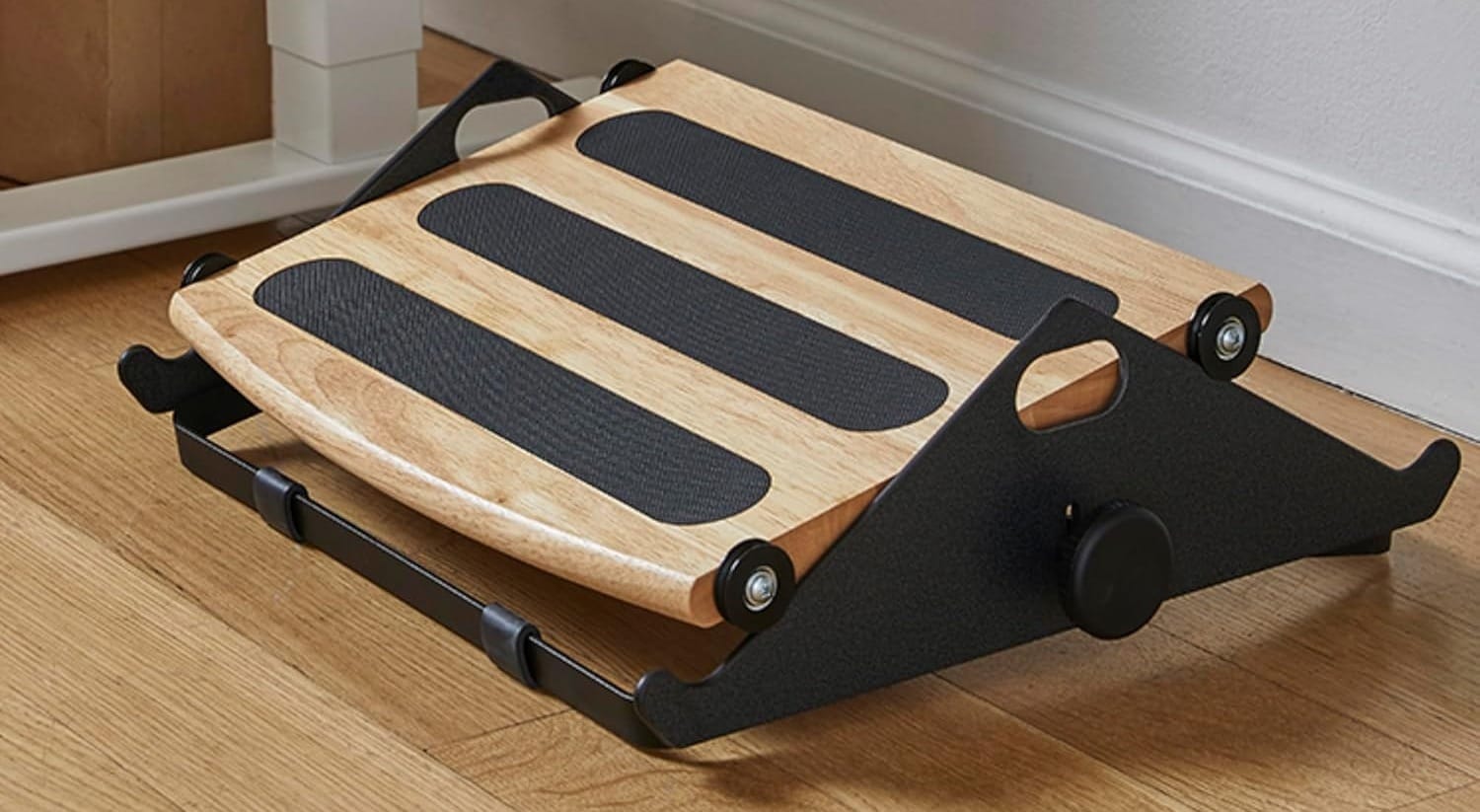
- Why It Works: Instead of forcing your feet into a static position, it rocks back and forth on curved wooden rails. This gentle motion activates calf muscles and encourages venous return in your legs.
- Key Specs: Smooth height transition between 2 and 5 inches (5 to 13 cm).
- Best For: Professionals who already use active balance stools or sit-stand desks and want continuous ankle movement.
2. Mind Reader Foot Rest Under Desk at Work — Best Height Range for Short Users
If your feet do not touch the ground even at your desk’s lowest setting, standard foot cushions will not provide enough height lift. This footrest offers the widest comfortable adjustment based on your needs.
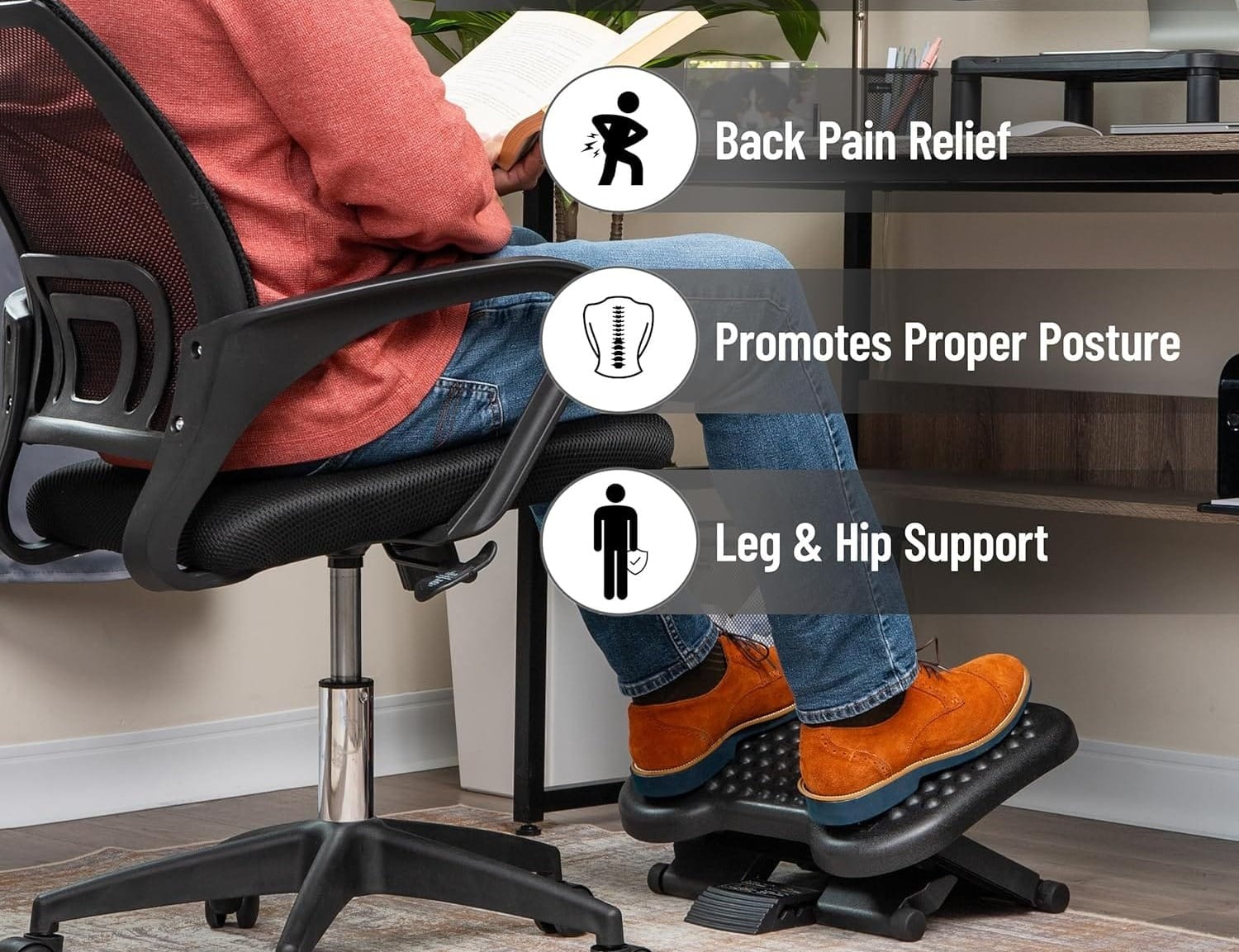
- Why It Works: Customizable Comfort – Adjusts from 3.25" to 6.25" in height to help you find the perfect ergonomic angle under your desk.
- Key Specs: Durable & portable design, measures 17" x 13", weighs just 5.5 lbs, and fits neatly under most desks and tables.
- Best For: Ideal for work or study, Perfect for home offices, workstations, dorm rooms, and even while relaxing at home.
3. Everlasting Comfort Footrest — Best Plush Soft Comfort for Barefoot Work
If you prefer working without shoes and want soft pressure relief under your soles, a high-density memory foam cushion provides immediate relief.
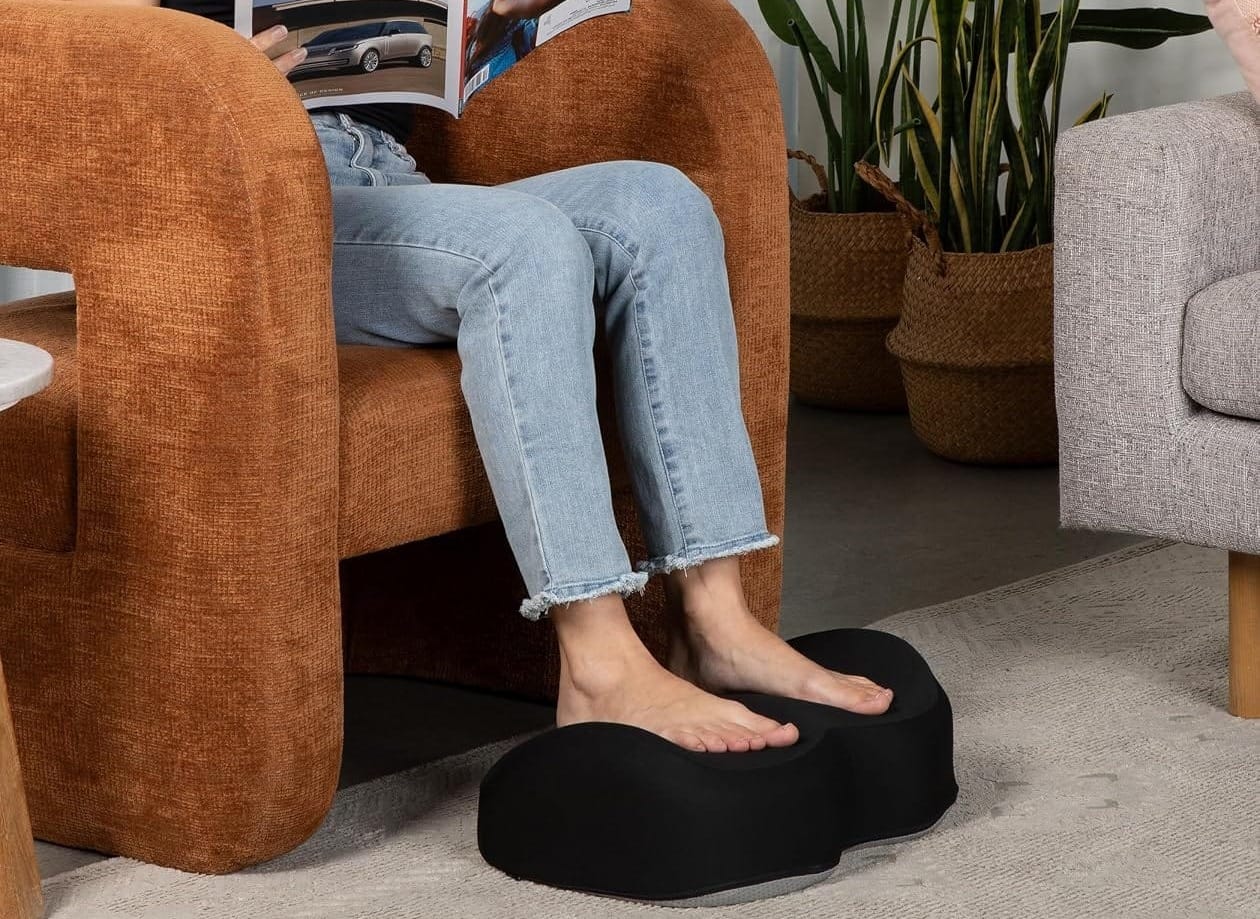
- Why It Works: Its half-teardrop shape matches the natural arch of the foot. It includes an attachable bottom booster panel to adjust total height between 4 and 6 inches.
- Key Specs: Washable velvet cover with a non-slip rubber grip base.
- Best For: Barefoot or socked home office workers needing soft arch support.
📋 Buyer's Checklist
How to Choose the Right Footrest
A good footrest can make a surprisingly big difference to your comfort, especially if you spend long hours at a desk. But with so many styles and features available, choosing the right one can be confusing.
Use this buyer checklist before purchasing a footrest for your home office, workplace, or study area.
1. Check the Height
The footrest should allow your feet to rest comfortably while keeping your knees in a natural position.
Look for:
- Adjustable height if multiple people will use it
- A height that works with your desk and chair
- Enough elevation to avoid leaving your feet dangling
Tip: Your feet should feel supported without forcing your knees too high.
2. Consider the Footrest Size
Check the platform dimensions before buying.
Ask yourself:
- Is it wide enough for both feet?
- Can you change your foot position comfortably?
- Will it fit underneath your desk?
- Is it compact enough for your workspace?
A footrest that's too small may feel restrictive, while an oversized model can take up valuable legroom.
3. Look for Adjustable Angles
An adjustable or tilting platform allows you to find a more comfortable position throughout the day.
Consider whether you want:
- A fixed platform
- A rocking/tilting design
- Multiple angle positions
- A freely adjustable surface
4. Check the Material and Cushioning
Think about how the footrest will feel during extended use.
Common options include:
- Memory foam
- High-density foam
- Mesh
- Plastic
- Wood
- Metal
For extended desk use, a cushioned surface may provide a softer, more comfortable feel.
5. Make Sure It Stays in Place
A footrest that constantly slides away can become frustrating.
Look for:
- Non-slip feet
- Rubberized surfaces
- A stable, wide base
- A platform that doesn't tip easily
If you have hardwood, tile, or other smooth flooring, stability becomes particularly important.
6. Check the Weight Capacity
Don't overlook the manufacturer's weight rating.
A sturdy footrest should be able to handle normal daily use without flexing, tipping, or losing its shape.
Always check the manufacturer's stated weight capacity before purchasing.
7. Consider Your Desk and Chair Setup
The best footrest depends on your entire workstation.
Before buying, consider:
- Chair height
- Desk height
- Available legroom
- Floor space
- Your preferred sitting position
A footrest should complement your existing setup rather than create another ergonomic problem.
8. Decide Whether You Need Portability
If you work from different locations, look for a lightweight or foldable design.
Portable footrests can be useful for:
- Home offices
- Shared workspaces
- Travel
- College or university
- Office commuting
9. Check Cleaning and Maintenance
For everyday use, choose a material that's easy to keep clean.
Consider:
- Removable/washable covers
- Wipe-clean surfaces
- Dust-resistant materials
- Whether replacement covers are available
10. Think About Your Primary Use
Before choosing a model, identify what you actually need it for.
Office work: Look for stability, adjustability, and comfortable positioning.
Gaming: A larger, durable platform and adjustable angle may be useful.
Travel: Prioritize portability and compact storage.
Home office: Focus on comfort, stability, and compatibility with your desk.
Shared workspace: Adjustable height and easy cleaning can be especially useful.
11. Read Reviews Carefully
Don't just look at the star rating. Read recent reviews to see what actual buyers say about:
- Long-term durability
- Stability
- Size
- Comfort
- Adjustability
- Noise
- Material quality
- Whether the product matches its advertised dimensions
Pay particular attention to recurring complaints rather than one-off negative reviews.
12. Compare Price With Features
The most expensive footrest isn't necessarily the best one.
| Feature | What to Look For |
|---|---|
| Height | Suitable for your chair and desk |
| Size | Enough room for comfortable foot placement |
| Angle | Fixed, rocking, or adjustable |
| Material | Durable and comfortable |
| Stability | Non-slip base |
| Weight Capacity | Suitable for intended use |
| Portability | Foldable or lightweight if needed |
| Cleaning | Easy-to-maintain surface |
| Warranty | Reasonable manufacturer coverage |
| Price | Appropriate for the features |
📋 FAQ's
Q1: Should you use a footrest at your desk? Q2: Should a footrest be flat or angled?
Q: Should you use a footrest at your desk?
Answer: Yes—if your feet don’t comfortably reach the floor, a footrest can make a noticeable difference to your comfort and sitting posture.
When you’re sitting at a desk, your feet should ideally be supported rather than dangling or resting awkwardly. A footrest can help keep your feet stable, reduce pressure on the back of your legs, and make it easier to maintain a comfortable sitting position throughout the workday.
Who can benefit from a footrest?
A footrest can be particularly useful if:
- Your desk or chair height doesn’t allow your feet to sit flat on the floor.
- You’re shorter, and your chair needs to be raised to position your arms comfortably at the desk.
- You spend several hours working at a computer.
- You tend to cross your legs or tuck your feet underneath your chair.
- You experience discomfort from sitting in one position for long periods.
How should you use one?
The goal isn't to force your feet into a particular position. Adjust the footrest so your feet are comfortably supported and your knees remain around hip level or slightly lower. Your thighs should be supported by the chair without excessive pressure behind the knees.
If possible, choose a footrest with a stable, non-slip surface and enough room to change your foot position. An adjustable or angled footrest can also make it easier to find a comfortable position.
Is a footrest necessary for everyone?
Not necessarily. If your feet already rest comfortably and securely on the floor while your chair, desk, and monitor are properly adjusted, you may not need one.
The important thing is to create a workstation that fits your body, rather than trying to force yourself into a standard desk setup.
A footrest is a relatively simple addition, but it can be especially helpful when your desk and chair height don't work well together. And remember that even with a well-designed workstation, it's a good idea to change positions, stand up, and move regularly rather than sitting in the same posture all day.
If your feet aren't comfortably supported at your desk, a footrest is worth considering. It can improve lower-body support and make your overall workstation more comfortable—especially during long periods of sitting.
Q: Should a footrest be flat or angled?
Answer: A footrest can be either flat or angled, but an angled footrest is often more comfortable for longer periods of sitting because it can support a more natural position for your feet and ankles.
The right choice depends on how you sit and what you want the footrest to achieve.
Flat footrests
A flat footrest provides a stable, level surface for your feet. It can be a good choice if you frequently change your sitting position or prefer to move your feet around while working.
Flat footrests are particularly useful when:
- You want a simple, stable platform.
- You regularly shift your feet while sitting.
- You need a footrest mainly to raise your feet off the floor.
- You prefer a neutral, level surface.
Angled footrests
An angled footrest slopes upward toward the front or back, depending on its design. This allows your feet to rest at a slight angle rather than remaining completely flat.
An angled design can be useful for people who sit at a desk for several hours because it may make it easier to maintain a comfortable ankle and lower-leg position. Some angled footrests also have a rocking surface, allowing you to move your feet during the day instead of keeping them completely still.
So, which one is better?
For general desk use, I'd lean toward an adjustable or slightly angled footrest. The important thing isn't the angle itself but whether the footrest allows you to sit comfortably with your feet supported and your knees and hips in a relaxed position.
A good footrest should:
- Keep your feet fully supported.
- Feel stable rather than wobbly.
- Be wide enough to accommodate natural foot movement.
- Allow you to maintain a comfortable sitting posture.
- Ideally allow some adjustment to suit your height and chair.
If you're buying one, don't assume that a steeper angle is automatically better. A small, comfortable angle is usually more practical than an aggressive slope. If possible, choose a footrest with an adjustable angle or a gently sloped surface so you can find what feels best for you.
Ultimately, the best footrest is the one that lets you change positions comfortably throughout the day rather than forcing your feet and ankles into one fixed position.