
An Ultimate Guide to Adjustable Weights: Are They Worth It?
Discover how to choose the best adjustable weights for your home gym with tips on weight range, increments, safety, durability, storage, and value.
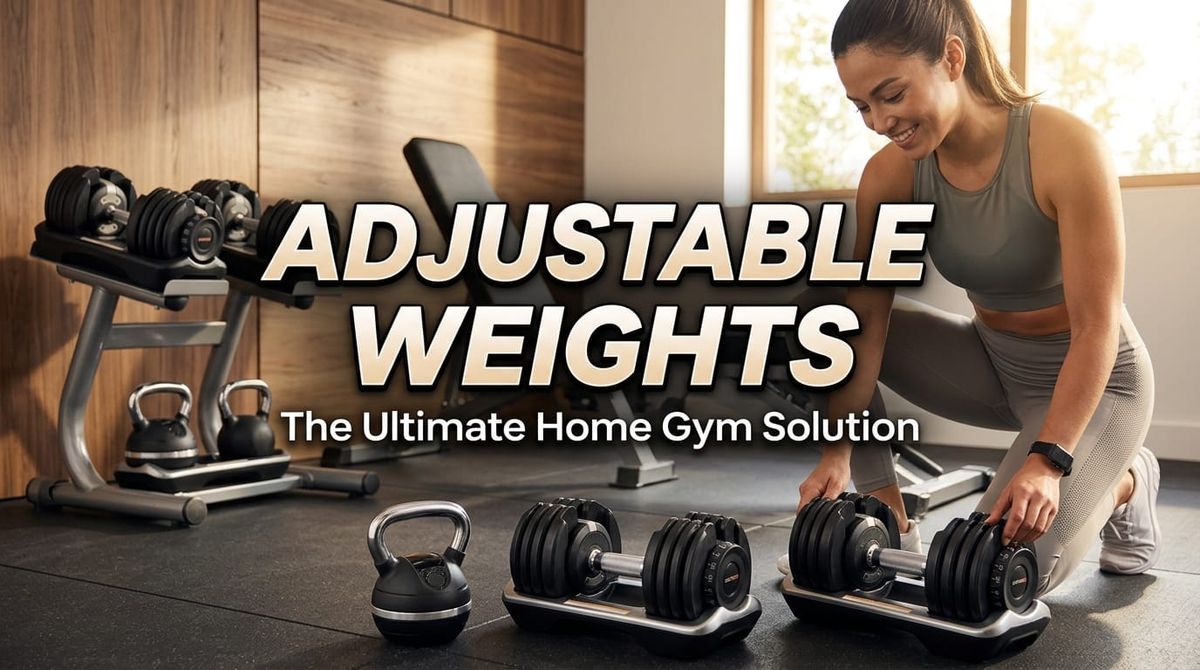
If you want to build strength at home without filling an entire room with bulky fitness equipment, adjustable weights can be one of the smartest investments you make. A single adjustable dumbbell set can provide multiple resistance levels while taking up a fraction of the space required by a traditional rack of fixed dumbbells.
But not all adjustable weights are created equal. Some are designed for quick weight changes between exercises, while others prioritise durability, affordability or the ability to handle very heavy loads. Choosing the right system therefore requires more than simply looking at the maximum weight on the box.
This comprehensive buying guide explains what adjustable weights are, how they work, the different types available, what features matter most, common mistakes to avoid and how to choose a set that will continue to meet your needs as your strength improves.
What Are Adjustable Weights?
Adjustable weights are strength-training equipment that allows you to change the resistance using the same handle or bar rather than purchasing multiple fixed-weight pieces.
For example, instead of buying separate 5 kg, 10 kg, 15 kg, 20 kg and 25 kg dumbbells, an adjustable system may allow you to select several of those weights from a single pair.
The adjustment mechanism varies between products. Common designs include:
- Dial or selector systems
- Pin-selected systems
- Twist-lock systems
- Plate-loaded dumbbells
- Quick-lock systems
- Expandable adjustable dumbbell systems
The main attraction is versatility. One compact set can support exercises ranging from light lateral raises and curls to heavier rows, presses, squats and lunges.
Why Are Adjustable Weights So Popular?
Adjustable weights have become particularly attractive for home gyms because they solve three common problems: space, cost and convenience.
1. They save space
A complete collection of fixed dumbbells can occupy a considerable amount of floor and storage space. Adjustable weights consolidate many resistance levels into one compact system.
This makes them particularly useful for:
- Apartments
- Small home gyms
- Spare rooms
- Garages
- Home offices
- Outdoor training areas
2. They can be more economical
Buying a complete rack of fixed dumbbells can become expensive quickly. An adjustable system can provide many of the same weight options through one purchase.
However, don't automatically assume adjustable weights are always cheaper. Premium selectorised systems can have a significant upfront cost. The better comparison is cost per useful weight range, rather than simply the purchase price.
3. They make progressive training easier
Strength training works best when your training can gradually become more challenging.
Adjustable weights allow you to increase resistance as you become stronger rather than replacing your equipment every few months.
4. They make changing exercises faster
Some adjustable systems allow you to change resistance within seconds. This is particularly useful for:
- Supersets
- Circuit training
- Full-body workouts
- Drop sets
- HIIT-style workouts
- Workouts involving several different exercises
The adjustment mechanism therefore has a direct impact on how enjoyable and efficient your workouts feel.
Types of Adjustable Weights
Understanding the different designs is arguably the most important part of choosing the right product.
1. Dial or Selector Adjustable Dumbbells
These use a dial, selector or similar mechanism to choose the desired weight.
You normally place the dumbbell in its base, select the required weight and lift it out. The mechanism engages the appropriate plates while leaving the unused plates in the cradle.
Advantages
- Very fast weight changes
- Convenient during supersets
- Easy for beginners
- Compact
- No loose plates during normal use
- Clean and tidy appearance
Disadvantages
- Usually more expensive
- More moving parts
- Some mechanisms require careful handling
- Not all models are suitable for dropping
- Replacement parts may be more complicated
Best for: Home users who prioritise convenience and fast weight changes.
2. Pin-Selected Adjustable Dumbbells
Pin-based systems use a selector pin to determine how many plates are engaged.
They are generally straightforward to understand and can offer a robust alternative to dial systems.
Advantages
- Relatively simple operation
- Fast weight changes
- Often durable
- Good for progressive strength training
- Usually compact
Disadvantages
- Some designs have an unusual shape
- Weight increments may be larger
- Pins and selectors need to be properly seated
Best for: Users who want a combination of durability, versatility and relatively fast adjustment.
3. Plate-Loaded Adjustable Dumbbells
This is the traditional approach.
You have a dumbbell handle, weight plates and collars. To change the resistance, you remove the collar, add or remove plates and secure the collar again.
Advantages
- Simple mechanical design
- Usually affordable
- Can be extremely durable
- Easy to expand if compatible plates are available
- Very small initial footprint
Disadvantages
- Slower weight changes
- Loose plates require storage
- Collars need to be checked regularly
- Can feel cumbersome during fast-paced workouts
Plate-loaded systems remain an excellent choice if price and mechanical simplicity are more important to you than rapid weight changes.
4. Twist-Lock or Quick-Lock Systems
These systems use a twisting handle, locking mechanism or similar system to select or secure the desired plates.
They attempt to combine the traditional dumbbell shape with faster adjustment.
Advantages
- Quick to adjust
- Familiar dumbbell-style feel
- Convenient for home workouts
- Less manual plate handling than traditional systems
Disadvantages
- More expensive than basic plate-loaded designs
- The locking mechanism needs to be reliable
- Not every system has the same durability
The Most Important Buying Factor: Weight Range
Don't buy an adjustable weight set based solely on the maximum weight.
You need to consider both the minimum and maximum weight and the increments between them.
For example, a set that goes from 5 kg to 25 kg may sound impressive, but if it jumps from 10 kg to 15 kg, that five-kilogram increase could be too large for certain exercises.
Smaller increments are particularly valuable for exercises such as:
- Lateral raises
- Front raises
- Biceps curls
- Triceps exercises
- Shoulder presses
- Chest exercises
Larger increments may be perfectly acceptable for:
- Goblet squats
- Romanian deadlifts
- Lunges
- Heavy rows
- Farmer carries
A useful rule
Choose a system that provides:
Don't buy only for the person you are today. Think about the person you expect to become after 12–24 months of consistent training.
How Much Weight Do You Actually Need?
There is no universal answer.
Your ideal range depends on your:
- Current strength
- Training experience
- Exercise selection
- Fitness goals
- Training frequency
- Age and physical condition
- Expected progression
- Available space
- Budget
A beginner performing general fitness workouts may have very different requirements from an experienced lifter focusing on hypertrophy or strength.
A useful approach is to identify the heaviest weight you currently use for your main exercises, then consider how much room you need for future progression.
For example, if you currently use 12 kg dumbbells for rows, buying a system that tops out at 15 kg may leave little room for progression.
Don't Ignore Weight Increments
Maximum weight gets most of the marketing attention, but increments can be just as important.
Imagine two adjustable systems:
System A: 5, 10, 15, 20 and 25 kg
System B: 2.5, 5, 7.5, 10, 12.5, 15, 17.5, 20, 22.5 and 25 kg
Both reach 25 kg.
But System B gives you far more control over progression.
Smaller increments allow you to increase resistance gradually rather than making a large jump that may compromise your technique.
Adjustable Weights vs Fixed Dumbbells
Which is better?
The answer depends on your priorities.
| Feature | Adjustable Weights | Fixed Dumbbells |
|---|---|---|
| Space efficiency | Excellent | Poor to moderate |
| Weight changes | Varies by system | Instant |
| Initial cost | Moderate to high | Low for a few pairs |
| Cost for large range | Often better | Can become expensive |
| Durability | Depends on mechanism | Generally excellent |
| Storage | Compact | Requires more space |
| Workout convenience | Excellent with quick-change models | Excellent |
| Heavy training | Depends on model | Excellent |
| Home gym suitability | Excellent | Good if space allows |
For a small home gym, adjustable weights are usually the more practical option.
For a dedicated gym with plenty of room, fixed dumbbells provide an excellent experience and remove the need to adjust the weight between exercises.
What About Adjustable Barbells and Other Weights?
Although adjustable dumbbells are the most common type, "adjustable weights" can also include:
- Adjustable kettlebells
- Loadable dumbbell handles
- Adjustable barbells
- Plate-loaded weight systems
- Selectable weight machines
The same buying principles apply:
Weight range, increments, adjustment mechanism, durability, safety, comfort, storage and long-term value.
If your goal is a versatile home gym, it can be useful to combine adjustable dumbbells with a bench, resistance bands and an appropriate mat rather than buying multiple specialised machines.
Grip and Handle Design Matter More Than You Think
You may spend considerable time holding your adjustable weights, so handle comfort shouldn't be treated as a minor detail.
Look for:
- Comfortable diameter
- Secure grip
- Appropriate knurling or textured surface
- Smooth edges
- Adequate handle length
- Minimal movement between the handle and plates
A handle that feels comfortable during curls may feel very different during heavy rows or presses.
If possible, test the grip before purchasing.
Check the Shape of the Dumbbell
This is an often-overlooked consideration.
Some adjustable dumbbells retain a traditional dumbbell shape. Others are rectangular, block-like or unusually wide.
The shape can affect:
- Wrist position
- Range of motion
- Exercise comfort
- Whether the dumbbell touches your body
- How easily you can place it on your thighs
- Storage
- Floor stability
A technically excellent adjustable dumbbell can still be frustrating if its shape doesn't suit the exercises you perform.
Adjustment Speed: How Important Is It?
Ask yourself how you normally train.
If your workout involves:
Exercise → rest → exercise → rest
then a slower plate-loading system may not bother you.
But if your workout involves:
Chest press → row → shoulder press → curl
with frequent weight changes, rapid adjustment becomes much more valuable.
Fast adjustment is especially useful for:
- Supersets
- Tri-sets
- Circuit training
- Drop sets
- HIIT
- Full-body workouts
If you mainly perform traditional strength sets with longer rest periods, adjustment speed may be less important.
Safety Should Be a Major Buying Criterion
Adjustable weights have more components than traditional fixed dumbbells, which means the locking mechanism deserves careful attention.
Before buying, check:
- How the plates are secured
- Whether the selector clearly locks into position
- Whether the manufacturer provides safety instructions
- Whether replacement parts are available
- Whether the product has a meaningful warranty
- Whether the manufacturer specifies any restrictions on dropping the weights
Never assume that an adjustable dumbbell is designed to be dropped simply because it is made from metal.
Some selectorised systems contain components that can be damaged by impact.
Before every workout
Check that:
- The selected weight is correct.
- The locking mechanism is fully engaged.
- Plates aren't loose or damaged.
- The handle is secure.
- The base or cradle is stable.
- There is enough clear space around you.
The American College of Sports Medicine recommends maintaining a secure grip, using proper technique and avoiding weights that are too heavy. It also highlights the importance of safely storing free weights and securing plates properly.
Can You Drop Adjustable Dumbbells?
This is one of the most important questions to ask before purchasing.
Never assume they are drop-safe.
A conventional fixed dumbbell can generally tolerate considerably more abuse than a complex adjustable mechanism. Depending on the design, dropping an adjustable dumbbell can damage:
- Selector mechanisms
- Pins
- Plates
- Cradles
- Handles
- Locking components
If you regularly train to failure, perform heavy pressing or need to safely abandon a failed repetition, investigate the manufacturer's specific instructions before purchasing.
If controlled handling is required, factor that into your training style.
Build Quality and Materials
The materials used in an adjustable weight system can influence both durability and user experience.
Look for:
- Solid metal handles
- Secure locking components
- Durable plates
- High-quality selector mechanisms
- Robust cradles
- Corrosion-resistant finishes
- Reliable collars
- Quality manufacturing tolerances
A cheap product may look attractive initially but become poor value if the selector fails, plates loosen or replacement components are impossible to find.
For equipment that you expect to use several times per week for years, paying more for proven construction can make sense.
ACSM also recommends considering durability, warranty and maintenance requirements when purchasing free-weight equipment.
Warranty and Replacement Parts
This is particularly important with adjustable equipment.
A simple fixed dumbbell has relatively few things that can go wrong.
An adjustable system may contain:
- Selectors
- Pins
- Locks
- Plates
- Springs
- Cradles
- Handles
- Internal components
Before buying, find out:
- How long the warranty lasts
- What the warranty covers
- Whether individual parts can be purchased
- Whether replacement plates are available
- Whether the manufacturer still supports older models
- Where the product is serviced
A slightly more expensive system with readily available replacement parts can be a better long-term investment than a cheaper product that must be completely replaced after a minor failure.
Storage: Plan It Before You Buy
One of the biggest advantages of adjustable weights is their compact footprint.
But remember that some models require:
- A dedicated cradle
- Additional plates
- Expansion kits
- Storage trays
- Floor protection
Don't simply measure the dumbbell itself.
Consider the entire footprint when the equipment is:
- Being used
- Stored
- Adjusted
- Loaded
- Removed from its cradle
You also want enough space around the weights to exercise safely.
ACSM specifically recommends considering available space and safe storage when purchasing free weights.
Adjustable Weight Sets for Small Homes
If you're working with limited space, prioritise:
1. Compact design
Look for a system that stores neatly rather than one requiring multiple loose plates.
2. Quick adjustment
A fast mechanism can make a small home gym feel considerably more convenient.
3. Secure storage
A stable cradle or tray keeps your workout area organised.
4. Broad weight range
The goal is to maximise the number of exercises available without increasing the equipment footprint.
5. Quiet operation
If you're training in an apartment, consider rubber-coated plates or designs that minimise metal-on-metal noise.
Adjustable Weights for Beginners
Beginners should avoid buying simply because a set offers an extremely high maximum weight.
Instead, focus on:
- Comfortable grip
- Easy adjustment
- Smaller weight increments
- Clear markings
- Secure locking
- Reasonable starting weight
- Good instructions
- Warranty and support
A beginner-friendly adjustable weight should make training simpler, not more complicated.
You should be able to look at the mechanism and immediately understand how to select the desired resistance.
Adjustable Weights for Experienced Lifters
Experienced users should pay more attention to:
- Maximum load
- Small progression increments
- Handle dimensions
- Durability
- Expansion capability
- Heavy-load stability
- Plate security
- Drop restrictions
- Warranty
- Availability of replacement parts
For serious strength training, buying a system that you will outgrow quickly can be a false economy.
If you already know that you want to progress to heavier loads, consider an expandable system from the beginning.
What Does "Expandable" Mean?
An expandable adjustable weight system allows you to purchase additional plates or components later.
For example, you might initially purchase a system that reaches 25 kg per dumbbell and later add an expansion kit that increases its maximum capacity.
This can be an excellent option for people who are still developing their strength.
Benefits include:
- Lower initial investment
- Same handle and feel as you progress
- Less equipment waste
- Long-term flexibility
- Easier upgrade path
Before buying, check the maximum expansion capacity and the cost of future expansion kits.
Common Buying Mistakes to Avoid
Mistake 1: Buying based only on maximum weight
A 30 kg maximum doesn't automatically make one product better than a 25 kg model.
Weight increments, usability and build quality can matter more.
Mistake 2: Choosing the cheapest option
Cheap equipment can be excellent value, but very low prices may come with compromises in durability, adjustment reliability or support.
Mistake 3: Ignoring the handle
A dumbbell can have excellent specifications but still feel uncomfortable during training.
Mistake 4: Ignoring the adjustment mechanism
The adjustment system determines how quickly and easily you can change resistance.
Mistake 5: Forgetting future progression
Don't buy a set that is already close to your current maximum unless you have no intention of increasing resistance.
Mistake 6: Assuming every adjustable dumbbell is drop-safe
Always check the manufacturer's instructions.
Mistake 7: Forgetting storage
Make sure you have a safe location for the dumbbells, plates and adjustment cradle.
Mistake 8: Buying more weight than you need
More isn't always better. Excessively heavy equipment costs more, takes up more space and may rarely be used.
How to Compare Adjustable Weights: A Simple Scorecard
When comparing two or more products, score each one from 1–5 for:
| Category | Score |
|---|---|
| Weight range | /5 |
| Weight increments | /5 |
| Adjustment speed | /5 |
| Adjustment reliability | /5 |
| Grip comfort | /5 |
| Build quality | /5 |
| Safety features | /5 |
| Storage | /5 |
| Expandability | /5 |
| Warranty | /5 |
| Replacement parts | /5 |
| Price/value | /5 |
This approach is much better than comparing products based on price alone.
What Should You Spend?
Your budget should reflect how frequently you expect to use the equipment.
Occasional users
A basic plate-loaded system may provide everything you need.
Regular home users
A mid-range adjustable system with a good mechanism, comfortable handle and useful weight range is often the sweet spot.
Serious home-gym users
Investing in a premium, durable and expandable system may make more sense if you train several times per week and expect to keep the equipment for years.
The important question isn't:
"What's the cheapest adjustable dumbbell?"
It's:
Adjustable Weights and Progressive Overload
One of the biggest benefits of adjustable weights is their ability to support progressive overload.
Progressive overload means gradually increasing the training challenge over time.
You don't necessarily have to increase weight every workout. Progress can also come from:
- More repetitions
- Better technique
- More sets
- Greater range of motion
- Improved control
- Shorter rest periods
- Increased training frequency
- Eventually, heavier resistance
Adjustable weights make one part of this progression—resistance—particularly easy to manage.
A Practical Example
Imagine you start with a dumbbell chest press at 10 kg per hand.
Over several weeks, you might progress like this:
10 kg → 12 kg → 14 kg → 16 kg → 18 kg
If your adjustable weights support those increments, you can progressively increase resistance without buying another dumbbell pair each time.
This is where the value of an adjustable system becomes particularly clear.
Maintenance Tips
A little maintenance can extend the life of your equipment.
Regularly:
- Wipe down handles and plates
- Check collars and locking mechanisms
- Inspect plates for cracks
- Check selectors and pins
- Keep adjustment mechanisms clean
- Keep equipment dry
- Follow the manufacturer's lubrication instructions where applicable
- Store the weights securely
Avoid modifying the locking mechanism or using incompatible plates or components.
Who Should Buy Adjustable Weights?
Adjustable weights are an excellent choice for:
- Home gym owners
- Beginners
- Apartment dwellers
- Busy professionals
- People with limited storage
- Strength-training enthusiasts
- People who want full-body workouts
- Users who regularly change exercises
- Anyone who wants multiple resistance levels without a full dumbbell rack
They may be less suitable for someone who:
- Has plenty of space for fixed dumbbells
- Frequently drops weights
- Needs extremely heavy loads
- Prefers the simplicity of fixed equipment
- Wants the fastest possible transition between every exercise and has the budget for a full rack
The Ultimate Adjustable Weight Buying Checklist
Before purchasing, ask yourself:
- What exercises will I perform?
- What weight do I currently use?
- What weight am I likely to need in 1–2 years?
- What is the minimum available weight?
- What is the maximum available weight?
- What are the weight increments?
- How quickly can I change the weight?
- Is the mechanism easy to use?
- Is the grip comfortable?
- How secure are the plates?
- Is the product designed to withstand my training style?
- Can I drop it safely?
- Is it expandable?
- Are replacement parts available?
- How long is the warranty?
- How much storage space does it need?
- Is the product easy to maintain?
- Does the price make sense for how often I'll use it?
If you can answer these questions confidently, you're much less likely to regret your purchase.
What Makes the Best Adjustable Weight Set?
There is no single adjustable weight system that is perfect for everyone.
The best adjustable weights are the ones that match your training style, available space, budget and expected progression.
For most home users, the ideal system should offer:
A useful weight range + sensible increments + secure locking + comfortable grip + reliable construction + convenient adjustment + manageable storage + good long-term support.
If convenience is your priority, a selectorised or quick-change system can make workouts faster and more enjoyable.
If durability and affordability are more important, a traditional plate-loaded system may be the better choice.
If you expect to become significantly stronger, prioritise a high maximum weight or expandable design.
And if you're buying equipment for a small home gym, don't underestimate the value of compact storage. One versatile adjustable system can give you access to a surprisingly broad range of strength exercises without requiring an entire room for equipment.
Ultimately, the best adjustable weights aren't necessarily the heaviest, cheapest or most technologically advanced. They're the ones you'll use consistently, safely and comfortably for years to come.
Quick Buying Recommendation
If you're unsure where to start, use this simple formula:
Beginner: Prioritise ease of use, comfortable grip and smaller increments.
Home fitness enthusiast: Prioritise a broad weight range, quick adjustment and durability.
Serious strength trainer: Prioritise maximum weight, expandability, secure locking and long-term durability.
Small-space user: Prioritise compact storage and an efficient weight range.
Budget-conscious buyer: Consider plate-loaded adjustable dumbbells and compare the total cost of compatible plates and collars.
The smartest purchase is not the one with the longest specification sheet. It's the one that fits your actual training needs today while leaving enough room for tomorrow's progress.
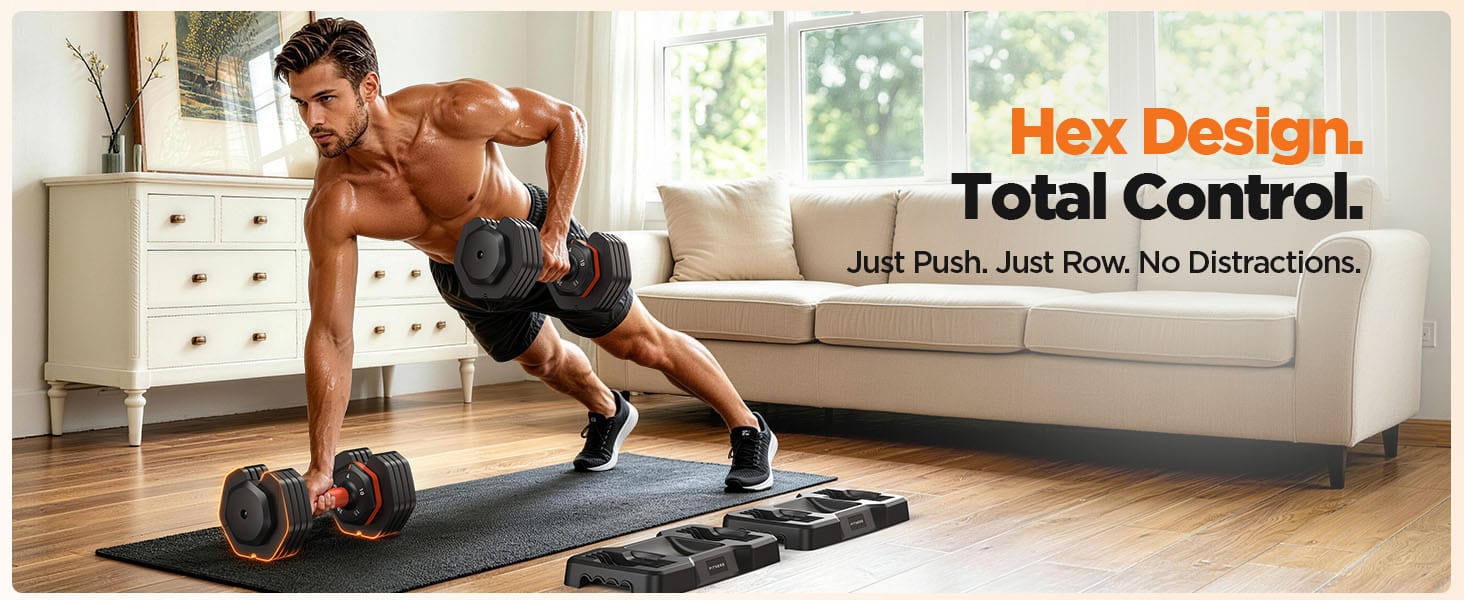
2026 FDB2 Updated Adjustable Dumbbell Set of 2
Quickly switch between five weights from 4 to 25 lbs. Get more sets per workout and more muscle fatigue per hour. That's easily 5x the efficiency of old-school plate swapping.
Replace 5 bulky dumbbell sets with just one adjustable dumbbell set. Less clutter, more workout space. Perfect for your home gym.
Yes4All Adjustable Dumbbell
Shop Now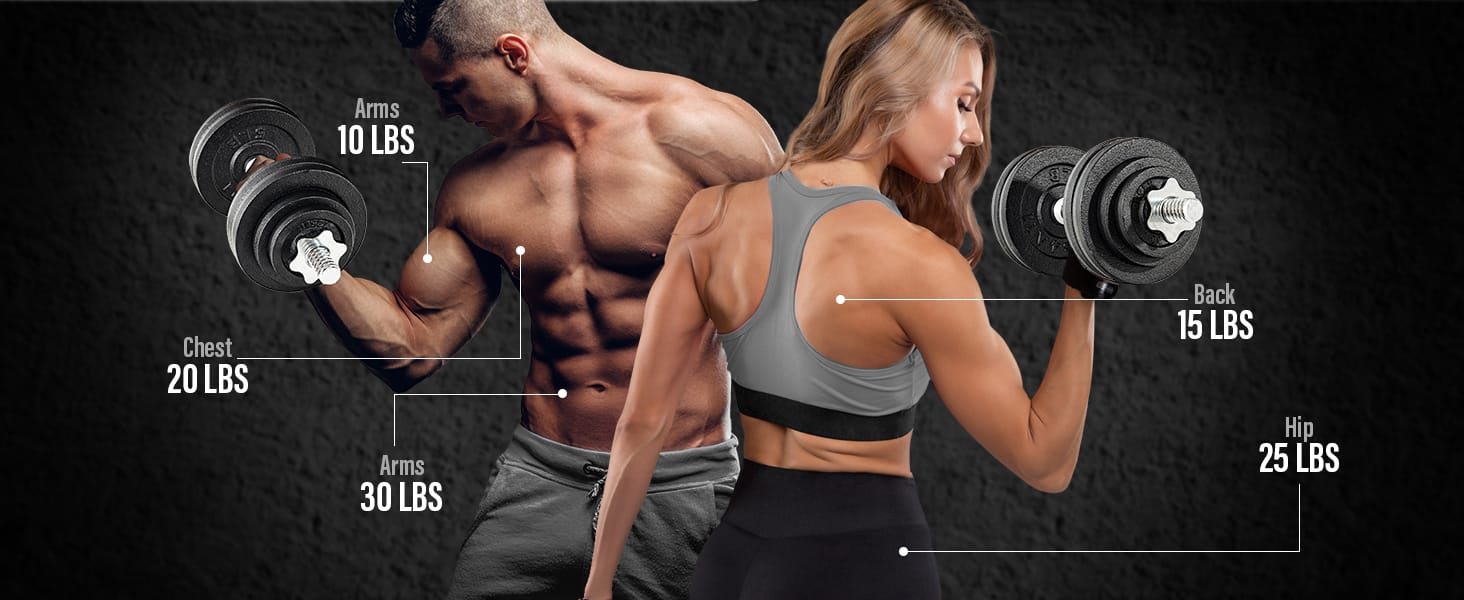
Yes4All Adjustable Dumbbell
Yes4All Adjustable Dumbbells are easy to use and do not require much space for storage, suitable for home gyms and fitness enthusiasts of all levels. With the additional Dumbbell Connector for selected weights, you can vary your workout routine even more while keeping your space clean and organized. Adjustable Dumbbell sets with the Dumbbell Connector can help you alternate quickly and easily between dumbbell and barbell exercises. This is great for strength training and enables you to expand your workout routine for peak performance.
Practicing with Yes4All Adjustable Dumbbells, you will see significant improvements in your cardiovascular health as well as muscular strength and endurance. Your range of motion will also increase, and your weight loss progress can become more and more efficient. Durable cast iron material coated with Powder Coated finish to prevent rust and corrosion, our adjustable dumbbells will last a lifetime without losing performance. Now with the Premium Silicone Sleeves, you can have a bespoke set that keeps everything neat and efficient.
FLYBIRD DB2 Adjustable Dumbbell Set
Shop Now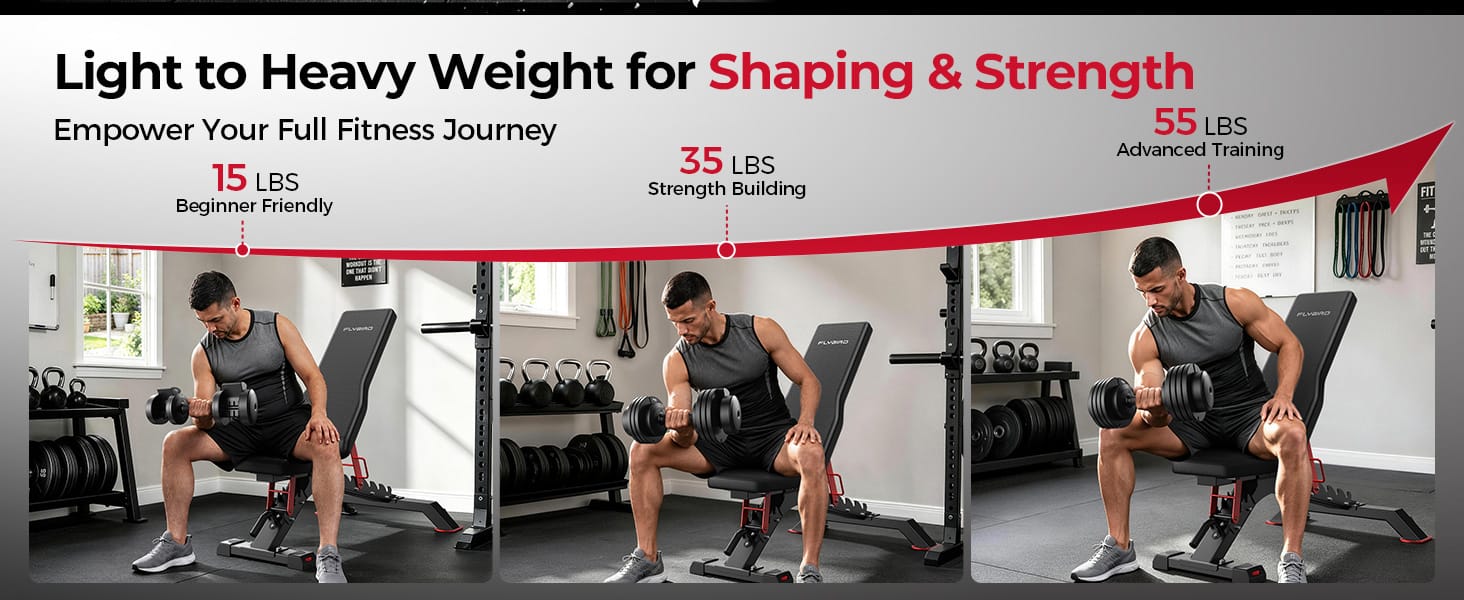
FLYBIRD DB2 Adjustable Dumbbell Set
Design and produce fitness equipment for 20 years. FLYBIRD strength equipment is designed with the advice of a professional coach, committed to meeting your needs for diversified weight training. Only need 1 set of dumbbell space, you can have 5-sets of dumbbell training experience with 80% space saving. Single dumbbell is easy to use and store, always meet your multiple need.
It supports diverse strength training by changing different weights. Adjustment weights from 5lb to 25lb, even for fitness beginners are very easy to use. It is a great choice for modifying muscle lines and strong muscle fibers. One-handed operation design, convenient for fast changing dumbbells' weight during training. Just turn the handle with one hand, FLYBIRD dumbbells can save you time changing different weights with both hands, enjoy faster adjustment and gain better training efficiency.
Wolfyok Dumbbells
Shop Now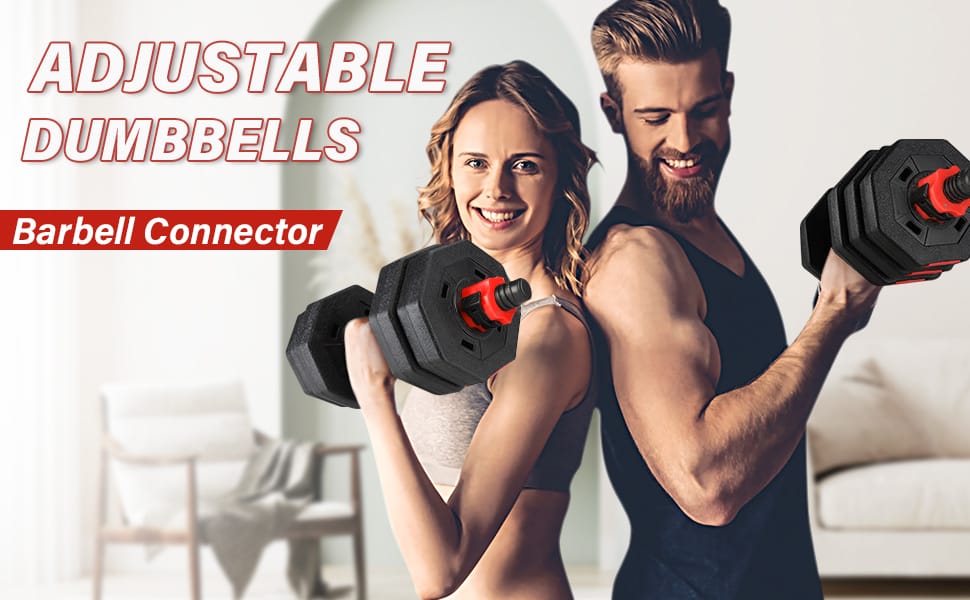
Wolfyok Dumbbells
Updated thickened and anti-skid nuts are easy to rotate and assemble. Can effectively lock the dumbbells and ensure their safety. Before training, tighten the nuts so that the dumbbells will not loosen or rotate. The dumbbell will never lose again. The handlebar and connecting bar are made of high-quality plastic, which is comfortable to grip and won't get rusted. The connecting bar is covered with soft foam, which can reduce the pressure on your neck during exercise.
This dumbbell set is filled with cement mixed substances. We use a better cement proportion, which can avoid sand trickling out. Thus the weight plates are much more durable than other dumbbells that are filled with sand. Easy to assemble and won't occupy too much space for storage. Easy to use and keep your space organized at the same time. Suitable for home gyms and fitness enthusiasts.
Amazon Basics Adjustable Dumbbells
Shop Now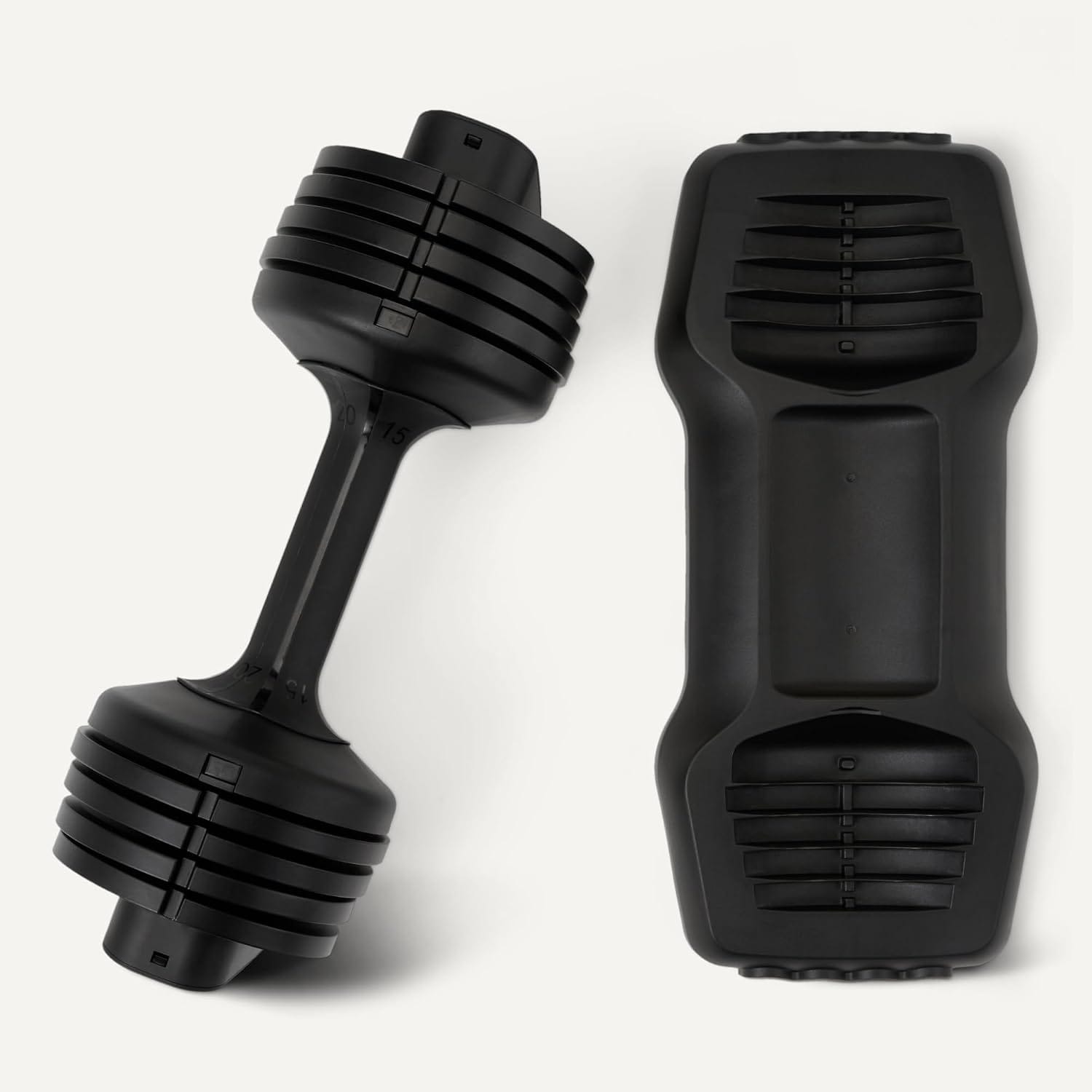
Amazon Basics Adjustable Dumbbells
This 38-pound adjustable weight set includes two 3-pound barbells, four 2.5-pound plates, four 5-pound plates, and four 0.5-pound collars. Adjusting the amount of weight is easy. Simply add or remove plates to/from the barbells and secure them with the threaded collars.
Whether used with bare hands or weight-training gloves, the metal barbell's textured grip helps ensure a steady, secure hold. The rugged plastic case provides placeholders for storing all the pieces securely inside. Its secure-closing lid and handle ensure easy portability.
Adjustable Weights FAQs
Q: Are adjustable weights good?
Answer: Benefits over traditional fixed weights, including:
- Convenience: With adjustable weights, you can easily switch between weight levels without having to switch between different sets of weights. This saves time and makes your workout experience more efficient.
- Versatility: Adjustable weights allow you to perform a wider range of exercises, as you can adjust the weight to suit your strength level for each exercise.
- Space-saving: Adjustable weights can be a space-saving solution for home gyms, as they eliminate the need for multiple sets of fixed weights.
- Cost-effective: Purchasing multiple sets of fixed weights can be expensive. With adjustable weights, you only need to buy one set, making them a cost-effective option.
- Ease of use: Many adjustable weight sets are designed with ease of use in mind, featuring simple adjustment systems that make it easy to change the weight level.
However, it's important to note that not all adjustable weights are created equal. Some sets may be of lower quality or may not offer the range of weights you need for your workouts. When choosing adjustable weights, it's important to consider factors such as weight range, durability, and ease of use to ensure you get a set that fits your needs.
In conclusion, adjustable weights can be a good option for those looking for a convenient, versatile, and cost-effective solution for their workouts. Just be sure to choose a high-quality set that fits your individual needs and preferences.
Q: Do adjustable weights work?
Yes, adjustable weights can work effectively for a variety of strength training exercises. They allow you to easily adjust the weight to match your strength level, making them a versatile and convenient option for a wide range of workouts.
Additionally, many adjustable weights are designed with durability and ease of use in mind, so they can be a reliable tool for reaching your fitness goals. Just be sure to choose a set with a good weight range and sturdy construction to ensure they are effective for your specific workout needs.
Q: Are adjustable weights safe?
Answer: Yes, adjustable weights can be safe if used properly. It is important to follow the manufacturer's instructions and guidelines for adjusting the weights and using them in your workouts.
Additionally, it is important to use proper form and technique when lifting weights to reduce the risk of injury. Before starting any new workout routine, it is always a good idea to consult with a healthcare professional or a certified personal trainer to ensure that it is safe for you and to receive proper guidance on form and technique.
Q: Do adjustable weights break easily?
Answer: The durability of adjustable weights can vary depending on the quality and brand. Some adjustable weight sets are made from high-quality materials and are built to last, while others may break easily due to lower-quality construction.
To ensure you get a set of adjustable weights that are durable and long-lasting, look for sets that are made from sturdy materials and have a good-quality finish. Additionally, reading user reviews can give you a better idea of the overall durability of a particular set of adjustable weights.
Q: Can I build muscle with just dumbbells?
Answer: Yes, you can build muscle with just dumbbells. Dumbbells are a versatile and effective tool for strength training and can help you target specific muscle groups. With proper form and progressive weight increase, you can use dumbbells to effectively challenge your muscles and promote growth.
It's important to remember that building muscle also requires a balanced diet and adequate rest and recovery. A comprehensive strength training program that incorporates a variety of exercises using different equipment, including dumbbells, is likely to produce the best results. Additionally, seeking guidance from a certified trainer can help you design a safe and effective workout plan.