
Adjustable Weight Bench for Home Gym: Comparison & Buyer’s Tips
The primary benefits of using an adjustable weight bench is the versatility it provides for your workout routine wiht our top picks for durable & functional adjustable weight benches.
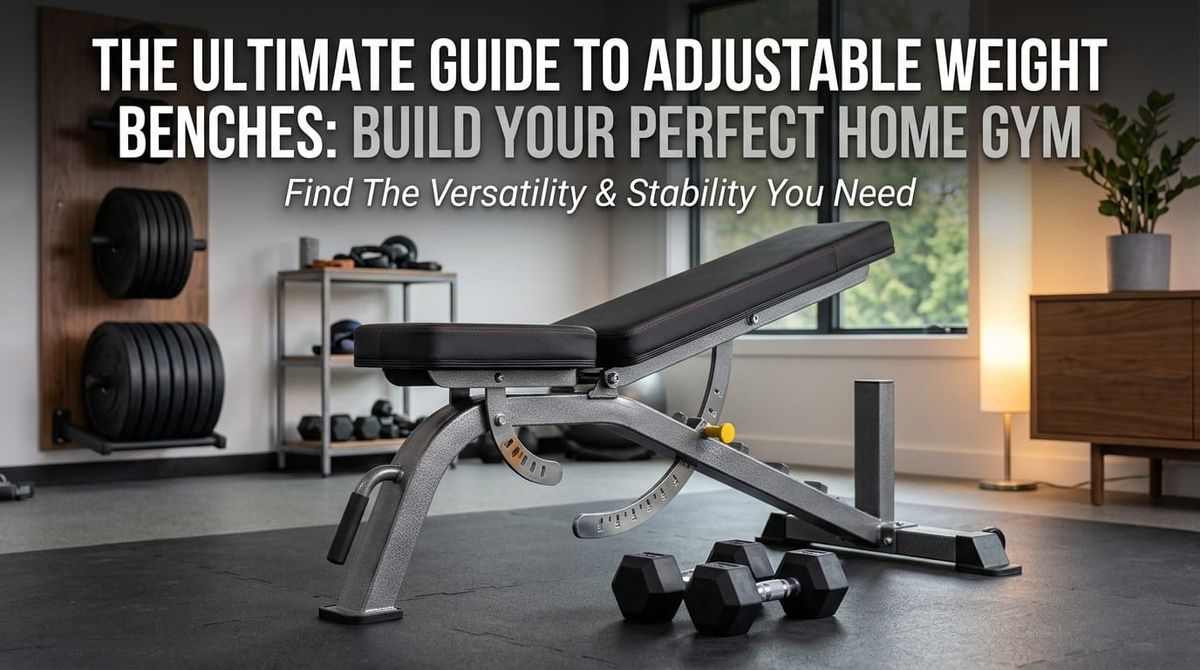
An adjustable weight bench is a versatile piece of exercise equipment that allows individuals to perform a wide range of exercises and workouts. These bench frames can be adjusted to different angles, allowing for various incline and decline positions, which in turn facilitates targeting different muscle groups in the body.
These west value weight benches come in a variety of bench frame styles and designs, ranging from flat benches to more complex ones that include additional features such as leg extensions, preacher curl attachments, and adjustable backrests. Weight benches are designed to be versatile pieces They can be used in a variety of workout equipment as an entire bench and have a decent weight capacity with a great bench pad.
They are a popular choice among fitness enthusiasts, bodybuilders, and athletes, as they provide an effective and efficient means of building strength and muscle mass, and improving overall fitness levels. These benches can be used in a variety of settings like flat position with an optimal bench height. Another great feature of these benches is their incline positions.
What Is an Adjustable Weight Bench?
An adjustable weight bench has a backrest that can be positioned at different angles rather than remaining permanently flat.
Depending on the design, the bench may provide:
- Flat position
- Multiple incline positions
- Upright/seated positions
- Decline positions
- Adjustable seat positions
A FID bench—Flat, Incline, Decline—is generally the most versatile version because it allows you to train across all three positions.
For a home gym, this versatility can be valuable because one adjustable bench can replace several specialised benches while taking up considerably less space.
Why Invest in an Adjustable Bench?
A good adjustable bench can dramatically expand what you can do with dumbbells, barbells, resistance bands and other equipment.
With a suitable bench, you can perform exercises such as:
Chest
- Flat dumbbell press
- Incline dumbbell press
- Decline dumbbell press
- Dumbbell flyes
- Dumbbell pullovers
Shoulders
- Seated shoulder press
- Arnold press
- Lateral raises
- Rear-delt exercises
Back
- Chest-supported rows
- One-arm dumbbell rows
- Incline dumbbell rows
Legs
- Bulgarian split squats
- Step-ups
- Hip thrusts
- Seated calf raises
Arms
- Seated curls
- Incline curls
- Triceps extensions
- Skull crushers
This is why an adjustable bench can be particularly valuable for people building a compact home gym.
Adjustable vs Flat Bench: Which Is Better?
If you're deciding between a fixed flat bench and an adjustable model, think about how you train.
| Feature | Flat Bench | Adjustable Bench |
|---|---|---|
| Flat pressing | Excellent | Excellent |
| Incline pressing | No | Yes |
| Decline pressing | No | Some models |
| Seated shoulder work | Limited | Excellent |
| Exercise versatility | Moderate | High |
| Simplicity | Excellent | Good |
| Space efficiency | Excellent | Good |
| Moving parts | Minimal | More |
| Typical price | Lower | Higher |
A flat bench is an excellent choice if you primarily perform flat presses, rows, and other exercises requiring a horizontal surface.
For most people building a versatile home gym, however, an adjustable bench provides considerably more flexibility. Australian fitness retailers similarly recommend choosing between flat and adjustable benches according to your exercises, training style and available space.
The 10 Most Important Things to Check Before Buying
An adjustable weight bench is one of the most versatile pieces of equipment you can add to a home gym. The right bench can turn a relatively simple setup of dumbbells or adjustable weights into a much more capable strength-training station, allowing you to perform flat presses, incline presses, seated shoulder exercises, rows, split squats, hip thrusts, and numerous accessory movements.
But choosing the best adjustable weight bench isn't simply about finding the model with the highest weight capacity or the largest number of adjustment positions. Stability, bench height, pad quality, adjustment mechanism, seat design, pad gap, footprint, and your own training goals all matter.
This guide explains what to look for, which features are genuinely useful, which specifications can be misleading, and how to choose an adjustable bench that will remain useful as your training progresses.
1. Stability Comes First
If there's one feature you should never compromise on, it's stability.
A bench shouldn't wobble, rock, or shift when you're pressing, rowing, or changing position.
A stable bench should:
- Sit firmly on the floor
- Have strong, properly positioned feet
- Resist lateral movement
- Remain stable at different incline angles
- Lock securely into position
- Avoid excessive frame flex
This is particularly important because instability can distract you from maintaining proper lifting technique.
A bench that feels stable when empty isn't necessarily stable under load. The frame, adjustment mechanism, and feet all contribute to how secure it feels during actual training.
Expert tip
If you can test the bench in person, don't only try it flat. Sit on it at several incline positions and apply pressure through the backrest.
Stability should be consistent across the entire adjustment range.
2. Understand Weight Capacity Properly
One of the biggest mistakes buyers make is looking at the advertised weight capacity without understanding what it represents.
For example, if you weigh 90 kg and eventually intend to press 100 kg, the bench needs to support at least 190 kg of combined load—and ideally have a meaningful safety margin.
Some manufacturers and retailers recommend allowing additional headroom rather than operating close to the published maximum.
Don't buy based solely on the biggest number
A bench advertised at 500 kg isn't automatically better than one rated at 300 kg.
The rating needs to be considered alongside:
- Frame construction
- Adjustment mechanism
- Welding quality
- Bench weight
- Foot design
- Manufacturer reputation
- Warranty
- Intended use
For a typical home gym, a quality bench with an appropriate capacity and strong construction is generally more valuable than an enormous headline specification.
3. Look at the Frame Construction
The frame is the skeleton of your bench.
Most quality benches use steel because it provides the strength and rigidity required for loaded training.
When comparing models, look for:
- Heavy-duty steel construction
- Reinforced joints
- Strong welds
- Wide support points
- Solid adjustment hardware
- Minimal frame flex
Some manufacturers publish steel dimensions and thickness, while others don't.
If you're comparing two otherwise similar benches, greater frame mass and robust construction can be useful indicators—but don't judge quality from steel thickness alone.
4. Pay Attention to the Adjustment Mechanism
The adjustment system is one of the most important components of an adjustable bench.
Common systems include:
Ladder-style adjustment
The back pad rests on a series of fixed positions.
Pros:
- Simple
- Fast
- Generally robust
- Easy to understand
Pull-pin adjustment
A pin is pulled to release the backrest and inserted into the selected position.
Pros:
- Simple
- Secure when properly engaged
- Often durable
Ratchet adjustment
The backrest moves through preset positions using an integrated mechanism.
Pros:
- Convenient
- Often quick to adjust
Potential drawback: More moving components mean build quality becomes particularly important.
Current Australian fitness equipment guidance commonly recommends checking that the adjustment mechanism locks securely and remains stable at every angle.
What to test
After adjusting the bench:
- Make sure the mechanism fully engages.
- Check that the backrest doesn't move unexpectedly.
- Apply pressure to the pad.
- Check for excessive side-to-side movement.
5. How Many Adjustment Positions Do You Need?
More positions can provide greater flexibility, but more isn't automatically better.
A quality FID bench commonly offers several backrest positions covering flat through incline and decline. Current buying guides often identify roughly 5–8 useful backrest positions as a practical range for home use.
Useful positions might include approximately:
- Flat: 0°
- Low incline: 15°
- Moderate incline: 30°
- Higher incline: 45°
- Steeper incline: 60°
- Near upright: 75–85°
- Decline: approximately -15° to -30°
The exact angles vary between manufacturers.
The important question isn't:
"How many positions does it have?"
Instead ask:
"Does it provide the angles I actually need?"
Six useful positions can be better than ten awkward ones.
6. Seat Adjustment Is More Important Than Many Buyers Realise
Don't look only at the backrest.
A good adjustable bench often has an adjustable seat as well.
The seat helps keep you properly positioned as the backrest moves into an incline.
This becomes especially useful for:
- Incline dumbbell presses
- Seated shoulder presses
- Higher-angle exercises
Without adequate seat adjustment, you may slide down the bench or feel poorly supported.
For a versatile home gym, I'd generally prioritise an adjustable seat over gimmicky accessories.
7. Check the Pad Gap
This is one of the most overlooked features when buying an adjustable bench.
Where the seat and backrest meet, there may be a gap created by the adjustment mechanism.
A large gap can become uncomfortable when you're lying on the bench, particularly during incline exercises.
Current adjustable-bench comparisons specifically identify pad gap as an important specification because it affects comfort and support during incline pressing.
Is zero gap essential?
Not necessarily.
A small, well-designed gap may be perfectly acceptable for many home users.
However, if you perform frequent heavy incline pressing, a zero-gap or minimal-gap design can be worth paying extra for.
8. Consider Bench Height
Bench height is another specification that is easy to overlook.
If a bench is too high, shorter users may struggle to establish a comfortable and stable foot position during pressing.
If it is too low, taller users may find the setup less comfortable.
Bench height therefore needs to suit your body proportions and training style, not simply match a manufacturer's marketing specification.
If possible, sit or lie on the bench before buying.
Ask yourself:
- Can I plant both feet comfortably?
- Can I maintain a stable pressing position?
- Does my lower back feel properly supported?
- Can I get into position without struggling?
- Does the bench feel natural with dumbbells?
9. Don't Underestimate Padding Quality
Padding needs to strike a balance between comfort and firmness.
Too soft
Very soft padding can:
- Compress under heavy loads
- Reduce stability
- Allow excessive sinking
- Make positioning less consistent
Too hard
Extremely firm padding may become uncomfortable during longer workouts.
A good bench should provide firm, supportive cushioning without feeling like a wooden board.
Australian buying guidance commonly places emphasis on high-density foam and adequate padding thickness rather than simply choosing the thickest cushion available.
10. Think About Your Available Space
Measure your training area before buying.
Don't only measure the bench itself.
Consider:
- Bench length
- Bench width
- Height
- Space required for adjustment
- Space around the bench during exercise
- Storage position
- Doorways
- Ceiling clearance
- Nearby equipment
A bench that fits perfectly in the corner may become difficult to use if you don't have enough room to safely perform dumbbell presses.
FID vs Incline-Only Adjustable Bench
This is another important decision.
Incline/flat bench
Typically offers:
Flat → Incline → Upright
It's a great option for:
- Chest
- Shoulders
- Dumbbell training
- General fitness
FID bench
Offers:
Flat → Incline → Decline
The decline function adds additional possibilities for:
- Decline presses
- Decline sit-ups
- Certain core exercises
However, decline functionality also adds complexity and can increase the bench's footprint.
My recommendation
For most home gyms:
Flat + incline is enough for general training.
Choose FID if you specifically want decline training or maximum versatility.
Do You Need a Decline Bench?
Probably not if you're a beginner.
Decline training can be useful, but it shouldn't be the deciding factor for most buyers.
If you're choosing between:
A very stable flat/incline bench
and
A less stable FID bench with decline
I'd take the better-built flat/incline bench.
Stability, construction, and comfort should come before the number of exercises a specification sheet claims to support.
What About a Foldable Adjustable Bench?
Foldable benches are particularly attractive for:
- Apartments
- Small bedrooms
- Home offices
- Shared living spaces
- Garage gyms
- Temporary workout areas
Some modern benches are designed to fold or store vertically, significantly reducing their footprint.
But there's an important trade-off.
Foldability should never come at the expense of stability.
Before buying a folding bench, check:
- Locking mechanism
- Frame rigidity
- Weight rating
- Folded dimensions
- Storage orientation
- Whether it can remain safely folded
- Warranty
If you have enough space, a heavier fixed-frame adjustable bench may provide a better training experience.
How Heavy Should the Bench Be?
A heavier bench isn't automatically better, but weight can contribute to stability.
A lightweight bench may be easier to move and store.
A heavier bench may:
- Resist movement
- Feel more solid
- Provide better stability during heavy pressing
The ideal compromise depends on your circumstances.
For an apartment
Prioritise portability.
For a dedicated garage gym
A heavier, more robust frame may be preferable.
Current Australian models range from relatively lightweight home benches to much heavier commercial-style designs, demonstrating how different the trade-offs can be.
Wheels and Handles: Small Features With Big Benefits
If you regularly move your equipment, wheels and transport handles can be extremely useful.
A 40–50 kg bench that is rock solid during training can be frustrating to reposition without a handle or wheels.
Look for:
- Integrated wheels
- Comfortable transport handle
- Good balance
- Easy lifting point
These features don't improve your workout directly, but they can significantly improve the overall user experience.
Attachments: Useful or Marketing Gimmick?
Some adjustable benches come with:
- Preacher curl attachments
- Leg curl attachments
- Leg extension attachments
- Sit-up attachments
- Resistance-band anchors
- Dip handles
These can be useful, but don't allow attachments to distract you from the fundamentals.
I'd prioritise:
Stability → frame → adjustment → padding → dimensions → capacity → warranty → attachments
rather than:
Attachments → accessories → appearance → price
A beautifully equipped bench that wobbles under load is still poor.
Should You Buy an Olympic Bench?
An Olympic bench integrates a barbell rack into the bench itself.
This can be useful if you don't have a separate power rack.
However, it has limitations.
A standalone adjustable bench paired with a proper rack generally provides more flexibility for a serious home gym.
An Olympic bench may make sense when:
- Space is limited
- You primarily bench press
- You want an all-in-one setup
- You don't plan to perform rack-based squats
For a broader strength-training setup, a standalone adjustable bench is generally more versatile.
Adjustable Bench for Dumbbells vs Barbells
Your choice should also depend on what you're lifting.
Mainly dumbbells
Prioritise:
- Comfortable pad
- Adjustable angles
- Compact footprint
- Easy movement
- Good seat design
Mainly barbell
Prioritise:
- Maximum stability
- Bench height
- Frame strength
- Compatibility with your rack
- Minimal movement
- Appropriate capacity
Both
Choose a heavier, robust adjustable bench with a strong locking system and good angle range.
What Weight Capacity Should You Target?
Here's a simple way to think about it.
Beginner
Choose a quality bench with plenty of capacity above your current combined bodyweight and training load.
Intermediate
Look for a stronger frame with substantial headroom for future progression.
Advanced/heavy training
Prioritise heavy-duty construction, proven stability and a substantial capacity margin rather than relying on a budget specification.
Some current Australian home benches are rated around 250 kg total, while heavier commercial-style benches can reach 400 kg or more.
The correct capacity depends on your bodyweight, lifting goals and whether the manufacturer's rating is explicitly defined as total load.
How Much Should You Spend?
There is no magic price point.
Instead, think in terms of value over the expected life of the bench.
Budget range
Suitable for:
- Beginners
- Light-to-moderate dumbbell training
- Small-space gyms
- Occasional use
Mid-range
Usually the sweet spot for many serious home users.
You can expect better:
- Stability
- Adjustment mechanisms
- Padding
- Frame construction
- Warranty
- Long-term durability
Premium
Worth considering when:
- You train heavily
- You use the bench frequently
- Multiple people use it
- You want commercial-style construction
- You want zero/minimal pad gap
- You want extensive adjustment options
Recent Australian examples illustrate a significant spread in price, from roughly $399 entry-level adjustable models to $800–$900+ premium benches, while mid-range models can offer a strong balance of capacity and features.
The Features I'd Pay Extra For
If your budget allows, these are the upgrades I'd prioritise.
1. Better stability
This is the first upgrade worth paying for.
2. Stronger adjustment mechanism
A reliable mechanism will serve you for years.
3. Better padding
Especially if you train frequently.
4. Minimal pad gap
Particularly useful for incline pressing.
5. Adjustable seat
Very useful across multiple angles.
6. Better frame construction
Important for heavy training and longevity.
7. Good warranty
A strong warranty provides additional confidence.
8. Replacement parts
Often overlooked but extremely valuable over the long term.
Features I Wouldn't Prioritise
Be cautious about paying extra for:
- Excessive numbers of adjustment positions
- Decorative finishes
- Unnecessary attachments
- Built-in electronics
- Complicated mechanisms
- Extremely high advertised capacities without supporting specifications
The best bench is generally the one that gets the fundamentals right.
Common Adjustable Bench Buying Mistakes
Mistake 1: Buying the cheapest bench available
You may save money initially but end up replacing it sooner.
Mistake 2: Looking only at weight capacity
Capacity doesn't tell you everything about stability or construction.
Mistake 3: Ignoring the pad gap
You may not notice it until you start doing incline presses.
Mistake 4: Buying too many adjustment positions
More positions aren't useful if the bench is unstable or awkward to adjust.
Mistake 5: Forgetting your height
Bench dimensions should suit your body.
Mistake 6: Ignoring folded dimensions
A "foldable" bench still needs somewhere to go.
Mistake 7: Buying attachments you won't use
Extra accessories can increase the price without improving your actual workouts.
Mistake 8: Not checking the warranty
A good warranty can be an important indicator of the manufacturer's confidence and provide protection if components fail.
How to Test an Adjustable Bench Before Buying
If you can try the bench physically, use this quick test.
Test 1: Sit on it
Does it feel stable?
Test 2: Lie flat
Check whether your head, shoulders, and hips feel properly supported.
Test 3: Set an incline
Does the mechanism engage cleanly?
Test 4: Push against the back pad
Does it move or flex?
Test 5: Check the seat
Does your body stay securely positioned?
Test 6: Try several angles
Don't test only the easiest position.
Test 7: Check the pad gap
Look at the gap between the seat and backrest.
Test 8: Move it
Can you realistically move it around your gym?
Test 9: Fold it, if applicable
Make sure the folding mechanism is straightforward and secure.
Test 10: Check the warranty
Know what happens if something breaks.
A Simple Adjustable Bench Scoring System
If you're comparing several models, score each one from 1–5:
| Category | Score |
|---|---|
| Stability | /5 |
| Frame quality | /5 |
| Weight capacity | /5 |
| Adjustment mechanism | /5 |
| Number/usefulness of angles | /5 |
| Seat adjustment | /5 |
| Pad quality | /5 |
| Pad gap | /5 |
| Bench height | /5 |
| Footprint | /5 |
| Portability | /5 |
| Warranty | /5 |
| Replacement parts | /5 |
| Value for money | /5 |
This prevents you from choosing a bench simply because it has the lowest price or the highest advertised capacity.
Best Bench Type for Different Users
🏠 Small apartment gym
Choose a compact, foldable adjustable bench with good stability and easy storage.
💪 General home-gym user
Choose a flat-to-incline adjustable bench with good seat adjustment and a solid frame.
🏋️ Serious strength trainer
Choose a heavy-duty adjustable bench with excellent stability, strong locking hardware, and substantial load capacity.
🔥 Heavy incline pressing
Pay particular attention to pad gap, stability, and adjustment precision.
🏋️♀️ Full-body training
A FID bench provides the greatest versatility.
👨👩👦 Shared family gym
Prioritise easy adjustment, robust construction, straightforward locking, and good warranty support.
💰 Budget-conscious beginner
A simple flat/incline model can provide excellent value without paying for unnecessary accessories.
The Best Adjustable Bench Is Not Necessarily the Most Expensive
One of the biggest lessons from comparing adjustable benches is that specifications need context.
A $300 bench with:
- Solid construction
- Good stability
- Useful angles
- Comfortable padding
- Reliable adjustment
- Appropriate capacity
can be a much better purchase than a $700 bench loaded with accessories you never use.
Likewise, a serious lifter may regret buying a budget bench if they quickly outgrow its capacity or find it unstable.
Buy for your training, not for the marketing brochure.
Expert Recommendation: What Should Most People Buy?
For the majority of home-gym users, I'd recommend looking for a high-quality flat-to-incline adjustable bench rather than immediately buying the most complicated FID model.
Your ideal bench should have:
- Strong steel frame
- Excellent stability
- Multiple useful incline positions
- Flat position
- Adjustable seat
- Secure adjustment mechanism
- Firm, supportive padding
- Minimal pad gap
- Appropriate bench height
- Weight capacity comfortably above your expected combined load
- Compact enough dimensions for your training area
- Wheels or handles if you need to move it
- A meaningful warranty and access to replacement parts
If you specifically perform decline exercises, step up to an FID bench.
If space is extremely limited, consider a foldable model—but don't compromise stability simply to save a few centimetres of storage space.
Final Adjustable Weight Bench Buying Checklist
Before clicking Buy, ask yourself:
☐ Is the bench stable at every angle?
☐ Does it support my bodyweight plus the weight I'll lift?
☐ Does it have enough capacity for future progression?
☐ Does the frame feel robust?
☐ Does the adjustment mechanism lock securely?
☐ Does it have the angles I actually need?
☐ Is the seat adjustable?
☐ Is the pad gap acceptable?
☐ Is the padding firm and supportive?
☐ Is the bench height suitable for me?
☐ Does it fit my available space?
☐ Can I move or store it easily?
☐ Is it compatible with my rack and other equipment?
☐ Are replacement parts available?
☐ Is the warranty reasonable?
☐ Am I paying for useful features rather than gimmicks?
An adjustable weight bench is one of the smartest investments for a versatile home gym, but choosing the right one requires looking beyond price and headline specifications.
Stability should come first. After that, consider frame construction, weight capacity, adjustment mechanism, useful angles, seat adjustment, padding, pad gap, dimensions, and long-term durability.
For most people, a solid flat-to-incline bench offers the best combination of versatility, simplicity, and value. If you want maximum exercise variety, a FID bench adds decline capability. If you're working with very limited space, a foldable bench can be an excellent solution—but only if it remains stable and secure during training.
The smartest approach is to buy a bench that matches how you train today while leaving enough room for tomorrow's progress.
A good adjustable bench should not feel like a compromise. It should become the foundation that allows your dumbbells, adjustable weights, barbell, and other home-gym equipment to work together as a complete strength-training system.
FLYBIRD Weight Bench 01 Adjustable Strength Flat Bench
Shop Now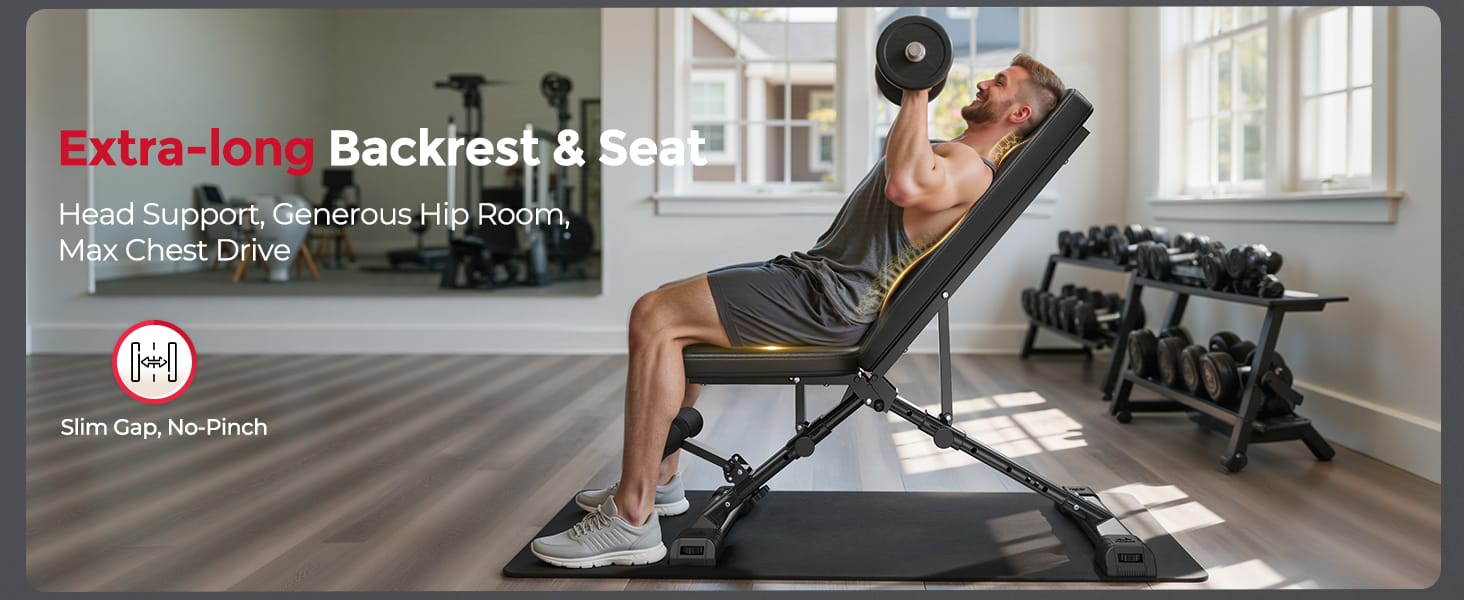
FLYBIRD Weight Bench 01 Adjustable Strength Training Bench
Design and produce fitness equipment for 20 years in the adjustable weight bench niche. This bench was designed with the advice of a professional coach for durability with long life.
Made of commercial-thickness steel, cleared multiple weight tests to ensure safety for a workout every time. Another feature to consider is its minimal pad gap of just 1 inch in the flat position.
Designed with a unique frame with a triangular structure and is made of heavy-duty commercial-quality steel which is very sturdy and durable. You can do weight training with these benches with your own weight in a variety of ways. With a square rack, it is handy to place all your weights.
All this is important in your workout with 7 back positions and 3 seat adjustments for a full body workout. This foldable bench is handy just by pulling the fast bolt, adjusting the place which fits you, and automatic lock.
Sold At Amazon
PASYOU Adjustable Weight Bench
Shop Now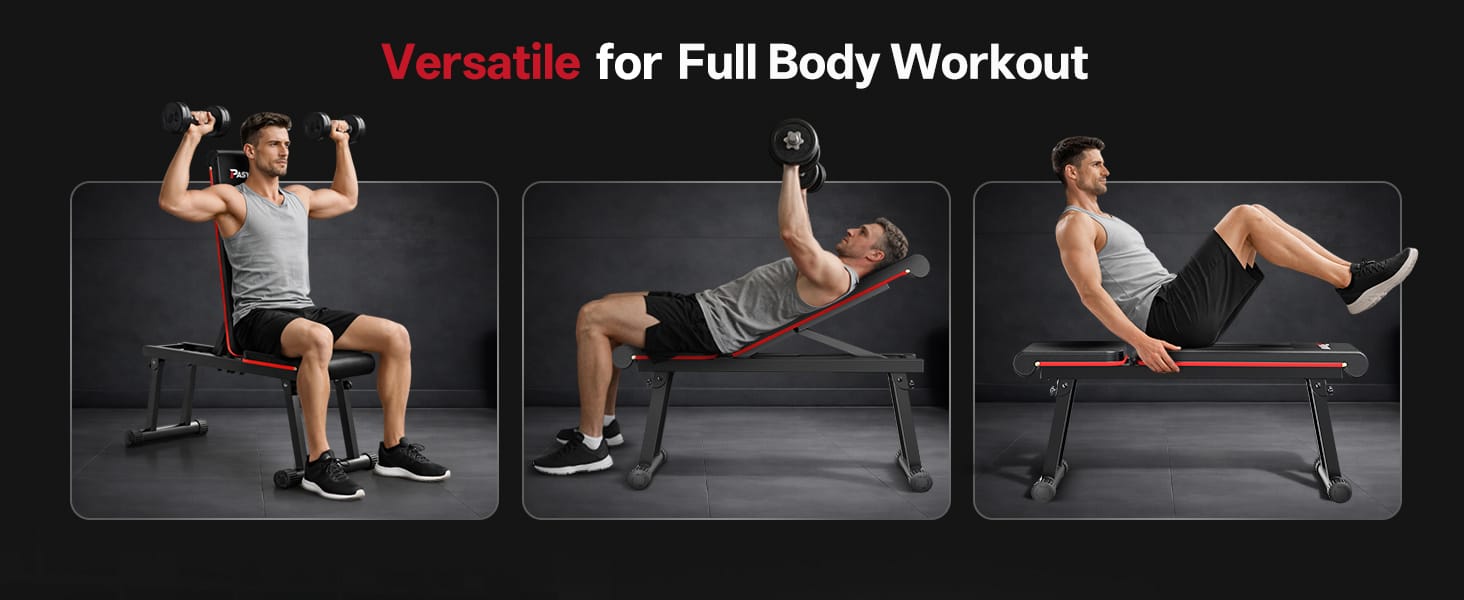
PASYOU Adjustable Weight Bench
This rock solid beach has 7 backrest positions to meet all your needs when workout. The Workout Bench seat or backrest is made of PU Leather, which is non-slip and wear-resistant.
High-density foam padding makes fitness more comfortable. It is easy to assemble and fold to store and you can put it in the corner or under the bed when not using it. The foot bottom tube is designed with an enlarged rubber cover, which is safe and non-slip and does not hurt the floor.
Foam-covered leg brace can prevent it from slipping and give you a comfortable feeling when exercising. These dumbbell bench presses are designed with a unique triangle structure and heavy-duty thickened steel with a weight capacity of 500 lbs. Designed with 7 back positions to meet all your needs when doing workouts, It is very easy to adjust the angle.
You can perform a number of upper and lower body exercises while incorporating dumbbell use to hit goals and build/maintain muscle. For Bench Presses, One-arm Dumbbell Curling, Seated Military Shoulder Presses, Dumbbell Lifts, Sit-ups, Dumbbell Fly, dip, Decline push-ups, and many other bodyweight workouts.
Sold at Amazon
FLYBIRD Adjustable Bench 02 Utility for Full Body Workout
Shop Now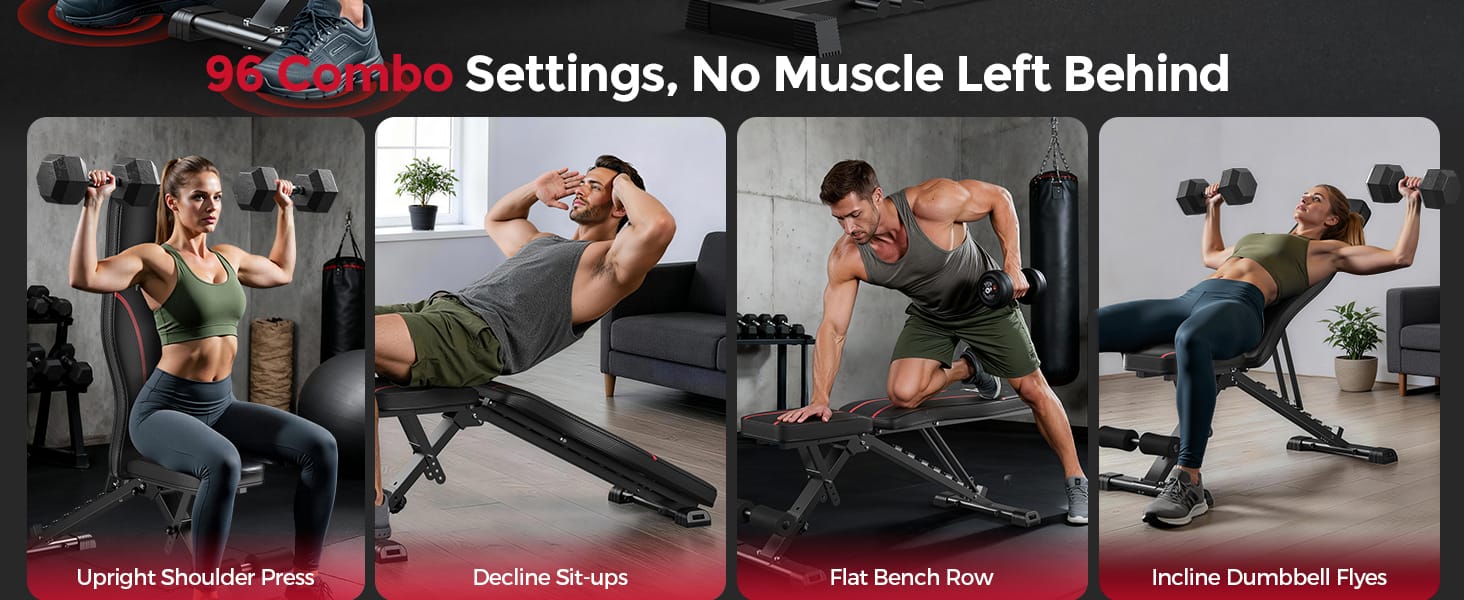
FLYBIRD Adjustable Bench 02 Utility for Full Body Workout
This bench is a versatile and durable utility bench designed for a full-body workout. It is a perfect addition to your home or fitness studio.
The bench is made of heavy-duty commercial-grade steel, which ensures its durability and stability. It can support a maximum weight capacity of 620 lbs, making it suitable for a wide range of exercises, including dumbbell presses, chest flyes, sit-ups, and more.
One of the key features of this bench is its adjustable design. It has seven adjustable backrest positions and three adjustable seat positions, allowing you to perform various exercises with different angles and positions. The bench can also be easily folded and stored, making it a space-saving solution for those with limited space.
The bench comes with a high-density foam cushion that provides comfort and support during workouts. The cushion is covered with premium leather, which is both comfortable and durable, ensuring that it will last for years to come.
It is easy to assemble, and all the necessary tools and instructions are included in the package. It is also easy to clean and maintain, making it a hassle-free addition to your home.
In summary, the FLYBIRD Adjustable Bench 02 is a high-quality and versatile bench that can help you achieve your fitness goals. Its adjustable design, durable construction, and comfortable cushion make it a great investment for anyone looking to work out at home.
Sold at Amazon
Keppi Adjustable Weight Bench
Shop Now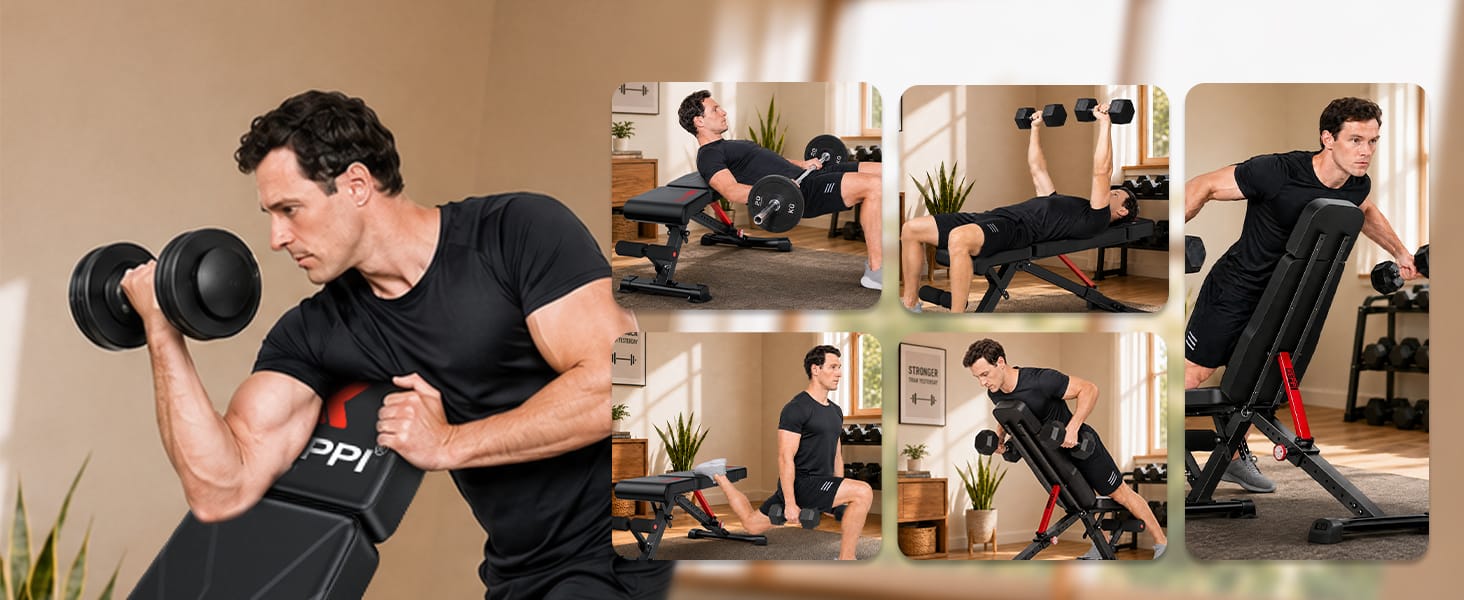
Keppi Adjustable Weight Bench
This bench is a versatile and durable workout bench that is perfect for anyone looking to build strength and muscle. With its adjustable design, this weight bench allows you to perform a wide range of exercises with ease, making it a great addition to any home gym.
The bench is made from high-quality materials that are built to last, including a heavy-duty steel frame and a comfortable, padded seat and backrest. The bench can be adjusted to multiple angles, allowing you to customize your workout and target different muscle groups.
One of the standout features of the Keppi Bench is its ease of use. The bench is easy to assemble and can be adjusted quickly and easily, making it ideal for anyone looking for a hassle-free workout experience.
Whether you're a seasoned weightlifter or just starting out, the Keppi Bench is a great investment in your fitness. With its sturdy construction and versatile design, this bench will help you achieve your fitness goals and get the results you want.
Sold at Amazon
Best Weight Bench FAQs
Q: Is an adjustable weight bench worth it?
Answer: Whether or not an adjustable weight bench is worth it depends on your fitness goals, workout routine, and budget. For those who are serious about strength training and muscle building, an adjustable weight bench can be a valuable and versatile piece of equipment.
The ability to adjust the angle of the bench allows for a wide range of exercises that target different muscle groups, which can help to build strength and muscle mass more effectively than with a fixed bench.
Additionally, adjustable weight benches are often more space-efficient than other types of weight benches, making them a great option for those with limited room in their home. They also tend to be more versatile than fixed benches, which means you can do a wider variety of exercises and get more out of your workout.
That being said, an adjustable weight bench can be a significant investment, so it's important to consider your budget and fitness goals before making a purchase. If you're just starting with strength training and don't plan on doing many exercises that require an adjustable bench, a fixed bench may be a better and more cost-effective option. Ultimately, whether or not an adjustable weight bench is worth it depends on your individual needs and preferences.
Q: Are adjustable benches good for bench presses?
Answer: Yes, adjustable benches are great for bench presses. Adjustable weight benches are often the preferred choice for many lifters and fitness enthusiasts for performing bench presses.
The ability to adjust the angle of the bench allows you to target different areas of your chest muscles more effectively. For example, setting the bench to an incline position will emphasize the upper chest muscles, while a decline position will place more emphasis on the lower chest muscles.
Moreover, most weight benches are versatile and allow for a range of exercises that can be performed in addition to bench presses. This means that you can get more out of your workout and target more muscle groups with a single piece of equipment. Additionally, the adjustability of the bench allows you to customize your workout and progress over time, making it a great option for those looking to improve their strength and fitness levels.
Overall, a flat weight bench is an excellent option for those looking to perform bench presses and a range of other exercises, providing a versatile and effective means of building strength and muscle mass.
Q: Why do you need an adjustable bench?
Answer: An adjustable bench is a valuable piece of equipment for anyone looking to build strength, increase muscle mass, and improve their overall fitness levels. Here are some of the key reasons why you may need a flat bench for your workout routine:
- Versatility: An adjustable bench allows you to adjust the angle of the bench, which enables you to target different muscle groups and perform a wide range of exercises. This versatility is particularly useful for those looking to build muscle and strength, as it allows for a more varied and comprehensive workout.
- Customization: With an adjustable bench, you can customize your workout and progress over time. As you become stronger and more advanced in your workout routine, you can adjust the angle of the bench and add more weight to continue challenging your muscles and achieving your fitness goals.
- Space-saving: Adjustable flat weight benches are often more space-efficient than other types of weight benches, making them a great option for those with limited room in their home gym. Its compact design means that it can be easily stored away when not in use.
- Convenience: With an adjustable bench, you can perform a wide variety of exercises with just one piece of equipment, which can save time and make your workout routine more efficient.
In summary, an adjustable bench is a valuable investment for anyone looking to improve their fitness levels and build strength and muscle mass. Its versatility, customization options, space-saving design, and convenience make it an ideal choice for those who want to get the most out of their workout routine.
Q: What is the best bench for a home gym?
Answer: The best bench for a home gym depends on your specific fitness goals, budget, and space constraints. However, there are a few factors to consider when choosing the best bench for your home gym:
- Adjustability: An adjustable bench is a versatile piece of equipment that allows you to perform a wide range of exercises and target different muscle groups. Look for a bench that allows you to adjust the angle of the bench, as this will give you the most flexibility in your workout routine.
- Build quality: The bench should be made of high-quality materials that can support your weight and the weight of your weights. Look for a bench with a sturdy frame and a weight capacity that meets your needs.
- Comfort: The bench should be comfortable to use, with ample padding and support for your back and other body parts. Look for a bench with good-quality padding that is firm enough to provide support but not so firm that it's uncomfortable.
- Additional features: Some benches come with additional features like attachments for leg curls and extensions, preacher curl pads, or storage racks. Consider whether these features would be useful to you and whether they justify the additional cost.
- Price: The price of the bench is also an important factor to consider. While you don't want to skimp on quality, you also don't want to overspend on a bench that has more features than you need.
Some of the best adjustable benches for a home. These benches are known for their adjustability, comfort, and build quality, and are great options for those looking to invest in a high-quality bench for their home gym.
Q: What are the negative effects of bench press?
Answer: While the bench press is a popular exercise for building strength and muscle mass, there are potential negative effects that should be considered:
- Shoulder injury: Bench press can put a significant amount of stress on the shoulders, especially if proper form is not used. Over time, this can lead to shoulder injuries such as rotator cuff tears or impingement.
- Elbow pain: Bench press can also cause elbow pain, particularly if the bar is not gripped correctly. Over time, this can lead to chronic elbow pain or even elbow tendonitis.
- Back pain: Improper form during bench press can cause strain on the lower back muscles. This can lead to lower back pain or injury, especially when lifting heavy weights.
- Chest injury: If the weight is too heavy or the lifter does not use the proper form, the bench press can cause injury to the chest muscles or even the rib cage.
- Overtraining: Overtraining can occur if a person performs bench press too frequently or with too much weight. Overtraining can lead to muscle fatigue, decreased performance, and potential injury.
It's essential to use proper form, warm up before exercising, and use an appropriate amount of weight to avoid the potential negative effects of bench press. If you experience any pain or discomfort during or after bench press, stop immediately and consult a medical professional.